A tightening in the chest. A breath that doesn’t quite complete itself. A faint restlessness that lingers long after the moment has passed. It all begins subtly and we call it “stress.” But long before the mind understands anything, the body shows the signs through vibration. The earliest tremors of unfelt emotions moving inside us.
And yet, paradoxically, we live in a world louder than ever before, an age where everything makes noise – politics, social media, information, ambition. News cycles, notifications, expectations, achievement – everything demands our attention. The world keeps getting noisier, but we are going increasingly deaf to ourselves. We hear everything except the only sound that could heal us: the subtle shift in the frequency of our own inner world.
And when we fail to listen, the body begins to speak for us eventually, in the language of illness. Because unfelt emotions don’t disappear. They simply change form.
The Quantum Truth: We are Vibration
At the quantum level, we are not solid beings. We are oscillating fields, rhythm and frequency. What we think, feel, intend, suppress, or express does not remain within us – it radiates outward, shaping our biology and the world around us. Ancient mystics understood this long before quantum physics articulated it.
And today, the signs of imbalance are everywhere: rising mental stress, emotional overwhelm, chronic diseases that have no clear biochemical explanation, and a collective exhaustion that words alone cannot solve. More people are realizing that healing is not only biochemical; it is bioenergetic.
Mind. Body. Emotion. Feeling. Breath. Sound. A system of frequencies interacting, resonating, colliding, or harmonizing. This is the shift the late Dr. Ben Johnson spoke of – from treating matter to harmonizing what shapes matter.
The Shift from Biochemical to Bioenergetic Understanding
Dr. Ben Johnson’s quote captures the essence of a profound shift in how we understand health and consciousness
“We are now entering the era of energy medicine. Everything in the Universe has a frequency and all you have to do is change a frequency or create an opposite frequency. That’s how easy it is to change anything in the world, whether that’s disease or emotional issues or whatever that is. This is huge. This is the biggest thing that we have ever come across.”
For centuries, Western medicine has focused primarily on the biochemical body – cells, tissues, and organs, treating symptoms through physical means. But energy medicine invites us to look at the human being as an energetic field first, a physical body second.
Modern physics, especially quantum theory, supports this: everything that exists, from the densest rock to the most delicate thought, is vibration, oscillating energy at specific frequencies.
Dr. Johnson is pointing to this paradigm shift from treating the matter to balancing the energy that gives rise to matter.
A physician specialising in integrative and alternative medicine, recognised for his work in personalised cancer care and holistic healing, Dr. Ben Johnson actively spoke about bridging conventional medicine with emerging approaches that consider energy fields, vibration, and frequency in healing. His quote about entering “the era of energy medicine” reflects this orientation, highlighting that frequency, not just chemical interventions, is increasingly seen as central in healing both emotional and physical conditions.
As Nikola Tesla said long ago, “If you want to find the secrets of the universe, think in terms of energy, frequency, and vibration.”
Resonance and Healing
When Dr. Johnson says, “All you have to do is change a frequency or create an opposite frequency,” he’s referring to resonance – the universal principle that like frequencies amplify each other, and opposing frequencies can neutralize or harmonize disturbance.
Just as dissonance in sound can create discomfort in the ear, dissonance in our energetic field can manifest as emotional turmoil or illness. By introducing a coherent vibration through sound, breath, intention, or awareness, we can bring the system back to harmony.
ALSO READ: The healing voice: Where sound becomes spirit
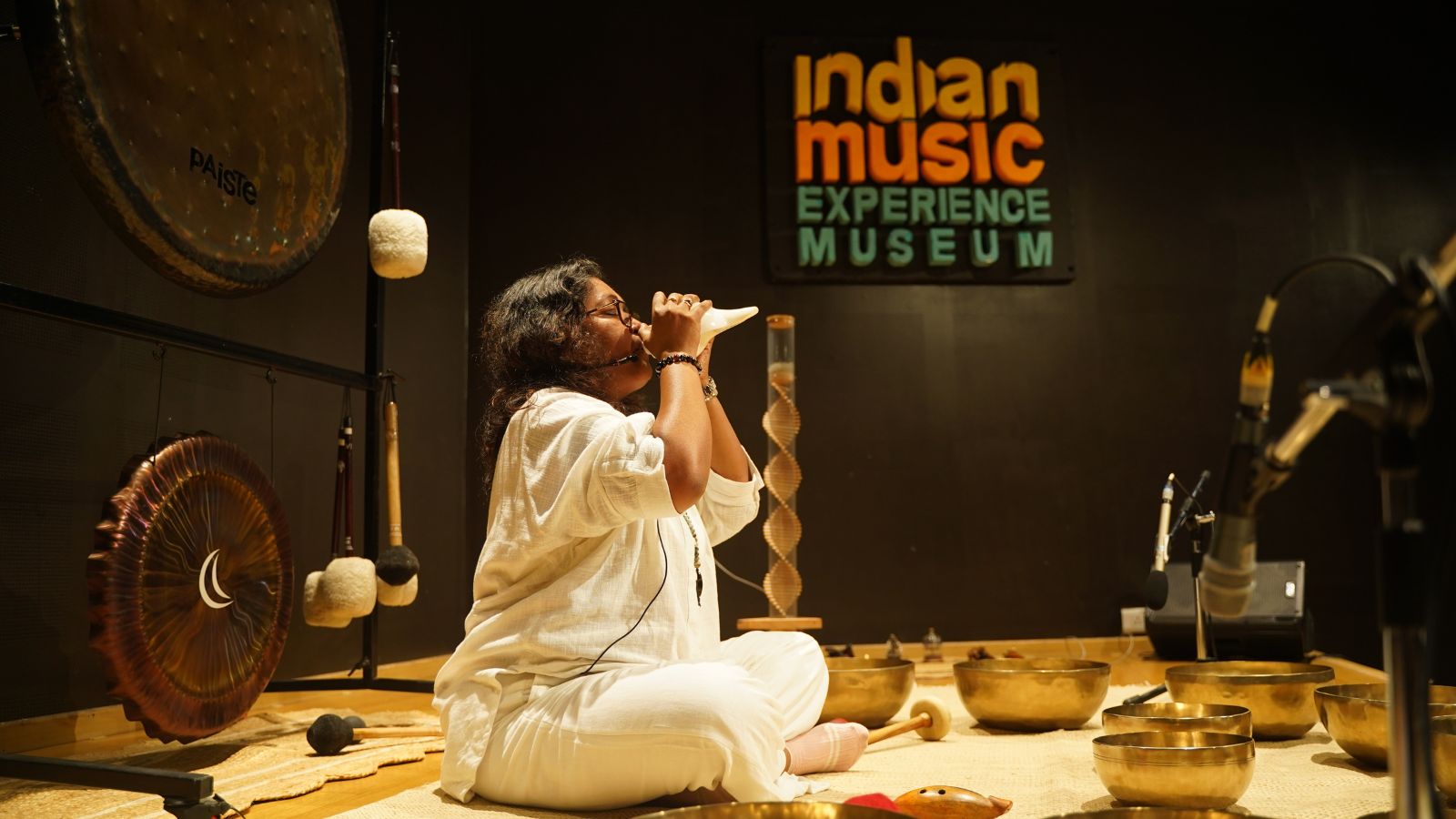
This is precisely what happens in sound therapy. Singing bowls, Gongs, Breathwork and Vocal overtoning create resonance that reorganizes the energy field. When frequency shifts, emotion and biology follow.
The Emotional Dimension of Frequency
What most people miss is that emotions themselves are frequencies.
Fear, guilt, and anger vibrate at lower, denser frequencies. Love, compassion, and gratitude vibrate higher, lighter, and more coherent. When Dr. Johnson spoke of “changing the frequency,” he also referred to shifting emotional states – from constriction to openness, from separation to connection.
This is why sound, prayer, chant, or even heartfelt conversation can heal. They are not just expressions, they are energetic recalibrations. When an alternative therapist working with voice and breath says “Your voice is your medicine,” you are embodying this same truth. Each human voice carries a unique energetic signature – a frequency that, when expressed with awareness, has the power to reorganize both inner and outer worlds.
So in essence, Dr. Ben Johnson’s statement is a scientific echo of the spiritual truth that ancient mystics, yogis, and sound healers have always known: healing is harmony. Disease is dissonance. And the bridge between the two is frequency, energy, sound, awareness.
The Simplicity and Magnitude of the Statement
Dr. Johnson called this “the biggest thing we have ever come across. ”Because when you truly understand frequency, healing is no longer mysterious. It becomes natural.
We realize that:
- Illness is not punishment; it’s misalignment.
- Healing is not intervention; it’s restoration of coherence.
- Every being has the innate ability to attune themselves to wholeness.
And being whole means recognising that our spirit, mind, heart, and body are not separate realms, but one continuous field. True wellbeing arises when the spiritual, mental, emotional and physical aspects of us move in harmony.
Ancient Resonance: How Civilizations Worked With Frequency Long Before Science Named It
When Dr. Ben Johnson said, “Everything in the universe has a frequency… all you have to do is change a frequency,” he wasn’t just pointing to the future of medicine. He was echoing humanity’s oldest memory.
Long before modern medicine began speaking of energy, frequency, and vibration, ancient cultures across the world instinctively understood what Dr. Ben Johnson articulated: that sound is not entertainment, it is transformation. Across continents and centuries, sound was the first healer, therapist, spiritual technology.
ALSO READ: The echo of unfelt emotions: From shadows to soul
Every civilization has used sound as medicine, not metaphorically, but as a lived, embodied technology.
In India, temple architecture was designed around vibration. Bells (ghantas) were rung at temple entrances not for ritual drama but to clear the mind’s stagnant energy, to reset the mind’s frequency, discarding mental noise, syncing the brain into focused attention, so the devotee entered in a state of coherent attention. The conch (shankh), blown in ceremonies and during war, produced a vibration believed to cleanse the nadis, stabilise prana, and ward off chaotic energies. Even today, a conch blast can be felt more than heard, a full-body resonance. The conch (shankh), blown at dawn and dusk, produced a frequency believed to purify the subtle body, awaken dormant prana, and dispel internal chaos. Mantra was more than prayer, it was physics articulated through syllables.
In Asia, tribes have long used Himalayan bowls, gongs, and throat chanting to regulate states of consciousness. Their overtone chants were engineered to drop practitioners from beta waves (stress) into theta (stillness). These sounds are not music; they are vibrational tools designed to shift the brain from the clutter of beta waves into the stillness of alpha and theta, a meditative descent that modern neuroscience now confirms.
In Africa, the djembe and communal drumming circles created what ethnomusicologists now call entrainment, the phenomenon of hearts, breath, and nervous systems synchronising through shared rhythm. Villages used drums to communicate, to celebrate, and to heal. Communal drumming was both communication and medicine. Villagers gathered around rhythms that entrained their nervous systems into unity, dissolving grief, conflict, and fear. Rhythm was not entertainment – it was emotional regulation, community bonding, and trauma release. Rhythm itself was medicine.
Among the Native American tribes, the frame drum, rattles, and voice were used to access altered states for visioning, grieving, or spiritual work. Healers used rhythm and chant to navigate between physical, emotional, and spiritual realms. To them, sound wasn’t symbolic -it was a portal. To them, sound was a bridge between worlds, a frequency through which the intangible could be touched.
In ancient Greece, Pythagoras taught that the universe itself was structured through vibration, the “music of the spheres”, and used lyre harmonics to balance emotional disturbances. He believed dissonance in the soul required harmony in sound – that illness was a form of dissonance requiring musical re-tuning. Healing was resonance.
In Middle Eastern Sufi traditions, chanting and the rhythmic repetition of Allah’s names (dhikr) created states of ecstatic unity, dissolving the ego into a larger, timeless awareness. Chanting the Divine Names created states of ecstatic unity – dissolving ego, cleansing sorrow, and expanding consciousness. Repetition of sound wasn’t spiritual discipline; it was nervous system alchemy.
And in the ancient Aboriginal cultures of Australia, sound was not just healing – it was creation itself.
Long before modern civilizations understood vibration, Aboriginal elders used the didgeridoo not merely as an instrument, but as a tool of energetic alignment. Its deep, droning frequency one of the oldest continuously played sounds on Earth was believed to soothe wounds, reduce physical tension, clear emotional heaviness, and restore spiritual harmony.
ALSO READ: Stop chasing wellness and find healing in your own voice
The didgeridoo’s long, resonant breath mimics the pulse of the Earth. In Aboriginal cosmology, it is said to reconnect the listener to the Dreamtime, the primordial field from which all life emerged. Modern researchers have discovered that these low-frequency sound waves can improve respiratory function, regulate breath, and stimulate brainwave states associated with calm alertness.
To the Aboriginal healer, however, none of this required explanation. The instrument was medicine. Breath and vibration was medicine.
When the didgeridoo sounds, the land, the body, and the spirit are believed to vibrate as one. It’s a reminder that healing is not an act, but a return to harmony with the living world.
When you look across all of humanity’s oldest lineages, a pattern appears. Across oceans, across eras, none of these cultures knew each other. None shared geography or language, yet all discovered the same truth: Sound rearranges the human being.
Sound transforms.
Rhythm regulates.
Voice heals.
Frequency alters the human experience.
They did not have MRI machines, EEG graphs, or quantum vocabulary. They had something simpler: direct experience. A felt understanding that sound shifted emotions, altered breath, softened the mind, and revived spirit – and therefore, could heal.
And now, thousands of years later, modern science is catching up. We study frequencies, coherence, neuroplasticity, sonic entrainment, vagal toning, and we call it energy medicine.
But ancient cultures simply called it life.
When Dr. Ben Johnson said we are “entering the era of energy medicine,” he was not predicting something new. He was pointing us back toward what humanity always knew, before we forgot:
Sound has always been our oldest healer.
Voice has always been our first instrument.
And resonance has always been the bridge between the body and the unseen.
Modern science now uses terms like entrainment, neuroacoustics, vagal toning, and coherence.
Ancient civilizations simply used their bodies, and their presence to feel what was already true.
In a way, Dr. Ben Johnson’s “era of energy medicine” is not something new. It is a return and remembering, as we are circling back to what our ancestors understood without laboratories or research papers:
The universe is sound.
The body is sound.
And healing begins when we learn to listen.
The Oldest Story the Universe Knows: Creation Through Sound
Across ancient civilizations, long before science studied vibration or medicine mapped neurophysiology, spiritual cultures understood something fundamental:
Sound doesn’t just heal.
Sound creates.
In the Indian spiritual tradition, this understanding is encapsulated in the timeless phrase:
Nāda Brahma – “The Universe is Sound.”
According to the Vedic and Upanishadic seers, the cosmos itself emerged not from matter, but from vibration, from a primordial frequency so subtle yet so powerful that all forms of existence unfolded from it. This first vibration is described as Om (or Aum), the soundless sound, the unstruck resonance (anāhata nāda) that lies beneath everything that ever was and will be.
The Mandukya Upanishad from Atharva Veda calls Om the “sound-symbol of pure consciousness,” suggesting that when we chant Om, we momentarily align our inner vibration with the cosmic one – like tuning an instrument back to its original pitch.
The ancient sages believed healing happens when a person synchronizes with this fundamental cosmic frequency. In other words, disease (dis-ease) arises when we fall out of harmony with ourselves, and healing begins when we return to resonance.
This echoes what quantum physicists and energy researchers describe today: Everything vibrates. Everything is frequency. Everything responds to sound.
Echoes Across Cultures
This idea of sound-as-creation is not unique to India. It appears like a hidden thread in nearly every wisdom tradition:
- Hindus spoke of Nāda Brahma.
- Christians began the Gospel of John with: “In the beginning was the Word.”
- Sufis described the universe born from the “breath of the Merciful.”
- Tibetans used long horns and overtone chanting to harmonize body and mind.
- Native American tribes used drums to communicate with the Great Spirit.
- African tribes used polyrhythmic drums for healing and trance.
- Shamanic cultures used rattles and chanting to enter expanded states of consciousness.
- Australian Aboriginals, as you added, used the didgeridoo, whose very sound symbolized creation and connection to the Dreamtime.
Across the world, long before the language of “frequency” and “energy medicine” existed, humanity already knew one thing:
Sound is the bridge between the seen and the unseen.
Why This Matters Today
Dr. Ben Johnson’s observation that we are now entering an era of energy medicine is not new wisdom – it is a return to ancient knowing. Modern research is catching up to what ancient mystics understood intuitively:
- Sound reorganizes chaotic energy patterns in the body.
- Certain frequencies can calm the nervous system, slow brainwaves, and restore emotional equilibrium.
- Chanting synchronizes heartbeat and breath.
- Group sound amplifies individual healing; the “collective resonance principle.”
When we chant Om or hum and tone, or even sigh consciously, we are not performing a ritual; we are participating in the oldest technology of human healing – the science of vibration. And when our voice becomes intentional, it becomes medicine. Because our voice is the closest frequency to our soul’s original vibration.
Sound has always been our first medicine. And resonance when rooted in intention, will always be the bridge between the body and the unseen, the self and the collective, the wound and wholeness.