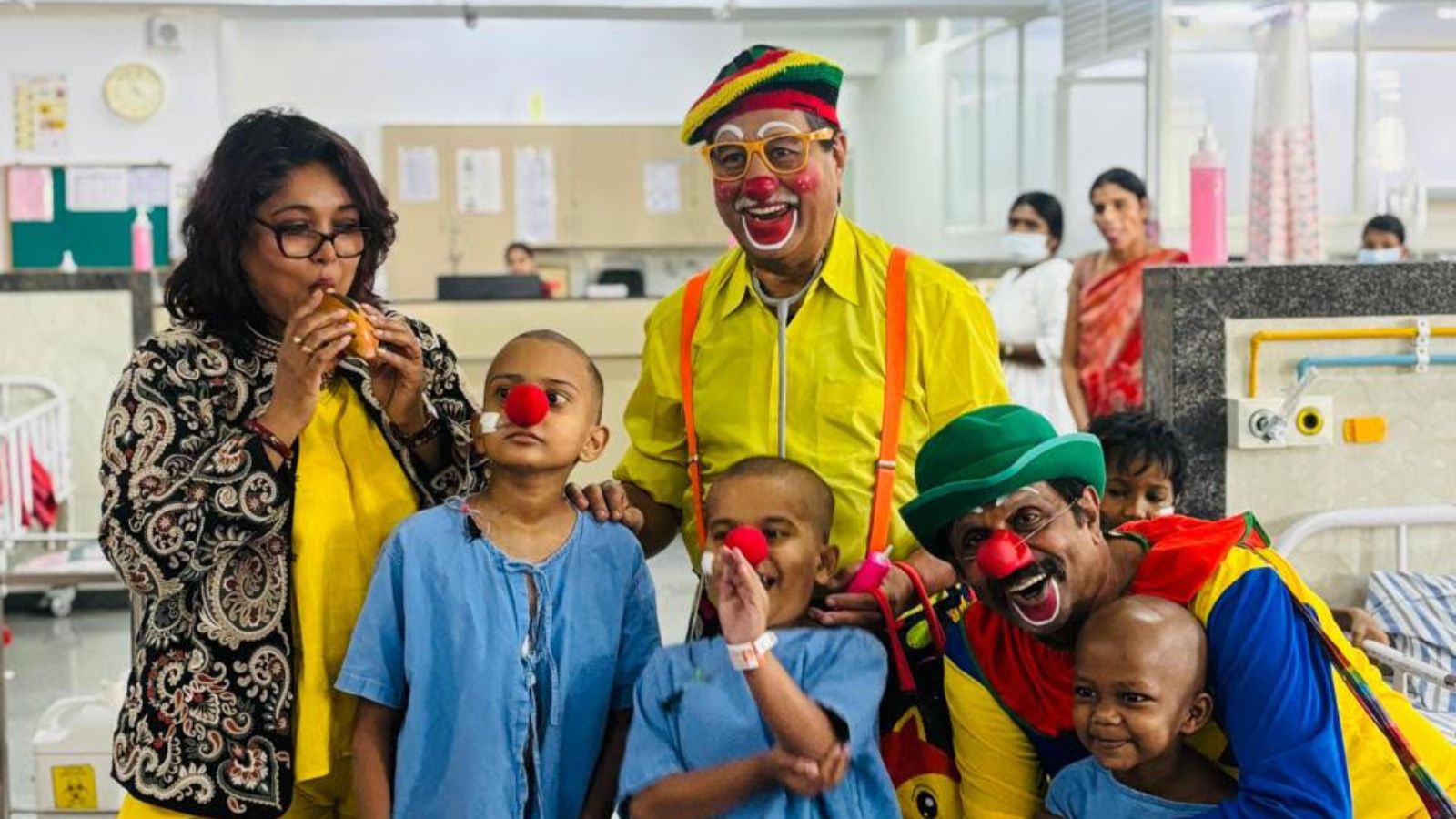
In a hospital room where silence often carries the weight of uncertainty, a small red nose can change everything.
A child awaiting a procedure stops crying.
An elderly patient, withdrawn for days, suddenly smiles.
A worried parent exhales, even if just for a moment.
No prescription or instrument, and yet, something shifts.
This is the subtle, powerful world of medical clowning – where humour, play, and human presence become tools of healing.
Origins, Pioneers, and Living Practice
The idea that humour can heal is not new, but it was brought into modern healthcare with radical clarity by Patch Adams, born Hunter Doherty Adams. A physician, activist, and clown, he challenged the conventional medical model by insisting that care must include joy, connection, and human presence.
In the 1970s, he began integrating humour and play into patient care, eventually founding the Gesundheit! Institute. Nestled in the quiet landscapes of rural West Virginia, USA, it was envisioned not as a hospital, but as a living space where healing could unfold through connection, compassion, and joy.
His philosophy reached global audiences through the film Patch Adams, where the now-iconic red nose became a symbol of a deeper truth: that healing is not only clinical – it is profoundly human. While the film simplified aspects of his work, it sparked a worldwide movement that brought medical clowning into mainstream awareness.
Today, that movement continues through structured programs across the world. Initiatives such as the Dream Doctors and early hospital-based models like the Big Apple Circus Clown Care Unit have helped professionalize the field, bringing trained clowns into healthcare systems to support emotional and psychological well-being.
MUST READ: Double-edged power: Sound heals and it destroys
In 1986, the Big Apple Circus Clown Care Unit was founded, widely regarded as the first structured hospital clown program. The initiative was led by Michael Christensen, a professional clown and co-founder of the Big Apple Circus.
It was Christensen’s vision to bring the spirit of the circus into paediatric wards, not as entertainment, but as emotional care. What began as an experiment soon revealed something deeper: children responded not just with laughter, but with visible relief, engagement, and trust.
The Clown Care Unit introduced a new model:
- clowns as trained professionals
- hospital-sensitive performance
- emotional attunement over spectacle
It marked a turning point, where humour became a deliberate therapeutic presence.
Building on these early foundations, the field evolved further in places like Israel, through initiatives such as the Dream Doctors Project one of the most advanced and structured medical clowning programs in the world.
Here, medical clowns moved beyond being visitors and became part of the healthcare system itself fully integrated into hospital teams, considered part of the clinical support system and working alongside doctors, nurses, and therapists.
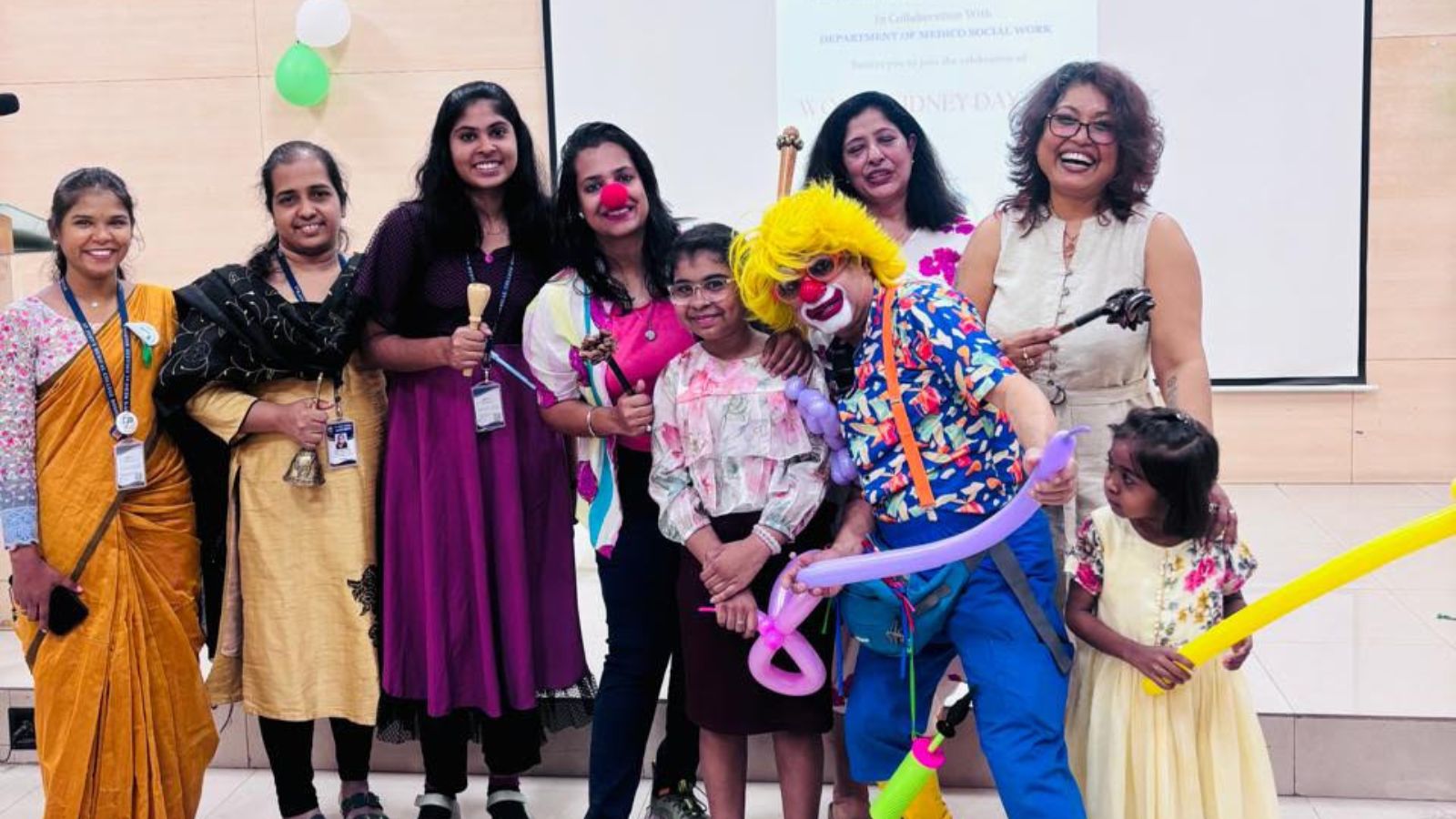
Dream Doctors are trained to accompany children into operation theatres, reduce anxiety
during painful procedures and support patients through long-term illness Instead of
distracting, they co-create emotional safety. (Theorist photo)
They operate in multiple hospitals across Israel, including paediatric wards, oncology units, and even emergency settings.
Dream Doctors are trained to accompany children into operation theatres, reduce anxiety during painful procedures and support patients through long-term illness Instead of distracting, they co-create emotional safety. A child going into surgery may imagine the procedure as an “adventure” and the clown becomes a companion, not a performer.
Their work has shown:
- Reduced need for sedation in children
- Lower anxiety levels pre-procedure
- Better cooperation during treatment
They are a powerful example of how emotional regulation directly impacts medical outcomes. In this model, clowning is no longer peripheral – it is integrated.
These programs go far beyond performance. They offer specialized training in empathy, improvisation, and patient interaction, preparing practitioners to navigate sensitive medical environments with awareness and care.
Beyond Entertainment: What Medical Clowning Really Is
At first glance, medical clowning may seem like simple entertainment or a light distraction in an otherwise serious environment. But to reduce it to humour alone would be to miss its essence.
Medical clowning is a therapeutic practice that integrates:
- emotional intelligence
- improvisation
- non-verbal communication
- deep empathy
Clowns in healthcare settings are not performers in the traditional sense. They are trained facilitators of emotional release, entering spaces where fear, pain, and vulnerability are often unspoken. They do not impose laughter, but invite connection.
ALSO READ: Where medicine stops and sound begins: Healing beyond the visible
Medical clowning calls for a form of intelligence rarely taught in traditional systems. It demands ability to read emotional cues, sensitivity to respond without words and humility to step back when needed
An intelligence of timing, intuition and presence it can be termed a form of spiritual intelligence, the capacity to connect beyond roles, identities, and the clinical framework.
Sometimes, a clown’s presence allows tears to surface, fear to be expressed and silence to be held. In these moments, the clown becomes a safe emotional outlet.
The Psychology of Play in Healing: Presence Over Performance
Human beings are wired for play. Even in distress, the nervous system responds to cues of safety, lightness, and familiarity.
When a clown enters a hospital room, the environment shifts from clinical to relational and the patient moves from passive recipient to active participant as fear momentarily loosens its grip.
Psychologically, humour and play reduce cortisol (stress hormone), increase endorphins (natural pain relievers) and activate social engagement pathways in the brain. In simple terms, laughter signals safety. And when the body feels safe, it easily goes into its healing mode.
One of the most misunderstood aspects of medical clowning is the idea of “making people laugh.” Seasoned medical clowns know that laughter is not the goal – presence is. Sometimes, the clown mirrors the patient’s mood or sits in silence and yet sometimes, they engage in gentle play.
This ability to meet the patient where they are is what makes the interaction therapeutic.
The impact of this work is increasingly visible. Children, in particular, respond deeply to medical clowning.
Studies in hospitals have shown that clown visits can significantly reduce anxiety in children before surgery, making medical procedures less overwhelming. During the COVID-19 pandemic, when physical presence was restricted, clowns adapted creatively connecting with patients through video calls. Even from a distance, their playful interactions helped ease distress, especially for patients in isolation.
Today, medical clowning is practiced across the world – from large urban hospitals to smaller community settings. Its ability to adapt across cultures and contexts highlights a simple truth
While much attention is given to patients, medical clowning also affects parents, nurses, caregivers and doctors. They often carry silent emotional burdens. Watching a loved one suffer can create stress, helplessness, and fatigue. A moment of shared laughter can release emotional tension, create connection and restore perspective
For healthcare professionals, too, these interactions offer brief yet meaningful pauses in demanding environments. Healing, in this context, becomes collective.
Sound and Play: When Vibration Meets Joy
Medical clowning does not work in isolation. Its impact deepens when it meets sound.
Simple elements like rhythmic clapping, gentle humming, playful vocal sounds, or even shared laughter create patterns that the brain and body naturally begin to follow. These rhythms can help slow down scattered mental activity and guide the nervous system toward a calmer, more regulated state.
When sound is introduced into playful interaction, something subtle begins to shift. The body, which may have been tense or guarded, starts to soften. Breathing becomes more natural and attention settles. Eventually, the environment feels less threatening.
In some integrative settings, practitioners combine clowning with sound-based practices such as singing bowls, soft instruments, or vocal toning. The intention is not complexity, but coherence – using gentle, repetitive sound to create a sense of safety while play opens the emotional space.
From a nervous system perspective, this matters deeply. As described in Polyvagal Theory, the body constantly responds to cues of safety or threat. Playful interaction signals social connection, while soothing sound reinforces that sense of safety.
Together, they support a shift:
- from alertness to ease
- from withdrawal to engagement
- from tension to release
This is why the combination can feel more powerful than either element alone. Play disarms. Sound regulates. And in that shared space, the body finds permission to let go of held stress.
It is certainly not about specific frequencies or techniques, but about creating conditions where the nervous system can return to balance. In that sense, healing does not come from sound or laughter separately, but from the harmony they create together.
Not a Replacement, but a Complement
It is important to understand that medical clowning is not an alternative to medical treatment. It does not replace medicine, surgery or clinical care. Instead, it complements them.
Where medicine treats the body, medical clowning addresses the emotional and psychological landscape in which healing occurs. And often, that landscape determines how the body responds.
Though medical clowning feels intuitive, its effects are increasingly supported by research.
Studies in hospital settings have shown that clown interventions can:
- reduce pre-operative anxiety in children by up to 50%
- improve pain tolerance and shorten hospital stays
- enhance cooperation during treatment
- positively influence emotional well-being
Emotional shifts influence physiological responses, such as lowered heart rate variability
In essence, the body does not separate emotional experience from physical state.
When the emotional environment softens, the body falls in place.
The Indian Context: A Living Expression
In India, one of the most heartfelt expressions of this work can be seen through Pravin Tulpule, fondly known as Happy Uncle. A former naval officer, he chose an unconventional path – stepping away from a structured career to bring joy into spaces of illness and vulnerability.
For over two decades, he has worked with children in hospitals, orphanages, and care centres, using humour, magic, and compassionate presence to ease emotional pain. His journey began with a deeply moving encounter with a terminally ill child – a moment that reshaped his life’s purpose.
Since then, he has performed thousands of interactions, often without expectation of reward, driven by what he calls a simple intention: to help people forget their pain, even if only for a while.
Beyond his performances, he has also conducted workshops and engaged with medical communities to highlight the role of emotional care in healing. In many ways, his work echoes the spirit of Patch Adams adapted to the Indian context, grounded in service, and carried forward through lived experience.
A Growing Global Discipline
From the Gesundheit! Institute to organizations like Dream Doctors, and independent practitioners like Pravin Tulpule, medical clowning has evolved into a global, interdisciplinary practice.
What connects all these efforts is not technique, but intention to restore dignity, create moments of lightness and to remind us that healing is relational
Medical clowning may exist within hospitals, but its message extends far beyond them.
It asks us:
- Can we bring lightness into difficult spaces?
- Can we listen without trying to fix?
- Can we connect without conditions?
In a world that often prioritizes efficiency over empathy, medical clowning quietly reintroduces us to the power of being human. There is something profoundly courageous about bringing lightness into spaces of suffering.
It requires sensitivity without intrusion, humour without disrespect and presence without ego. Medical clowns walk this delicate line with intention.
They do not deny pain. They simply remind us that joy can coexist with it. In the end, perhaps what heals us most is not just medicine, but the moments that make us feel alive within it.
And sometimes, all it takes is a red nose to remind us of that.
A Calling, Not Just a Craft
Medical clowning is not merely a skill one acquires, it is often a path one chooses with intention.
At its heart lies a deeply philanthropic impulse: the willingness to step into spaces of vulnerability, not to fix, but to comfort; not to perform, but to connect. It asks for a rare blend of sensitivity, humility, and presence.
Those who take up this work come from diverse backgrounds – theatre, healthcare, psychology, education – but what unites them is a shared understanding that healing is not always about intervention. Sometimes, it is about showing up with lightness in places that feel heavy.
In a world increasingly driven by outcomes and efficiency, choosing such a path is, in itself, an act of quiet service. And perhaps that is the invitation this work offers – not that everyone must become a medical clown, but that each of us can learn to bring a little more presence, play, and compassion into the spaces we inhabit.
Because sometimes, the greatest act of care is simply to help another human being feel a little less alone.