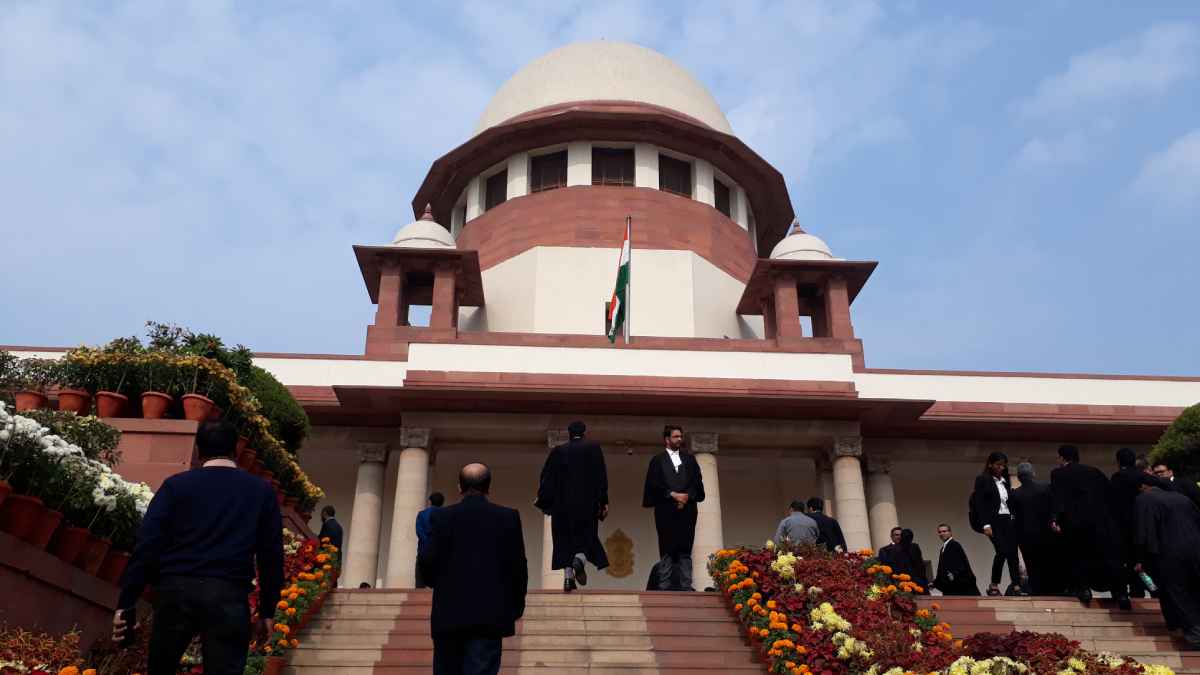
The Supreme Court on Friday stayed the deportation of Bengaluru-based Accenture employee Ahmed Tariq Butt and his family after the government ordered their removal as part of a broader diplomatic crackdown on Pakistani nationals following the Pahalgam terror attack.
Family Claims Indian Citizenship
Butt, an MBA graduate from IIM Kozhikode, approached the top court claiming that he and his six family members were being forced to leave India despite holding Indian passports and Aadhaar cards. He asserted that they were Indian citizens, not visa holders.
The court directed authorities to verify the family’s documents and ruled that no coercive action be taken against Butt until the verification process is complete. The bench also advised Butt to approach the high court for further relief.
‘Some Human Element’: Supreme Court
Solicitor General Tushar Mehta, representing the government, contested the court’s leniency. However, the Supreme Court acknowledged a “human element” in the matter and cautioned that its interim relief in this case should not be treated as a precedent for similar cases.
Court Questions Family’s Origin
During the hearing, Justice Surya Kant asked how Butt came to India. Butt replied that his father, a Pakistan passport holder, moved to India in 1997, and the rest of the family followed in 2000, settling in Srinagar. He said they all subsequently acquired Indian citizenship and completed their education in local schools.
Despite this, Butt said, the Ministry of Home Affairs last week issued a deportation notice claiming the family had overstayed expired visas—a claim he denies.
ALSO READ: Amid rising tensions with India, new role for Pakistan ISI chief
Government’s Crackdown on Pakistani Nationals
In response to the deadly Pahalgam terror attack, where 26 civilians were killed by militants from Pakistan-based Lashkar-e-Taiba, the Indian government has revoked all visas for Pakistani nationals except those granted long-term residency or to members of the Hindu community.
As part of sweeping diplomatic reprisals, India has also closed its borders with Pakistan, suspended the Indus Waters Treaty, and frozen bilateral agreements including the Simla Accord. Pakistan has retaliated by expelling Indian nationals, sealing its own borders and airspace.
Modi Government Promises Retaliation
Prime Minister Narendra Modi has declared a strong response to the Pahalgam attack, calling for decisive action against terrorism. The military has reportedly been granted full operational freedom to formulate and execute a retaliatory strategy.