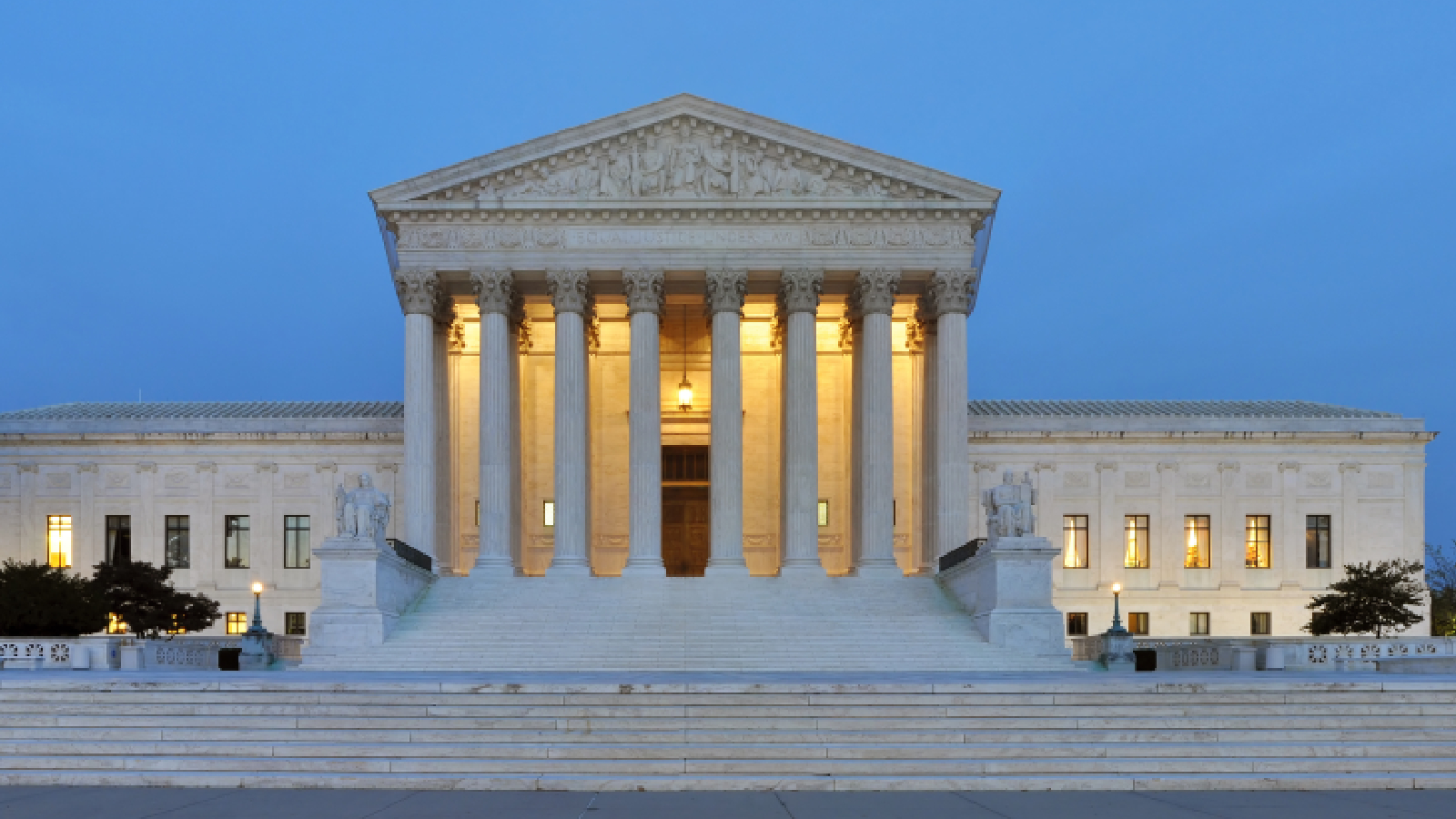
The United States Supreme Court has reaffirmed the constitutional guarantee of birthright citizenship, delivering a significant ruling that preserves the long-standing principle that nearly every child born on American soil is automatically a US citizen.
The judgment was widely welcomed by Indian-American advocacy groups, community leaders and lawmakers, who described it as an important affirmation of constitutional rights and a source of certainty for millions of immigrant families.
The ruling rejected an executive order signed by US President Donald Trump that sought to deny automatic citizenship to children born in the United States to parents who were either living in the country illegally or staying on temporary visas. The court concluded that the order conflicted with the protections guaranteed under the Fourteenth Amendment of the US Constitution.
Executive Order Challenged Long-Standing Citizenship Policy
The legal dispute stemmed from an executive order issued by President Trump on the first day of his second term in office. The order proposed that children born in the United States to undocumented immigrants or individuals holding temporary visas would no longer qualify for automatic American citizenship.
MUST READ: ‘Will cut off those hands’, says Pakistan over Indus Waters Treaty
The move represented one of the most significant attempts in recent years to alter the interpretation of birthright citizenship, a constitutional principle that has remained in place for more than 150 years. The order immediately faced legal challenges from civil rights organisations, immigration advocates and several states, leading to the matter being considered by the nation’s highest court.
Court Says Fourteenth Amendment Guarantees Citizenship
In its decision, the Supreme Court ruled that the executive order violated the Fourteenth Amendment, which guarantees citizenship to nearly all individuals born within the United States.
Chief Justice John Roberts, writing for the majority, said citizenship has long represented the right to participate fully in American civic life. He noted that the authors of the Fourteenth Amendment deliberately extended this constitutional protection to every person born in the country, reaffirming that commitment in the present day. The judgment effectively preserved the constitutional interpretation that has governed birthright citizenship since the amendment was ratified following the American Civil War.
ALSO READ: ‘He’s like me, doesn’t sleep’: Trump on calling Modi at 6 AM
What is US Birthright Citizenship?
Birthright citizenship is the legal principle under which nearly every child born within the United States automatically acquires American citizenship at birth, irrespective of the immigration status of their parents.
The doctrine originates from the Citizenship Clause of the Fourteenth Amendment, adopted in 1868 following the Civil War. The amendment declares that all persons born or naturalised in the United States and subject to its jurisdiction are citizens of the United States.
Only a small number of exceptions exist, including children born to accredited foreign diplomats, members of hostile occupying forces, and individuals born aboard certain foreign public vessels. Native Americans were initially excluded from the provision but received birthright citizenship through the Indian Citizenship Act of 1924.
Historic Principle Remains Intact
The court’s ruling also rejected the administration’s effort to overturn a legal framework that has guided American citizenship policy for generations. For more than a century, children born in the United States—except in a limited number of specific circumstances—have automatically acquired American citizenship regardless of their parents’ immigration status.
The latest judgment reinforces that legal position and prevents changes through executive action alone. Legal experts have described the decision as another affirmation that constitutional rights cannot be altered by presidential orders that conflict with established constitutional provisions.
ALSO READ: India, Seychelles sign key defence and economic agreements
The judgment received strong support from Indian-American advocacy organisations, many of which argued that the executive order would have disproportionately affected families navigating lengthy immigration processes.
Community Leaders Say Decision Brings Stability
Indian-American community leaders also welcomed the verdict, saying it offers long-term certainty to families who have built their lives in the United States while waiting for immigration approvals.
Several Indian-American members of the US Congress also welcomed the Supreme Court’s decision, describing it as an affirmation of constitutional protections.
Congressmen Raja Krishnamoorthi and Suhas Subramanyam, along with Congresswoman Pramila Jayapal, criticised the executive order as an unconstitutional attempt to remove citizenship rights from children born in the United States.
Congressional Tri-Caucus Highlights Constitutional History
The Congressional Tri-Caucus, representing Asian Pacific American, Hispanic and Black lawmakers, also welcomed the Supreme Court’s decision.
In a joint statement, the group said the judgment reaffirmed a constitutional promise that has defined American citizenship for generations. It pointed to the Fourteenth Amendment and the landmark 1898 Supreme Court case United States v. Wong Kim Ark, which firmly established the legal principle of birthright citizenship.
The caucus said the ruling demonstrated that constitutional protections cannot be overridden through executive action. It added that the decision rejected attempts to redefine who qualifies as an American citizen and reaffirmed constitutional guarantees that have remained in force for more than a century.
Ruling Provides Relief to Immigrant Families
The Supreme Court’s decision is expected to provide immediate legal certainty for families concerned about the future status of children born in the United States while their parents navigate immigration procedures.
For many Indian-origin professionals working in the country on temporary employment visas and waiting years for permanent residency because of green card backlogs, the ruling removes uncertainty surrounding their children’s citizenship status.
The judgment preserves one of the longest-standing constitutional principles in American law while reaffirming the protections guaranteed under the Fourteenth Amendment, a decision that has been welcomed by immigrant communities, advocacy organisations and lawmakers across the United States.