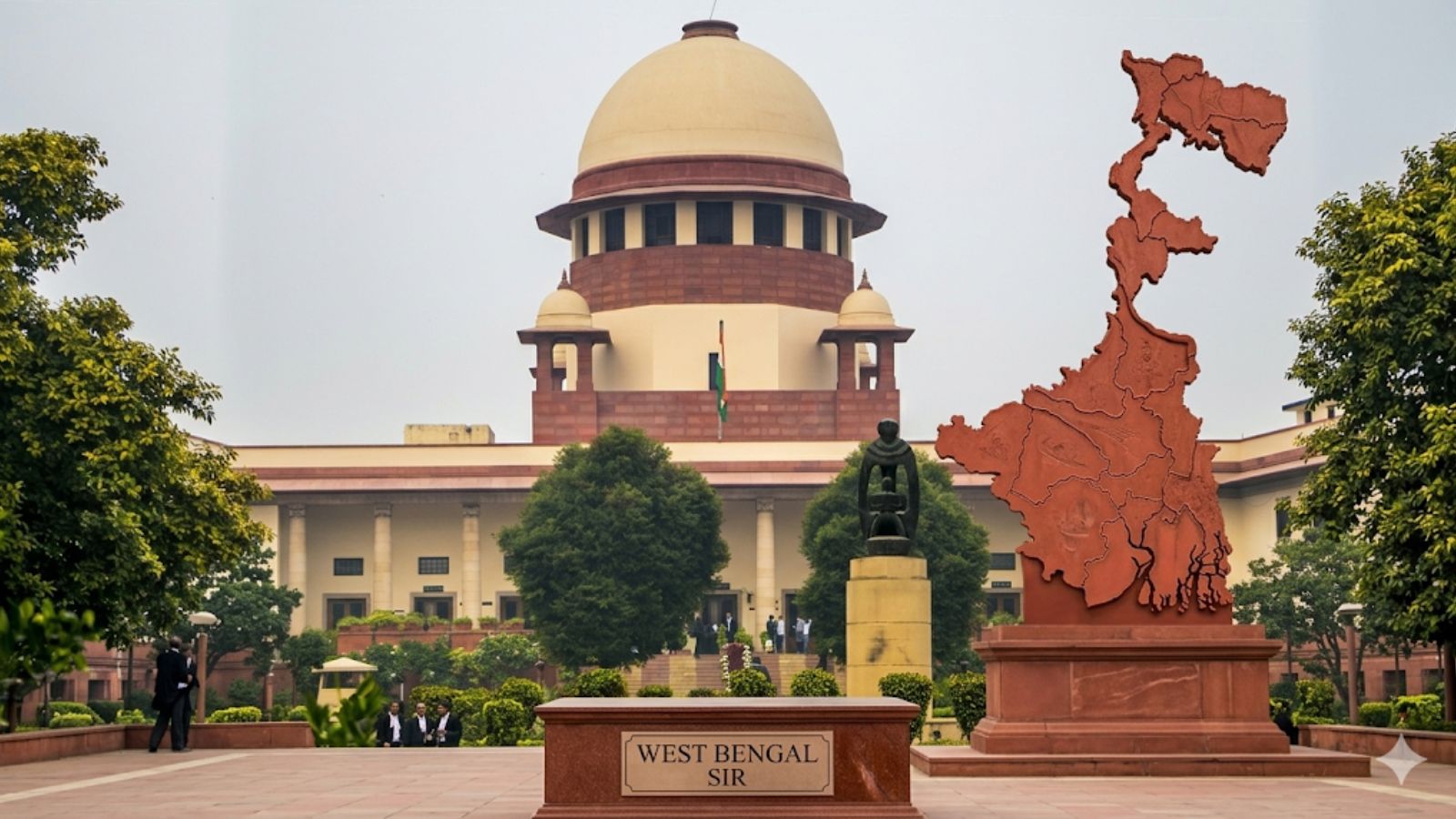
The Supreme Court of India has ruled that voters in West Bengal who are cleared by appellate tribunals at least two days before polling will be eligible to cast their votes in the upcoming Assembly elections.
Polling in the state is scheduled in two phases—April 23 and April 29. Accordingly, individuals whose appeals are resolved in their favour by April 21 or April 27 will be included in the electoral rolls and allowed to vote.
`
The directive was issued by a Bench led by Chief Justice of India Surya Kant and Justice Joymalya Bagchi, invoking the Court’s powers under Article 142 of the Constitution of India.
The ruling comes in response to petitions challenging the ongoing Special Intensive Revision (SIR) of electoral rolls in the state, which has triggered widespread disputes over the deletion of voter names.
Supplementary Electoral Rolls to Be Issued Before Polling
The Court directed the Election Commission of India (ECI) to implement decisions taken by appellate tribunals within the specified deadlines by publishing supplementary revised electoral rolls.
It clarified that only those whose appeals are conclusively decided in their favour within the stipulated timeframe will gain voting rights. The Court emphasised that merely having a pending appeal would not entitle an individual to vote.
The SIR process was overseen by judicial officers after disagreements between the ECI and the West Bengal government raised concerns over transparency. The Supreme Court had earlier directed the deployment of district and additional district judges—including retired officials—from West Bengal, Odisha, and Jharkhand to conduct the exercise.
MUST READ: LeT co-founder, accused of attacks in India, shot by unknown gunmen in Lahore
Around 900 judicial officers examined nearly 60 lakh objections, resulting in approximately 27 lakh names being excluded from the voter rolls.
To address grievances, appellate tribunals were established. Currently, 19 such tribunals are operational and have received more than 34 lakh appeals challenging inclusion or exclusion decisions.
Court Rejects Interim Relief for Pending Appeals
The apex court declined to grant interim voting rights to individuals whose appeals are still pending. It observed that allowing such relief could create confusion and disputes, potentially affecting those already included in the revised electoral rolls.
The Bench noted that granting voting rights in such cases could lead to counter-claims and disrupt the electoral process, effectively undoing the progress made through the extensive verification exercise.
The Court acknowledged that all appellate tribunals are now fully operational, with members having completed necessary training. A standard procedure for handling appeals has also been finalised to ensure timely disposal of cases.
The Bench appreciated the efforts of judicial officers involved in the SIR process, describing their work as a “herculean task” carried out under challenging conditions.