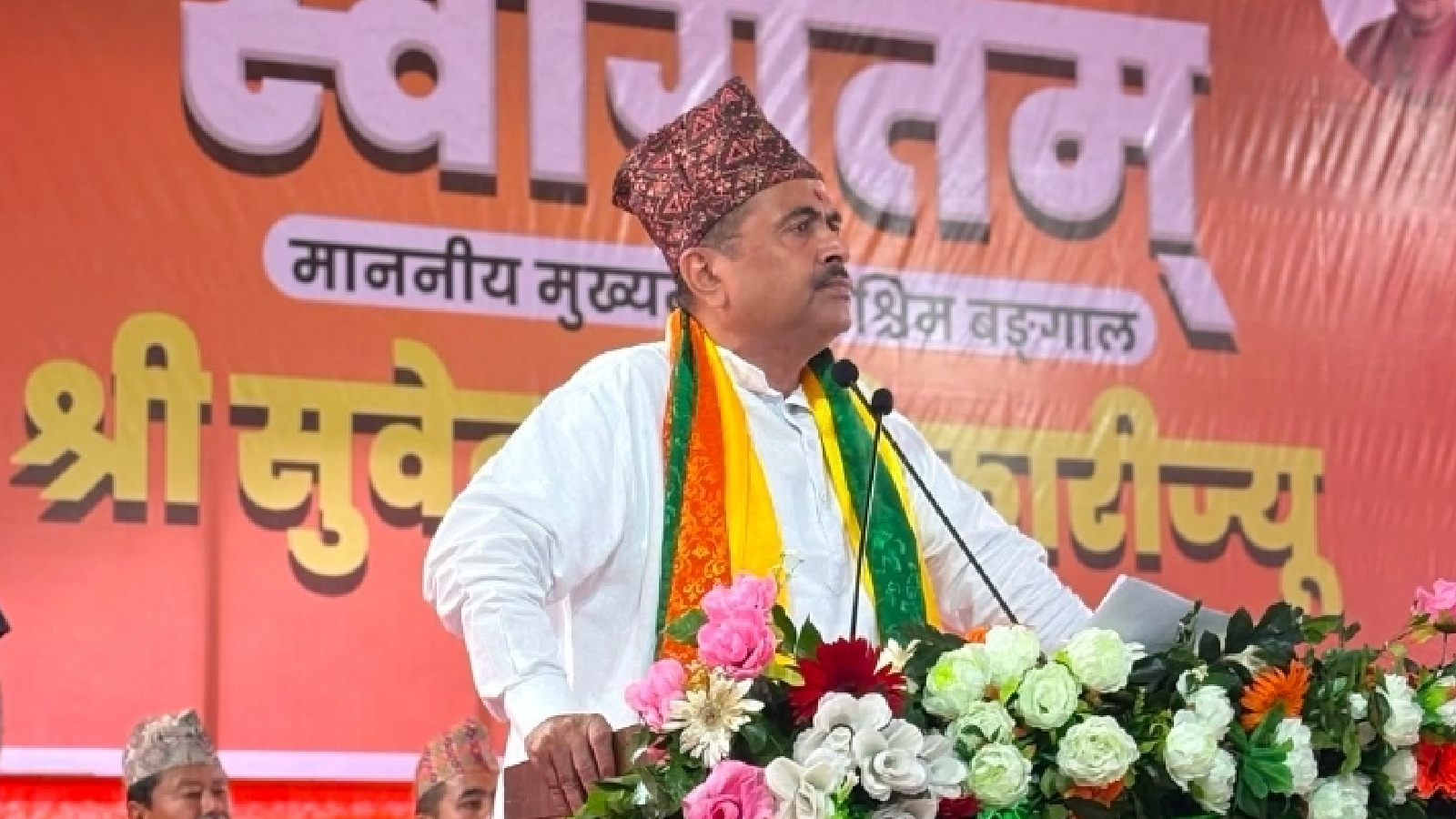
The Suvendu Adhikari-led West Bengal government is expected to introduce the Uniform Civil Code (UCC) Bill in the Assembly on Monday, marking one of its first major legislative initiatives since the Bharatiya Janata Party (BJP) came to power in the state.
The proposed legislation is likely to become the central focus of the ongoing Budget session and could trigger a significant political confrontation with both factions of the Trinamool Congress (TMC), which split following the 2026 Assembly elections.
Common Civil Framework Proposed Across Communities
The proposed Bill aims to establish a common civil framework governing marriage, divorce, succession, inheritance and adoption, replacing religion-based personal laws with a uniform legal structure applicable to all citizens. The government has stated that constitutional exemptions available to certain protected communities will continue to remain in force.
The BJP has described the legislation as the fulfilment of a key election promise and said it is intended to ensure equality before the law irrespective of religion. Opposition parties, however, have questioned whether reforms affecting personal laws should proceed without wider public consultation.
MUST READ: India, Seychelles sign key defence and economic agreements
Election Promise Moves Towards Implementation
The move comes within months of the BJP assuming office, ahead of the six-month implementation timeline outlined in its Assembly election manifesto. During the election campaign, Union Home Minister Amit Shah had stated that a BJP government in West Bengal would implement the Uniform Civil Code within six months of taking office as part of its governance agenda.
The state government has indicated that the legislation will follow procedural models adopted by BJP-ruled states where similar legal frameworks have already been introduced.
ALSO READ: Sonam Wangchuk calls for nationwide hunger strike support
Government Cites Constitutional Procedure
The government has maintained that the proposed law will be implemented through constitutional procedures similar to those followed in Gujarat, Uttarakhand and Assam. Officials have also said the legislation seeks to establish a uniform legal framework while respecting constitutional protections available to specific communities.
The administration has presented the proposal as a governance measure designed to promote legal uniformity by replacing separate personal laws governing family matters.
“BJP’s position on the Uniform Civil Code (UCC) in India has long been clear and consistent. It has been a part of the BJP’s election manifesto and political commitment — there is no secrecy or hidden agenda behind it,” West Bengal BJP president Samik Bhattacharya wrote on his social media handle on Saturday.
BJP Clarifies Tribal Communities Will Remain Exempt
Ahead of the Bill’s introduction, West Bengal BJP president Samik Bhattacharya reiterated that the Uniform Civil Code has long been part of the party’s political commitment and election manifesto.
He clarified that Scheduled Tribe communities recognised under Articles 366(25) and 342 of the Constitution would remain outside the scope of the proposed legislation. According to Bhattacharya, their customs, traditions and constitutionally protected rights would continue to be safeguarded.
He also rejected claims linking the proposed law to population control or family-size regulation, stating that such provisions are not included in the legislation.
Opposition Raises Constitutional and Political Concerns
The Trinamool Congress has announced its intention to oppose the Bill inside and outside the Assembly. During a strategy meeting with party legislators and senior leaders, TMC chairperson and former chief minister Mamata Banerjee reportedly directed party members to mount a coordinated opposition to the proposed legislation.
According to the party, the Bill raises broader questions relating to constitutional safeguards, social consensus and India’s pluralistic character. Senior TMC leaders have also argued that reforms involving personal laws should follow extensive consultation before being introduced.
Leader of the Opposition Ritabrata Banerjee has also questioned the pace at which the government is moving with the legislation. He said issues relating to personal laws, marriage and family matters require detailed discussion and wider public consultation before any legislative changes are enacted. Ritabrata said, “I don’t understand what the hurry is. A matter like the UCC requires extensive discussion and consultation”.
The opposition has maintained that the debate surrounding the Uniform Civil Code involves both legal and political considerations.
Two Additional Bills Also Likely During Assembly Session
Apart from the Uniform Civil Code Bill, the West Bengal government is also expected to introduce two additional legislations during Monday’s Assembly proceedings.
These include the West Bengal Public Safety and Control of Anti-social Activities Bill, 2026 and the West Bengal Maintenance of Public Order (Amendment) Bill, 2026. According to the government, the proposed laws seek to strengthen measures against organised anti-social activities, including extortion, while addressing public disorder, vandalism and attacks on police personnel and other public servants.