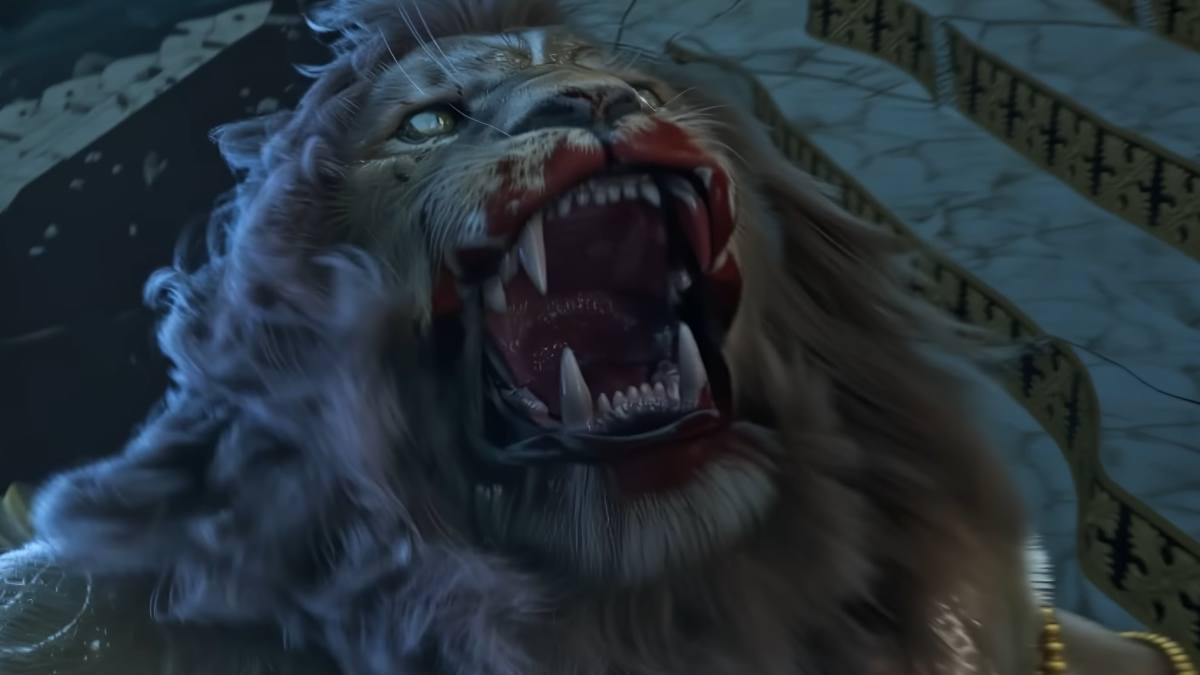
A recent film hitting theatres has unexpectedly challenged Bollywood norms despite being an animation project with a modest budget of just ₹20 crores, as claimed by debut director Ashwin Kumar. Mahavatar Narsimha is already making history with its initial success. Audiences aren’t merely watching the film—they’re treating cinema halls as temples, flocking to witness Lord Vishnu in 3D animation graphics.
Adding to the unique cultural phenomenon, members of the Vaishnava community are organising naam sankirtan outside multiplexes before each screening. The Bhakti movement initiated by Sri Chaitanya Dev appears to be reaching new heights, with this film playing a vital role in that spiritual resurgence.
However, every Puranic story holds not just historical and literary value, but also deep philosophical significance. While the historical and literary dimensions can be debated, the philosophical essence—especially from the Indian Vedantic perspective—deserves focused reflection.
Let’s delve into the philosophy behind the tale of Bhakta Shiromani Prahlad and Sri Hari Narsimha, and uncover what this ancient story truly represents.
The Tale from the Puranas
Hiranyakashipu, one of the two demon sons of Maharshi Kashyap and Diti, sought vengeance against Lord Vishnu for the death of his brother Hiranyaksha. However, it’s worth noting that the twin brothers weren’t entirely at fault—they were misguided by their teacher, Shukracharya, who encouraged them to view Vishnu as their ultimate nemesis.
According to the Vishnu Puran, the story actually begins in Vaikuntha, the celestial abode of Lord Vishnu and Goddess Lakshmi. There, Jaya and Vijaya, the divine gatekeepers, were cursed by four innocent young sages—Sanak, Sanandan, Sanatan, and Sanatkumar—for mocking their childlike purity. The curse condemned Jaya and Vijaya to be born as Asuras (demons) for three lifetimes, each ending in liberation at the hands of Lord Vishnu himself.
ALSO READ: Spiritually conscious parenting: A guide to raising awakened children
In their first Asura incarnation, Jaya became Hiranyaksha and Vijaya became Hiranyakashipu. Hiranyaksha, driven by an insatiable hunger for power, tried to conquer Earth but was ultimately slain in battle by the Varaha Avatar—the boar incarnation and third avatar of Lord Vishnu.
To avenge his brother, Hiranyakashipu performed severe penance and received a powerful boon from Lord Brahma: he could not be killed by any being born of Brahma’s creation—neither human nor animal—neither during the day nor at night, neither on the ground nor in the sky, neither inside a room nor outside, not by any weapon, nor by disease or aging. In essence, he became virtually invincible.
With this boon, Hiranyakashipu declared himself the supreme God, attacking Devlok, defeating Indra in a brutal battle, and enslaving the Devas. He decreed that any worship of Lord Hari Vishnu would be punishable by death across all three worlds.
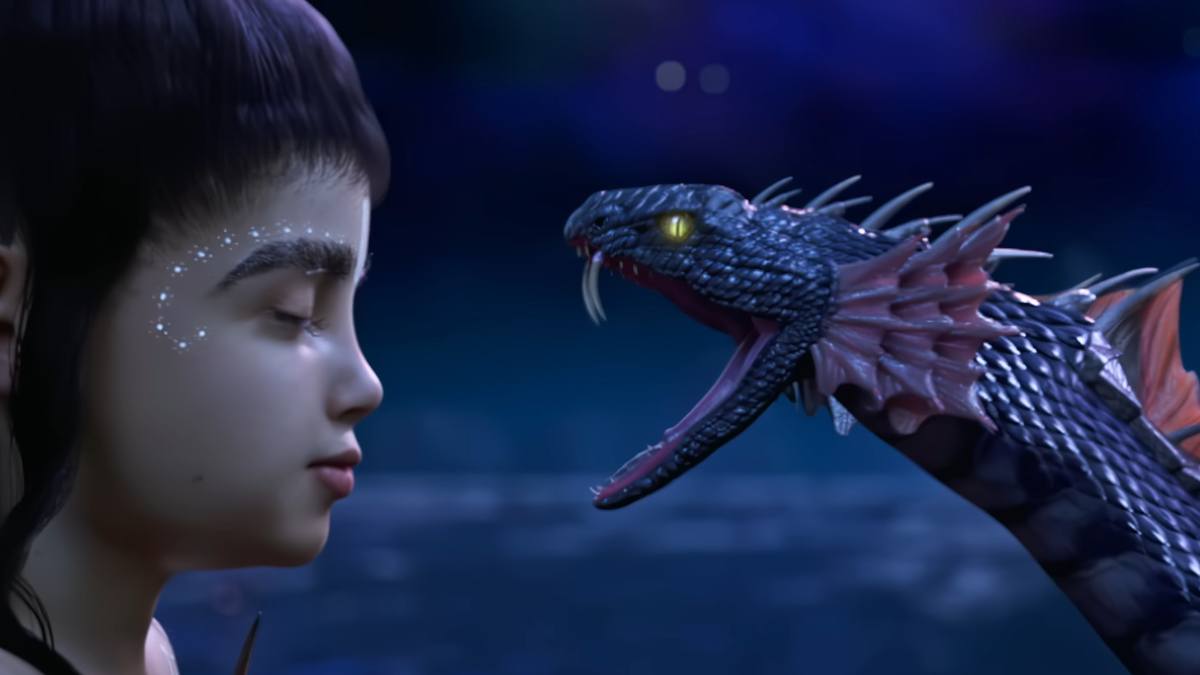
The story takes a dramatic turn when Prahlad, Hiranyakashipu’s own son, becomes an ardent devotee of Lord Vishnu. (screenshot)
But the story takes a dramatic turn when Prahlad, Hiranyakashipu’s own son, becomes an ardent devotee of Lord Vishnu. This enraged Hiranyakashipu, who viewed Vishnu as his mortal enemy. After multiple failed attempts to kill his son—including throwing him from a mountain, drowning him in the ocean, tossing him into a snake pit, and trying to crush him with wild elephants—each time Lord Vishnu protected Prahlad.
Eventually, Holika, Hiranyakashipu’s sister, tried to kill Prahlad by sitting him on her lap in a blazing fire, confident in her immunity to flames. But the flames consumed Holika, while Prahlad remained unharmed, continually chanting the name of Lord Hari.
The Vedantic Lens
Why did Maharishi Vedvyasa, the sage behind the Vishnu Puran, preserve and share this tale? One reason is to highlight that unwavering bhakti (devotion) can triumph over evil. This message is both spiritually uplifting and morally instructive. But there’s a deeper, more philosophical angle to the story—each character symbolizes the inner forces within all of us.
Hiranyakashipu represents vices such as pride, lust, vengeance, tyranny, and above all, ignorance. Prahlad, on the other hand, embodies virtues like purity, kindness, forgiveness, detachment from material desires, and innocence. When inner ignorance overpowers innocence—when lust and pride dominate the mind—the Supreme Being intervenes. Sometimes, this comes as the unexpected loss of security or an unforeseen event that humbles us, purifying our soul with the fire of divine knowledge. Lord Narsimha, the fierce half-lion, half-man incarnation, is the symbolic manifestation of this fire of knowledge.
ALSO READ: Spiritual art of giving: How soulful generosity shapes who we are
We must not fall into superstition or expect miracles that defy reason. If we do, we risk losing the deeper message our Rishis sought to convey—messages rooted in Vedantic wisdom. Faith is powerful, but blind faith can become a force of darkness when stripped of understanding.
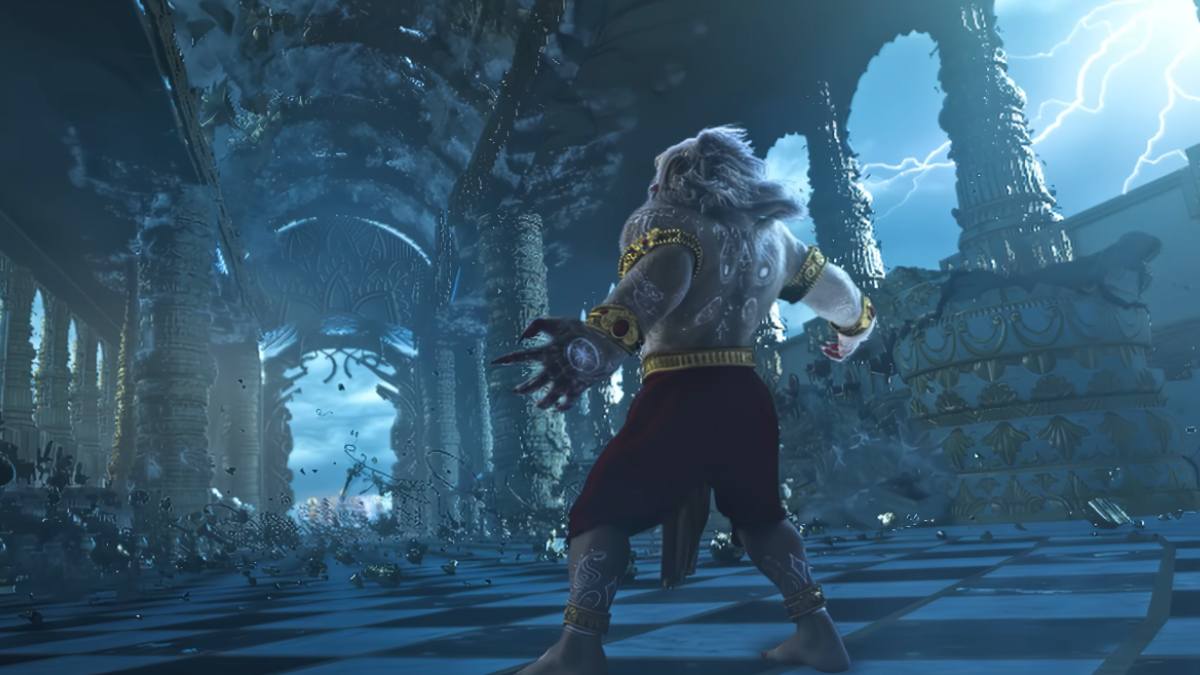
Hiranyakashipu met his end through Narasimha Avatar—an entity not born by conventional means. (screenshot)
Hiranyakashipu met his end through Narasimha Avatar—an entity not born by conventional means. He emerged from a broken pillar (symbolising the unexpected shock that shatters pride and ignorance), at dusk (neither day nor night), in a form that was half-man, half-lion (neither human nor animal), and killed Hiranyakashipu on his lap (neither on nor above the ground), at the threshold of a room (neither inside nor outside), using his fingernails (not a weapon). The symbolic fulfillment of every condition in Brahma’s boon is profound, underscoring that only the eternal Supreme, the Paramatman, is truly immortal.
Also significant is the fact that both Hiranyaksha and Hiranyakashipu were Brahmins—sons of Rishi Kashyap. This reminds us that vice is not exclusive to any caste. Claims that Asuras were oppressed non-Aryans misinterpret the Puranic framework, just as attempts to carbon-date Devas and Asuras reduce deep allegorical truths to mere historic curiosities. These stories reflect the dual qualities—divine and demonic—within us. It is up to us to choose: will we live as Hiranyakashipu or as Prahlad?
In their subsequent incarnations, Jaya became Ravan and Vijaya became Kumbhakarna, both slain by Lord Rama. In their final birth, they became Shishupal and Dantavakra, who were killed by Lord Krishna. After fulfilling the curse, they were finally liberated and returned to Vaikuntha.
Peace and harmony—across caste, gender, and belief systems—were symbolically restored in the form of Indradhanush (a rainbow). While utopian, this vision is precisely what Rishi Vedvyasa urges us to aspire toward: equal vision.
Let us celebrate this movie. Watch it as many times as possible. Sing kirtans. Assemble, gather, and support the poor by drawing inspiration from the compassion of Prahlad. But also, let us read and understand the intentions of the Rishis. The story is not merely entertainment, nor a tool to promote superstition—it is a timeless call for self-reflection, moral clarity, and inner transformation.