Written by Mahek Chhabra
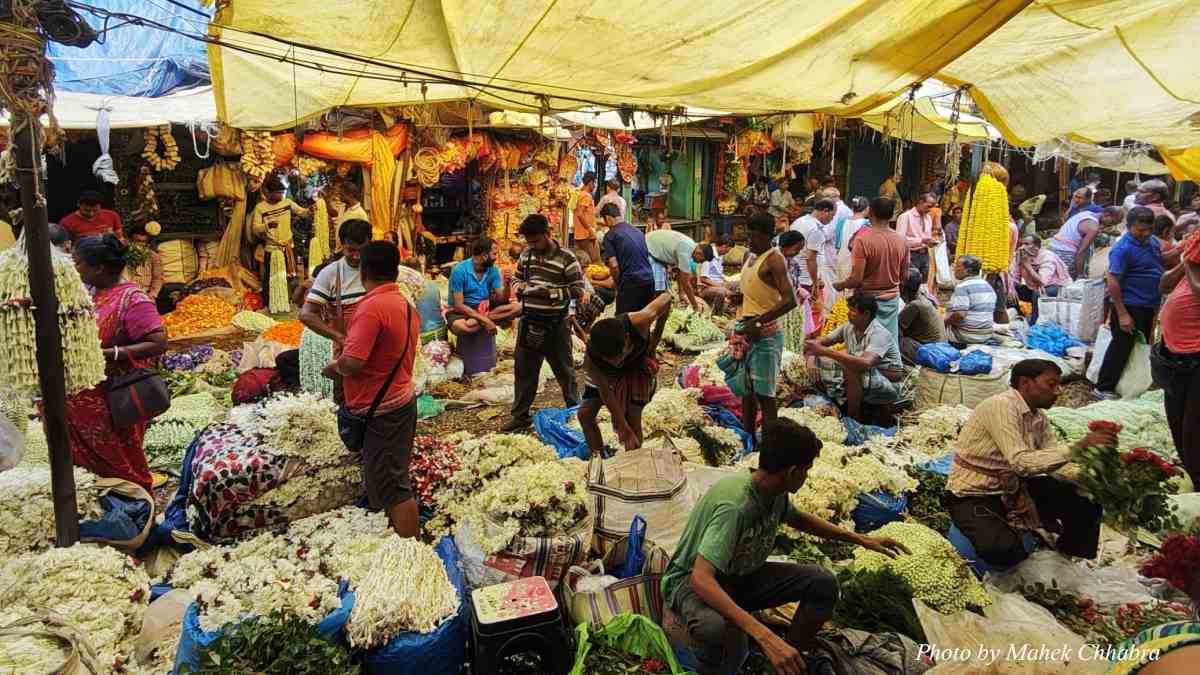
At the Mullick Ghat flower market, the fragrance of fresh blooms masks the fatigue of hundreds who live and labour behind the scenes. These are not just vendors—they are farmers, middlemen, and daily wage workers whose entire livelihood depends on the fleeting life of a flower.
Their mornings begin in darkness, long before the first train reaches Howrah. Some arrive from distant villages, others never leave—sleeping in their shops to save rent and time. For them, the ghat isn’t a place of business, it’s a way of life. They brave the seasons, price crashes, and spoilage—all for a trade that pays by the bunch and punishes by the hour.
While the Mullick Ghat flower market is famed for its colour and chaos, the real story lies in the lives of its vendors.
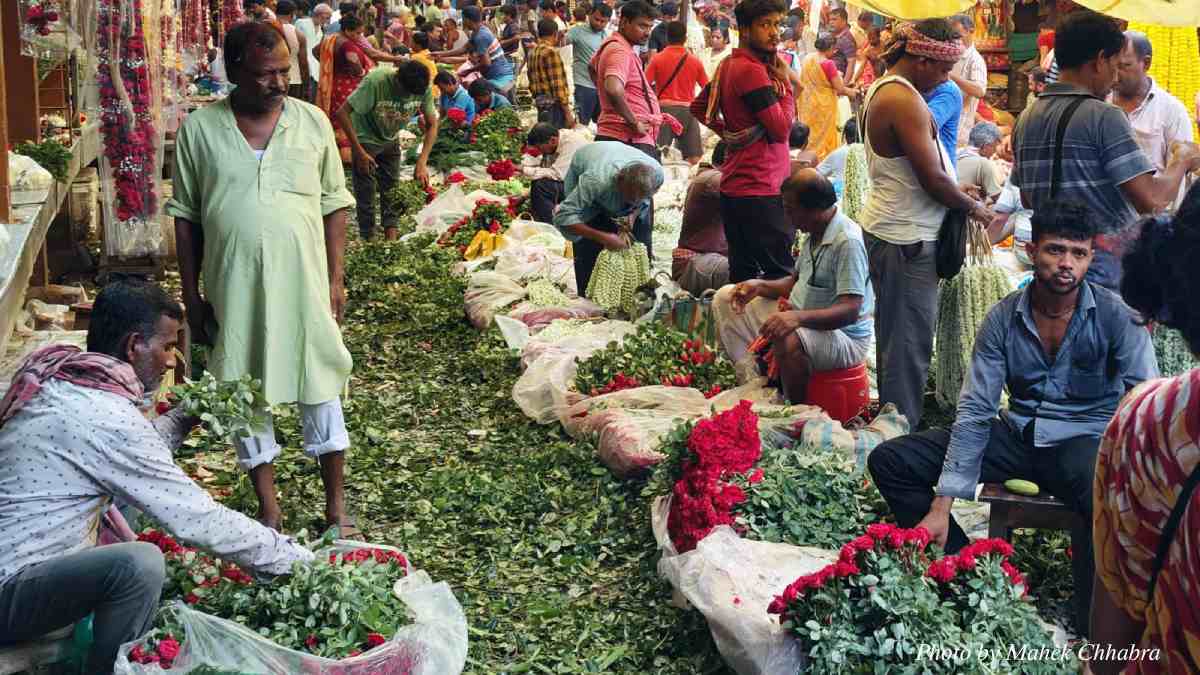
For the vendors, every petal carries weight—not of beauty, but of survival. (Photo by Mahek Chhabra)
“I was born into this,” says Aarshiv Mishra, his hands deftly sorting roses still damp with dew. Born and raised in Kolkata, Aarshiv represents the third generation of his family working at the ghat. “It’s not just a business—it’s our legacy. I’ve been here for 15, maybe 20 years now. We’ve seen the city change, but the rhythm of the market remains the same—fast, unforgiving.”
The people who keep Mullick Ghat flower market alive
Somnath, who owns a small shop inside the market, has lived most of his adult life on these very premises. “We’re mostly from places like Midnapore and Ranaghat. The flowers come from there too,” he says. “Farmers travel in with the stock each day, while shop owners like us sleep here. There’s no time to waste. We live where we work.”
Why stay in a business so uncertain, where prices change daily and earnings are never guaranteed?
ALSO READ: Did you know it took a shipwreck and deaths of over 700 passengers to forge the Kolkata-Puri rail link?
Gour smiles quietly. “It’s what we know. We set our prices based on how the market moves that day. Some days are good, some days we barely break even.”
Among the many who commute daily is Gour Haripal, a farmer from Midnapore. “I grow the flowers myself,” he says, wiping sweat off his brow. “We leave home in the dark, reach here by 5 am or 6 am. Another round of flowers comes by 12 noon or 1 pm. We fix prices depending on the market. Hibiscus and roses—they’re the most unpredictable.”

The vendors often have to dump the flowers that do not sell on the banks of the Hooghly river, adding to stench and filth. (Photo by Mahek Chhabra)
But unpredictability doesn’t just come in prices—it comes in losses too. Prasanjit Bhaumik, a seasoned vendor of over 20 years, understands this all too well. “In summers, the flowers rot fast. If they don’t sell within hours, we dump them. That’s money gone. Huge losses.” Originally from Midnapore, he doesn’t travel daily anymore—“only weekly, sometimes monthly. I work under a shop owner, get paid based on sales. Weddings—November to February—that’s our golden time.”
For Hemant, another worker from Bagnan, the summer months are particularly harsh. “We get paid based on daily sales. When sales drop, so does our income. We survive one day at a time.” He gestures to the bustling lanes. “Most flowers are sold in bulk in the morning by local store runners. After that, the rest of the day is slow.”
ALSO READ: Kolkata’s Saturday coin market: Where history is sold by the Rupee
While most stick to local varieties, Sonu Kumar brings in something different. Hailing from Bihar, he deals in imported flowers—“lilies, orchids—from Bangalore and Pune,” he shares. His income is more stable, with a monthly payment, but he raises concerns about the ghat’s condition. “The waste—the unsold flowers, the stink—it affects the river, the people living around here. It’s not just dirt. It’s a slow decay of everything.”
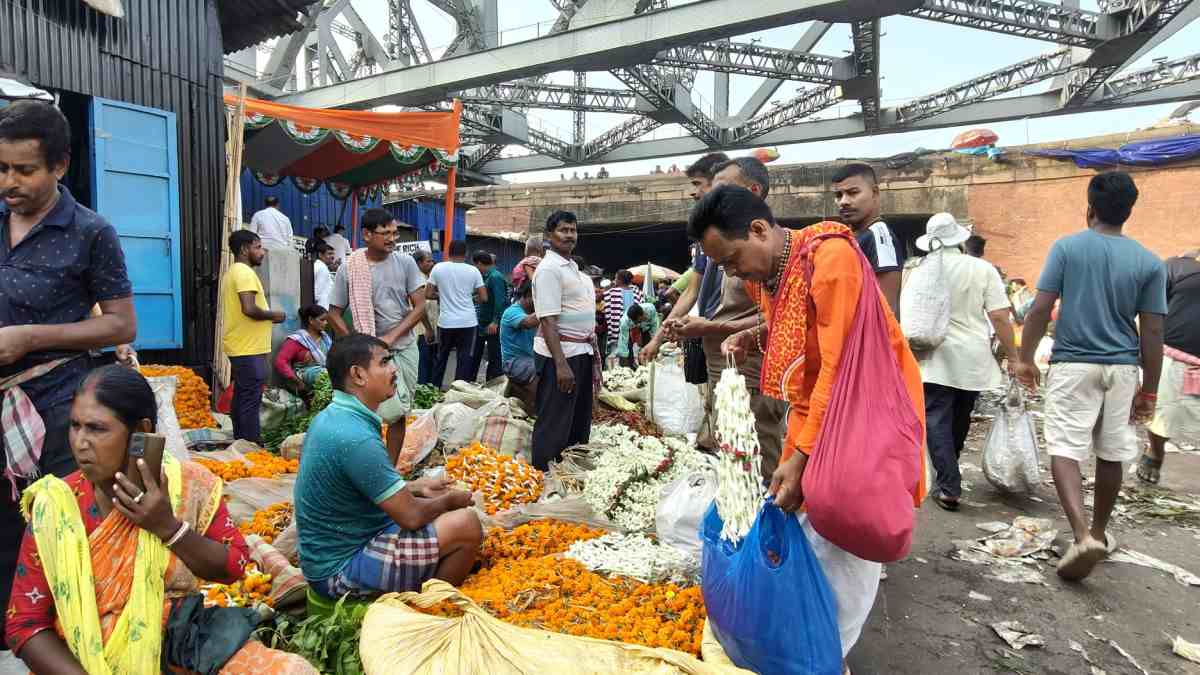
Beneath the bright colors and fleeting fragrance, lie stories of endurance and economy, of hands that toil quietly while the city sleeps, so it can wake to the scent of fresh blossoms. (Photo by Mahek Chhabra)
The Mullick Ghat flower market is not just a trade; it’s a lifeline, a legacy, a daily gamble. For these men, every petal carries weight—not of beauty, but of survival. Beneath the bright colors and fleeting fragrance, lie stories of endurance and economy, of hands that toil quietly while the city sleeps, so it can wake to the scent of fresh blossoms.