The Nationalist Citizens Party of India (NCPI), a relatively obscure political outfit with limited electoral presence, has suddenly emerged as a major talking point in national politics after 20 rebel Trinamool Congress (TMC) MPs announced their merger with the party.
The development has intensified the political crisis within the TMC and transformed NCPI from a fringe regional organisation into a parliamentary player with significant influence.
According to reports, the merger has also provided the BJP-led National Democratic Alliance (NDA) with an unexpected ally while raising questions about the future political trajectory of NCPI.
NCPI emerges as surprise player in TMC political crisis
Registered with the Election Commission of India as a Registered Unrecognised Political Party (RUPP) on January 20, 2023, NCPI was formed with a focus on regional issues, particularly tribal representation and welfare.
Although headquartered in Howrah, West Bengal, the party’s early political activities were concentrated in Tripura, where it attempted to establish itself as an alternative political force.
NCPI, founded in 2023, emerged with a focus on tribal welfare and regional issues, beginning its political outreach in Tripura despite being headquartered in West Bengal. (image: social media)
News18 reported that NCPI was founded by former Tripura minister and tribal leader Paban Kumar Das. The party was initially projected as a platform focused on tribal welfare, nationalism, governance reforms and development-oriented politics.
The party has also highlighted issues such as national security, infrastructure expansion, anti-corruption measures and greater representation for marginalised communities.
From Tripura Assembly debut to limited electoral impact
Despite its ambitions, NCPI had a limited electoral record before its sudden rise in national politics.
NDTV reported that the party made its electoral debut during the 2023 Tripura Assembly elections, aiming to represent communities in areas connected with the Tripura Tribal Areas Autonomous District Council (TTAADC) region.
The party fielded candidates in seven constituencies, but nominations in four seats were rejected. Eventually, NCPI candidates contested only two constituencies under the party symbol.
The party secured 536 votes in Chawmanu and 286 votes in Kailashahar, taking its total vote count to 822. Another NCPI-backed independent candidate contested from Ambassa and received 376 votes, bringing the broader tally to 1,198 votes.
None of the candidates came close to winning.
Questions over NCPI’s ground presence after 2023 elections
Several former NCPI candidates claimed that the party’s activities declined after the Tripura polls.
Speaking to NDTV, former candidates alleged that party representatives had contacted them before the elections but later disappeared after the campaign period ended.
The report quoted candidates saying that organisational activity became inactive after the election, with communication between local workers and the party leadership reducing significantly.
NCPI leader Shantanu Dey reportedly said the party had initially planned to contest the 2023 West Bengal panchayat elections but failed to move ahead due to internal issues and resource constraints.
NCPI’s Organisational Structure And Leadership
The party’s organisational background has also attracted attention following the merger announcement.
According to NDTV, Election Commission records showed that NCPI received total donations of around Rs 1.13 lakh. Party documents list Shewly Kundu as treasurer, while Uttiya Kundu serves as the party president.
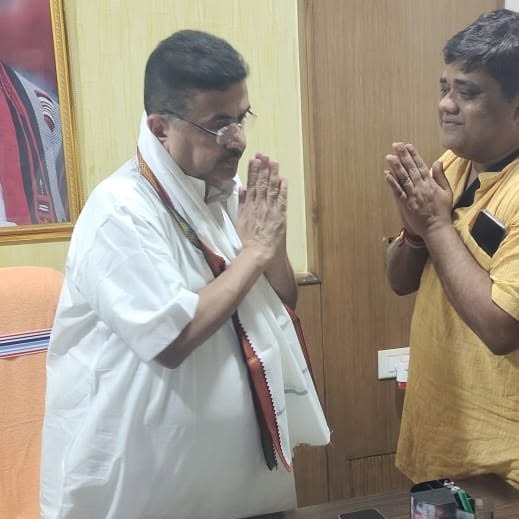
Post featuring Uttiya Kundu alongside BJP leader Suvendu Adhikari has drawn attention. (Image credit: Uttiya Kundu/Facebook)
The report noted that Shewly Kundu is also associated as a director with two organisations registered at the same address as the political party in Howrah, West Bengal — Biswabazar Private Limited and Paschim Banga Asangathita Mahila Karmi Association.
NDTV also highlighted a social media post by Uttiya Kundu in which he shared a photograph with BJP leader and West Bengal Leader of Opposition Suvendu Adhikari. The report mentioned the post while examining the background and political links of the party leadership.
Before the TMC merger, NCPI had little parliamentary presence and remained largely unknown outside parts of eastern India.
Why did TMC rebels choose NCPI?
The decision by 20 rebel TMC MPs to merge with NCPI has become the most significant turning point in the party’s history.
News18 reported that the dissident MPs considered multiple political options before choosing NCPI. Joining the BJP directly could have strengthened allegations from the TMC leadership that the rebellion was backed by the saffron party.
Creating a new political organisation could also have involved lengthy legal and procedural challenges.
Since NCPI already had registration with the Election Commission, the merger provided the rebels with an existing political identity and organisational framework.
MUST READ: TMC dissolves all frontal committees amid MLA rebellion, announces party restructuring
20 TMC MPs merge with NCPI, giving party national spotlight
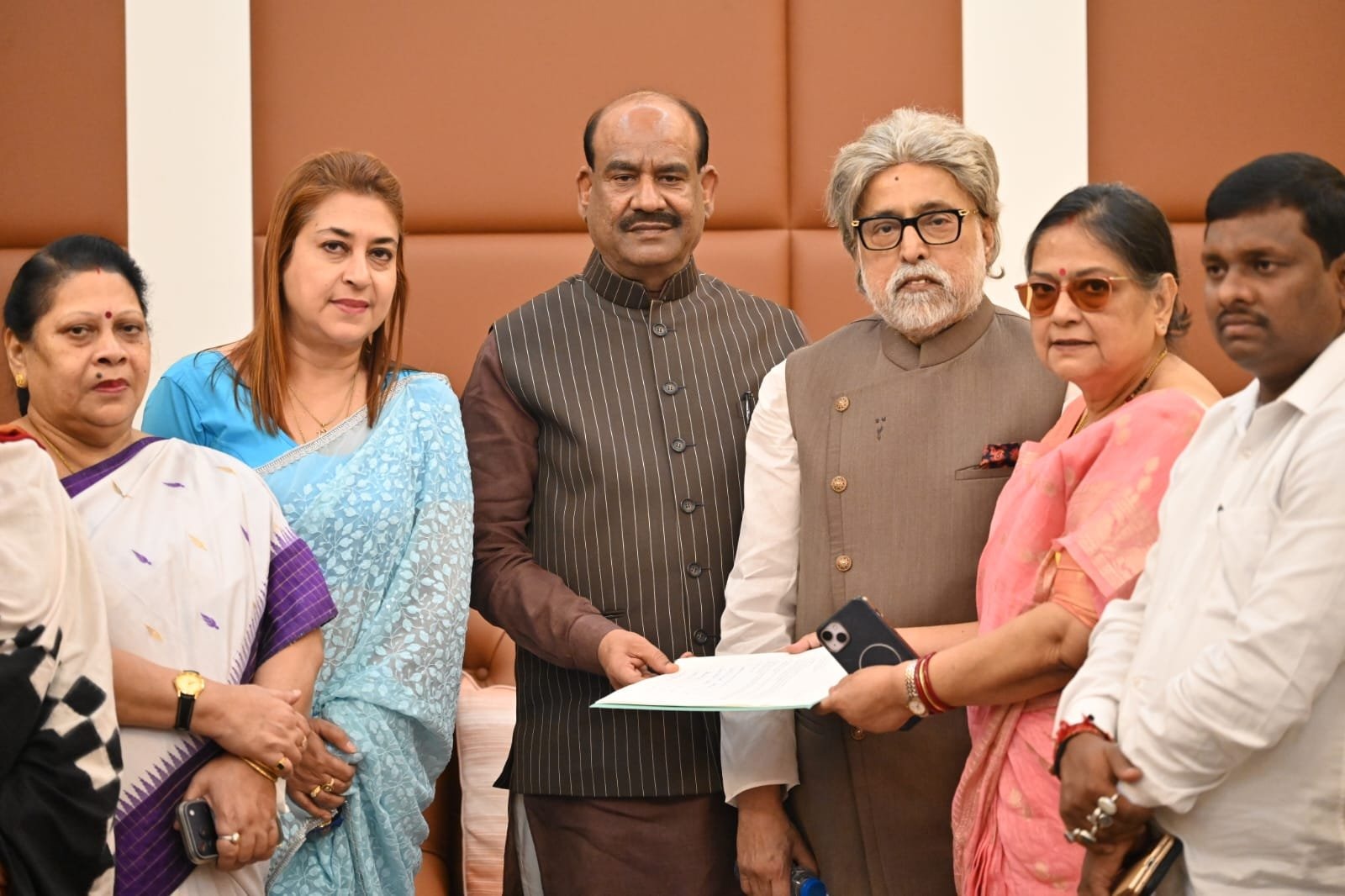
Following the announcement, rebel TMC MPs met Lok Sabha Speaker Om Birla and sought separate seating arrangements in Parliament.
TMC leader Sudip Bandyopadhyay confirmed that the rebel group had merged with NCPI, describing it as a regional political party.
With 20 Lok Sabha MPs joining its ranks, NCPI’s political relevance changed dramatically overnight.
News18 reported that the party has now gained a significant presence within the NDA ecosystem and emerged as one of the prominent allies outside the BJP.
Impact on TMC, NDA and future of NCPI
For the TMC, the merger represents a major internal challenge and raises questions over party unity and parliamentary strength.
For the BJP-led NDA, the entry of 20 former TMC MPs provides a political boost and strengthens its position in eastern India.
For NCPI, the transformation has been unprecedented. A party that struggled to gain electoral visibility in its first major contest now finds itself at the centre of national political developments.
The coming months will determine whether NCPI becomes a long-term political force or remains primarily a vehicle for the former TMC MPs.