Written by Shruti Singh
On the stormy evening of May 25, 1887, a steamship named Sir John Lawrence left the banks of Chotulal Ghat—today’s Mullick Ghat in Kolkata—carrying hundreds of pilgrims bound for the sacred Jagannath Dham in Puri. What should have been a voyage of devotion turned into a harrowing chapter in maritime history when a violent cyclone struck the Bay of Bengal, capsizing the ship and claiming the lives of more than 700 people, most of them women and children.
The wreck of Sir John Lawrence stands as one of colonial India’s deadliest maritime disasters. But from that devastation emerged a demand for change—ultimately leading to the establishment of the critical railway link between Kolkata and Puri.
When Pilgrimage Meant Peril
Back in the late 19th century, thousands of pilgrims from Calcutta (now Kolkata) journeyed to Puri for religious pilgrimages. But there was no direct railway line. Instead, the journey involved a mix of pedestrian travel, bullock carts, and steamship routes that navigated unregulated rivers and storm-prone coastal waters.
Retired security advisor of the Kolkata Port Trust (now Syama Prasad Mookerjee Port), Goutam Chakraborty, explained, “At that time, large numbers of pilgrims from Calcutta used to go to Puri for their pilgrimage,” Chakraborty explained. “The primary mode of transport was through river and sea — a risky journey, almost rudimentary, because of how unregulated and exposed the waterways were.”
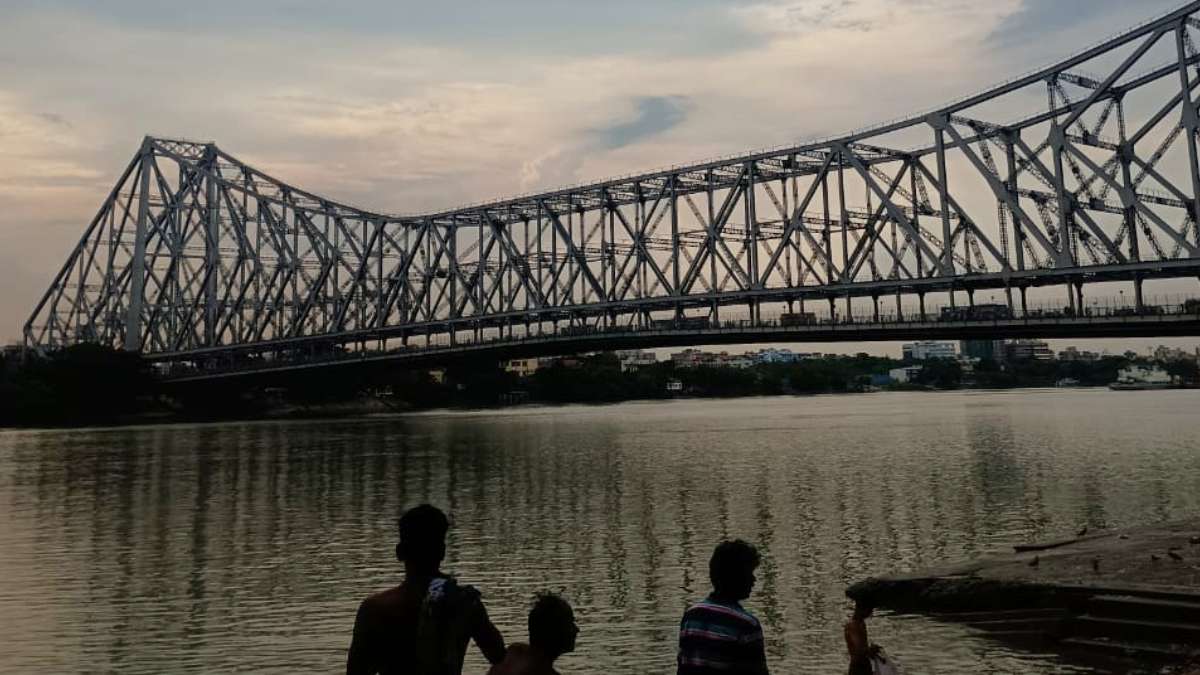
The place in present day from where the vessels would begin their journey. (Photo by Shruti Singh)
Private vessels, like those operated by McLin & Company, were the mainstay of such maritime travel. Sir John Lawrence was among several vessels that departed that day, including tugboats. But the sea was merciless. When the cyclone hit, the ships stood no chance. Wreckage washed ashore for days, and not a single soul aboard the Sir John Lawrence survived.
A Disaster That Stirred a Nation
The public response was overwhelming. News of the disaster traveled far, stirring editorials in India and even in British newspapers. The outcry wasn’t just about the tragedy—it was about why it happened and how it could have been prevented.
ALSO READ: Kolkata’s Saturday coin market: Where history is sold by the Rupee
“This wreck became the immediate trigger for what had been a long-pending demand — the introduction of railways between Calcutta and Orissa,” Chakraborty said. Though proposals for a rail link had existed since the 1860s, they had failed to gain traction. But the scale of the tragedy forced authorities and promoters like Marshman and Stephenson to act with urgency.
The call for a more inclusive and safe railway service—free from caste or regional barriers—gained unprecedented momentum. Railway tracks were soon extended to Balasore and eventually toward Puri, providing a safer, land-based route for pilgrims that significantly reduced the risks associated with sea travel.
A Plaque for the Perished, A Poem for the Pain
To honour the lives lost, a group of British women in Calcutta erected a marble memorial plaque at Chotulal Ghat (Mullick Ghat). The bilingual inscription still stands today—a quiet sentinel to a tragedy that changed the way people traveled between Bengal and Orissa.

Today, the inscriptions on the plaque, thanks to lack of maintenance, are hardly readable. (Photo by Shruti Singh)
The English inscription reads, “The stone is dedicated by a few English women to the memory of those pilgrims, mostly women, who perished with the Sir John Lawrence in the cyclone of 25th May 1887.”
ALSO READ: In a world of emails, this man still writes letters for others outside Kolkata GPO — Meet Shyam Narayan Shaw
“The women were so much in pain,” Chakraborty said, adding, “they came down and installed this plaque after the incident in 1887.”
The disaster also left a deep emotional impact on a young Rabindranath Tagore, who would later channel the collective sorrow into his poem Sindu Tarango, offering a lyrical tribute to the lives swallowed by the sea.
Railways Born of Ruin
The Sir John Lawrence tragedy was more than a maritime mishap—it was a turning point. It prompted the British colonial administration to prioritize rail connectivity between Kolkata and Orissa. What followed was a systematic transformation in regional infrastructure, eventually ensuring that millions could undertake the pilgrimage to Puri safely and reliably.
Today, as trains speed through the Bengal-Odisha corridor, connecting lives and faiths across states, the railway link silently echoes a past marked by loss—but also resilience. It stands as proof that from the darkest moments can emerge paths of progress.