Written by Mahek Chhabra
Nestled in the heart of Kolkata, College Street stands as a timeless testament to India’s reading culture. Known as boipara (the book colony), it is home to hundreds of bookstalls that have fed generations of students, scholars, and readers. But in a world now dominated by screens, apps, and e-books, this iconic stretch of literary life is struggling to turn its pages.
Can the human chain that has sustained College Street for decades survive the digital tide?
Anil Kumar Singh, 55, has been selling Bengali books here for over 30 years. From a humble stall that costs him just ₹150 in monthly rent and a yearly license fee of ₹350, he paints a grim picture of the present. “Sales have dropped drastically,” he says, scanning his thinning collection. “Even though we sell books for less than half their original price, very few people stop to buy them now. Online platforms have changed everything.”
A few steps down the street, Sheikh Hussain, who inherited the shop from generations before him, echoes the concern. Selling mainly literature and novels, he says years in the trade have sharpened his instinct. “We can still tell who’s a genuine reader the moment they approach the stall,” he says. “Apps may offer free PDFs, but the real fun of reading a book is still here and there are buyers. However, the problem is—they’re fewer now. Even students from Calcutta University and Presidency drop by, but only a handful actually browse or buy.”
ALSO READ: Kolkata’s Saturday coin market: Where history is sold by the Rupee
Ruma Roy, 52, one of the few women in the business, has been here since her youth. “I grew up between books and black tea,” she smiles. “My father used to say: the street teaches you more than schools.” Despite waking at 5 am to set up her stall, she’s unsure of what lies ahead. “The market is shrinking. Even selling books at one-third of the price doesn’t guarantee sales. Many stalls have shut down permanently. We’re holding on just to run our families.”
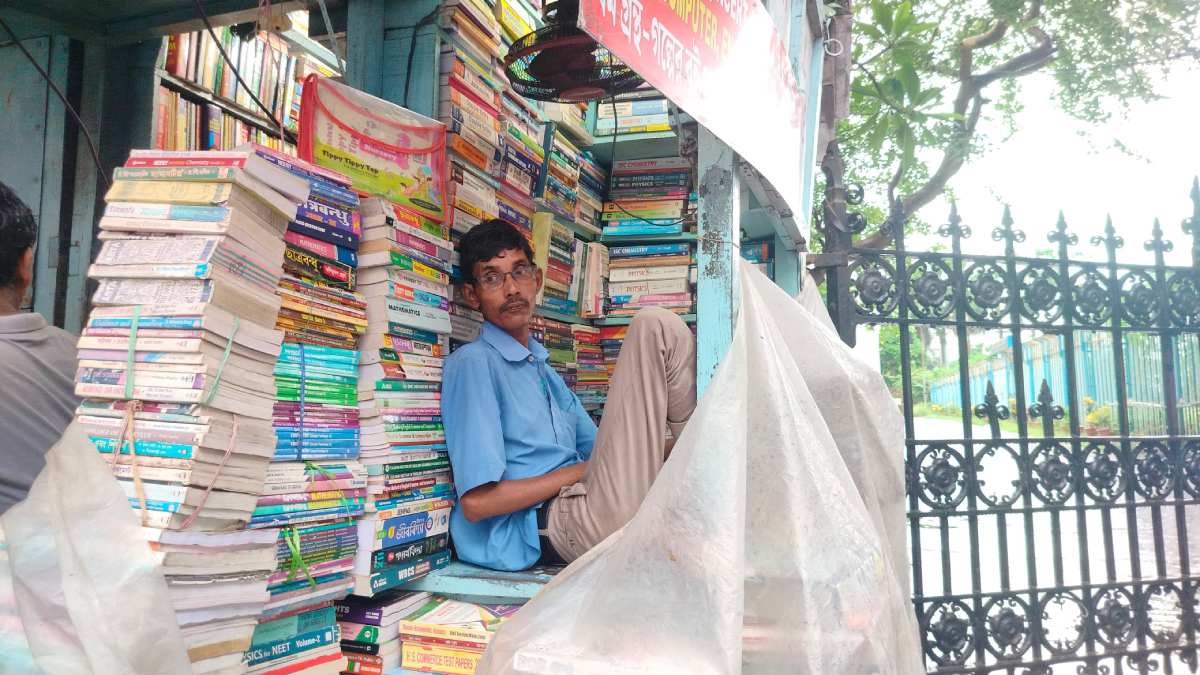
With fewer buyers on the street, are changing academic patterns also deepening the crisis? (Photo by Mahek Chhabra)
But with fewer buyers on the street, are changing academic patterns also deepening the crisis?
Bijoy Dey, a stall worker earning ₹300 a day, says the frequent syllabus changes have hit them hard. “Earlier, books stayed relevant for years. Now, every year the syllabus changes—so our stock becomes outdated overnight,” he explains, surrounded by unsold CBSE and college textbooks.
“Students want the latest editions, and we can’t update fast enough. Even online sellers buy from us in bulk, polish the books, and resell them at higher prices. But we’re left with piles we can’t move.”
He believes stability is the key: “If the syllabus stopped changing so often, we could plan better, stock smarter, and actually survive.”
ALSO READ: From legacy to lull: The silent decline of iconic Kolkata libraries
Masood Ali, in the trade for 10 years after his father’s 30-year legacy, remembers a time when customers came from across India to buy books at bargain prices. “Now, even covering rent is a challenge. I pay ₹6,000 a month. Sometimes I have to delay the payment, and thankfully the owner understands,” he says. “But I’ve told my children—don’t take this business forward. There’s no future in it anymore.”
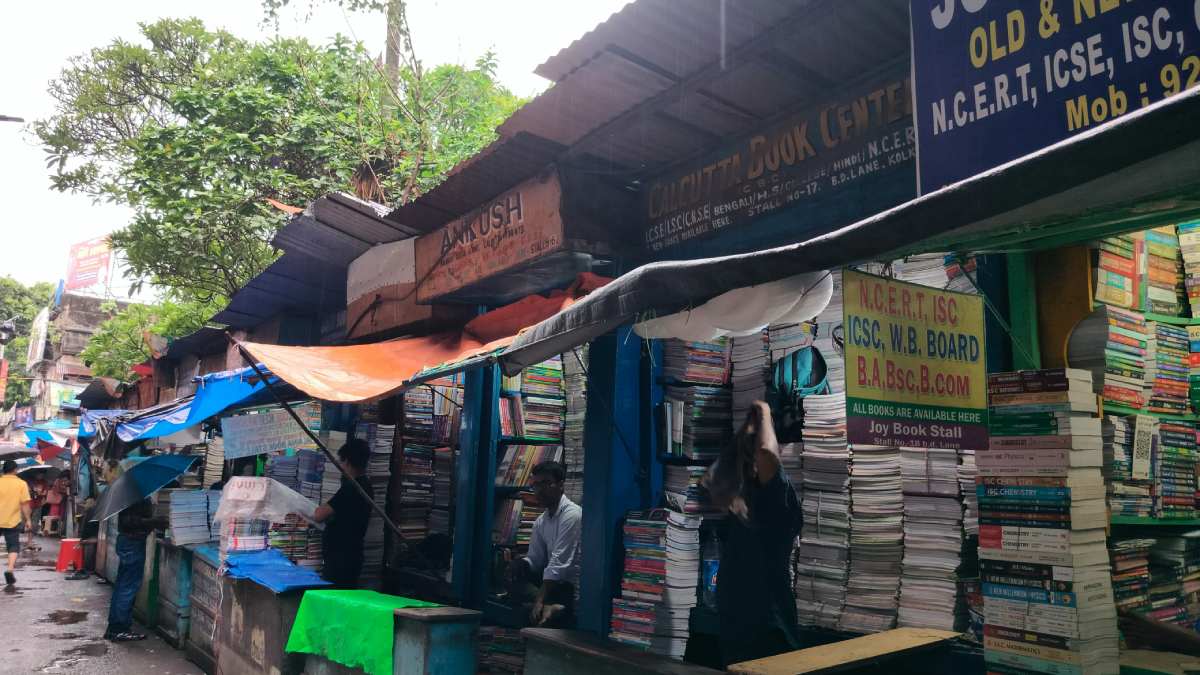
Despite the odds, College Street endures—propped up by the grit of its booksellers and the quiet loyalty of its readers. (Photo by Mahek Chhabra)
Yet despite the odds, College Street endures—propped up by the grit of its booksellers and the quiet loyalty of its readers. Each day they return, unlocking shutters and dusting off spines, not just to sell books, but to keep a culture alive.
And as long as there are students who still browse, readers who still value the weight of a real book, and sellers who still believe in their trade, College Street will continue to turn its pages—one reader at a time.
While College Street may no longer be crowded, but it hasn’t gone silent. Not yet.