Written by Ritika Jain
Upcycling is fast emerging as one of the most practical answers to the growing problem of fast fashion and textile waste. It is not only helping the environment but also creating sustainable livelihoods for many.
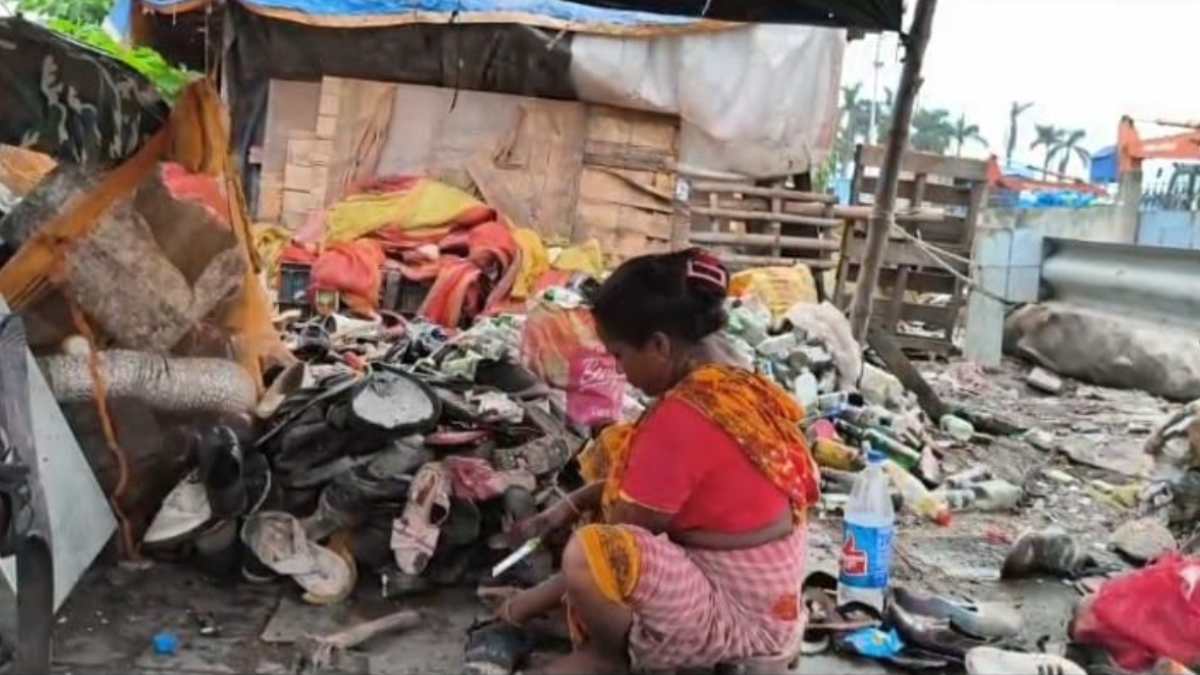
In the dump yard of Kolkata’s Pramod Nagar at the Dum Dum area, a woman named Ajmeri makes her living from discarded shoes. She removes the soles from worn-out footwear and sends them for resale.
“The garbage is only increasing day by day,” Ajmeri says. “That shows how fast fashion is devastating our environment.”
Her work reflects the scale of the problem and the ways in which discarded materials can be repurposed for survival.
A Community Model of Upcycling
Upcycling has also found a more organized form at Endeavour NGO, founded in 2020 by Swati Chatterjee, who has worked NGOs for over 11 years. At Endeavour, women and children are taught to create useful and decorative items from leftover fabrics and donated clothes.
“What others throw away becomes the foundation for creativity — and also a way to earn,” says crafts teacher Nabanita Bhattacharya.
Their products — bookmarks wrapped in cloth, flowers made from fabric, and chokers crafted from discarded thread spools — are sold at exhibitions in schools and colleges. The money earned is shared with the people who made them, offering both income and recognition.
The Hidden Environmental Cost of Fabric
Chatterjee also highlights the environmental cost of textile waste.
“There is not a single cloth or fabric which does not affect the environment,” she says. “But polyester, which is petroleum-based, has a far greater impact. It is non-biodegradable and contributes to microplastic pollution.”
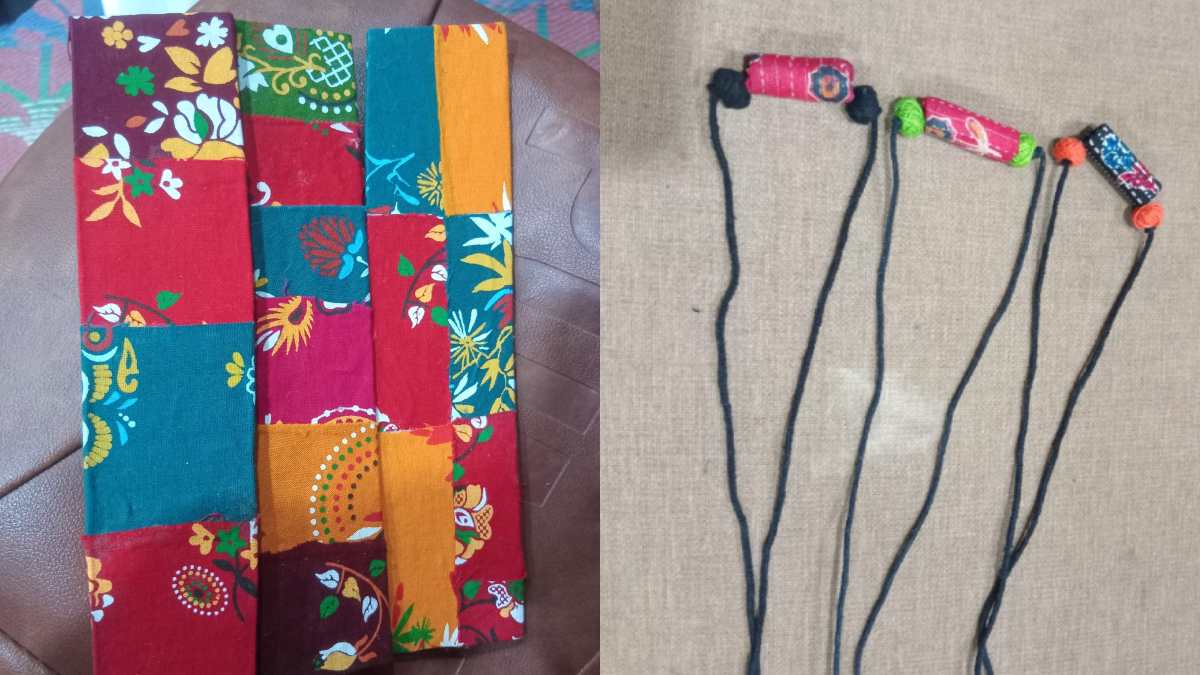
At Endeavour NGO, people from the community make bookmarks wrapped in cloth, fabric flowers, and chokers from discarded thread spools. (Photos by Ritika Jain)
She adds, “Other synthetic textiles also fall in this category — they do not biodegrade and often release toxins into the environment.”
Chatterjee also points out another overlooked issue. “Shoes are often dumped with general waste, which shows the loss of segregation in our waste system. Upcycling is a meaningful step, but not a complete solution.”
When Fashion Comes Full Circle
Upcycling mirrors the cyclical nature of fashion itself. While fashion is often seen as time-bound, it is also recurring. Trends from the 90s, for example, are making comebacks today. In a broader sense, fashion has always been about creating something new out of something old — an idea at the very heart of upcycling.
From women in community workshops to workers in dump yards, upcycling proves that sustainability is not an abstract concept. It is a practical, recurring act of creativity — one that helps protect the planet while supporting livelihoods.
(Ritika Jain is an intern with The Theorist)