The ancient Rajmahal Hills of Sahibganj district have once again captured scientific attention with the discovery of a new type of fossil, believed to date back more than 150 million years to the Mesozoic Era. The find further cements the region’s global importance in paleobotanical and geological research. These newly found fossils are called Ptilophyllum or simply plant imprints.
The fossils were uncovered in the foothills of Chhota Kesh Chipri in Patna block by Anil Besra, a geology student at Model Degree College, Rajmahal. He spotted the remains during the excavation of a local pond.
Upon being informed, college principal and geologist Dr. Ranjit Kumar Singh visited the site and confirmed the discovery. The fossil samples were later brought to the college for academic study and have also been reported to Sahibganj Forest Division Officer Prabal Garg for protection and preservation.
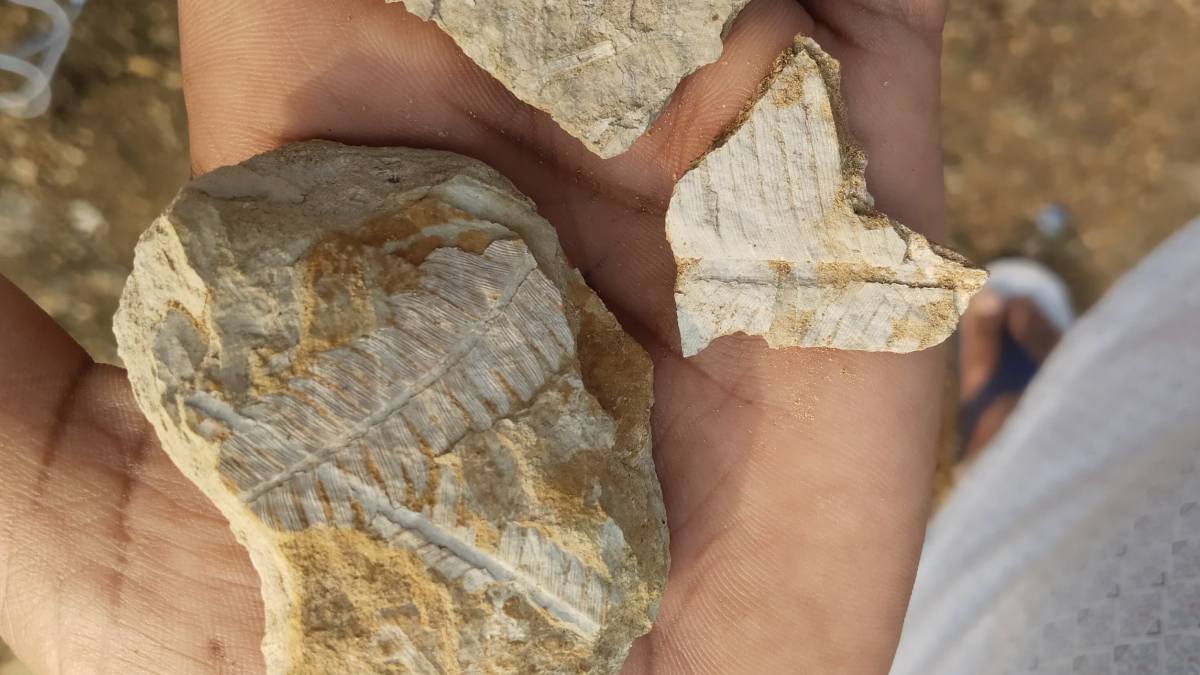
Upon being informed, college principal and geologist Dr. Ranjit Kumar Singh visited the site and confirmed the discovery. (Theorist Photo)
Fossils from the Age of Dinosaurs
These newly found fossils are likely part of the Ptilophyllum flora, a group of prehistoric plants that thrived during the Jurassic to Cretaceous transition, roughly 145 to 200 million years ago.
The Rajmahal Hills, formed by intense volcanic activity during the Jurassic period, are home to a unique geological formation known as the Rajmahal Traps. These are sequences of basaltic lava flows interbedded with sedimentary layers called intertrappean beds, which preserve a rich diversity of fossilized plants.
ALSO READ: Scientists stumble upon nearly 145-million-year-old giant tree fossil in Jharkhand
The area has previously yielded well-preserved leaf impressions and petrified wood, offering insights into the tropical and subtropical forests that once covered this part of India.
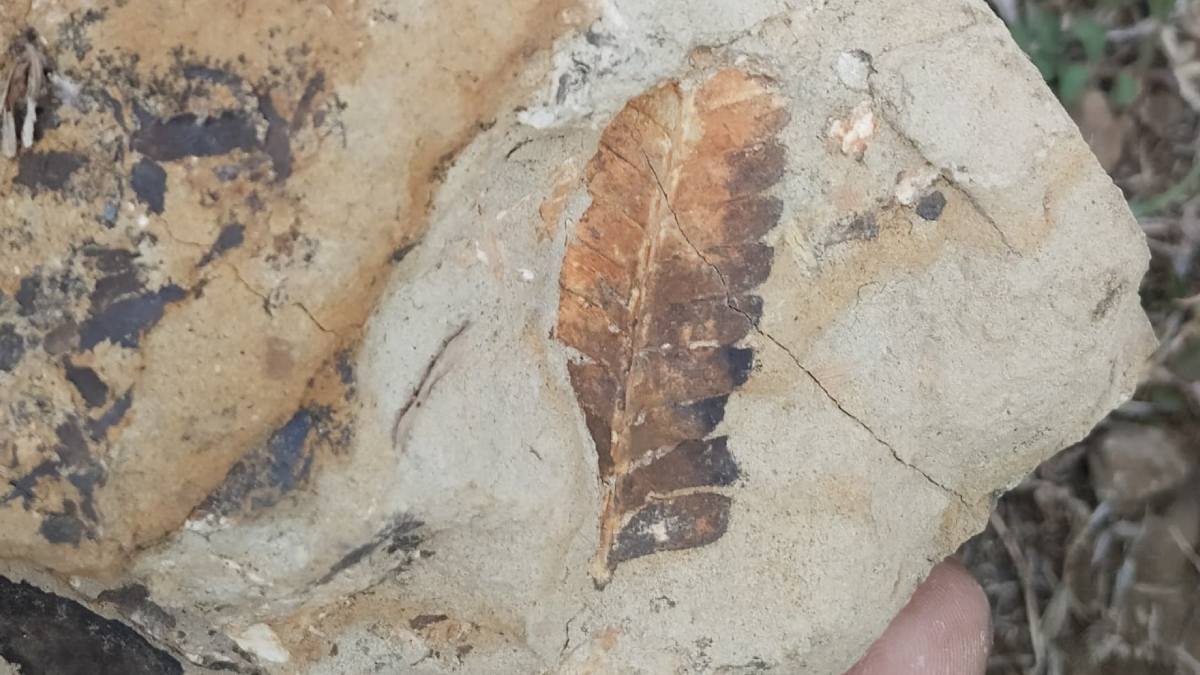
The Rajmahal Hills, formed by intense volcanic activity during the Jurassic period, are home to a unique geological formation known as the Rajmahal Traps. (Theorist Photo)
According to Dr. Singh, the fossils found by Anil Besra appear to differ from commonly found specimens, raising hopes of a new classification or further understanding of plant evolution during the Mesozoic era.
Geological Significance of Rajmahal Hills
Declared a National Geological Monument by the Geological Survey of India (GSI), the Rajmahal Hills are one of the world’s most important fossil sites for Mesozoic flora. Their exploration dates back to 1850, when early surveys were conducted by McClelland, followed by extensive work by geologists Oldham, Morris, Feistmantel, and renowned paleobotanist Prof. Birbal Sahni, often regarded as the father of Indian paleobotany.
ALSO READ: Dhanbad: Jharkhand ATS arrests another man for links with terrorist outfit
Petrification—a process in which organic plant material is gradually replaced by minerals over millions of years—has enabled the preservation of fine anatomical details, allowing scientists to study the ancient forest ecosystems in unprecedented depth.
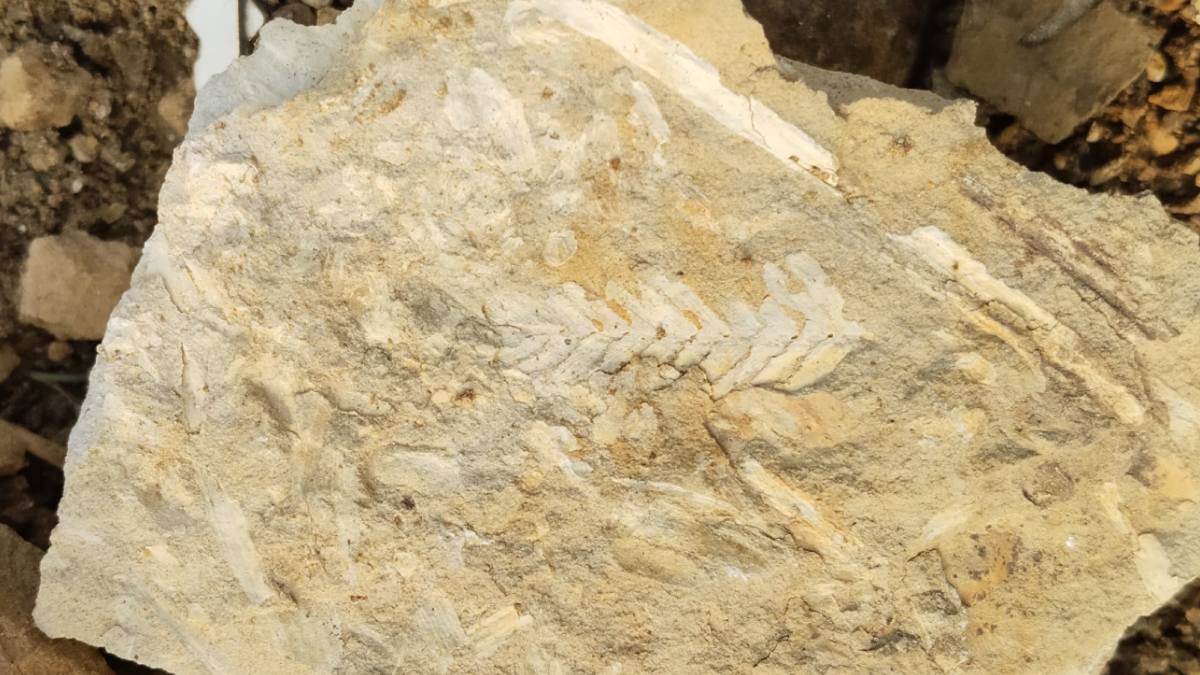
Following the discovery, local forest officials have been informed to ensure the site is protected from damage or unauthorized fossil collection. (Theorist Photo)
Appeal for Preservation and Further Research
Following the discovery, local forest officials have been informed to ensure the site is protected from damage or unauthorized fossil collection. Dr. Singh emphasized the need for collaborative efforts to preserve such sites, which are not only of academic interest but also potential geotourism hubs for Jharkhand and India.
The Rajmahal Hills remain a living classroom for geology and paleobotany students across India. With each new fossil uncovered, they offer a deeper glimpse into Earth’s biological and climatic past.