In a groundbreaking discovery, geologist Dr. Ranjit Kumar Singh and forest ranger Ramchandra Paswan have unearthed a petrified fossil in Barmasia village, Pakur district. This remarkable finding holds immense significance in understanding the geological and biological history of the region.
During the exploration, the team identified fossilized remnants of a massive tree, estimated to be between 100 to 145 million years old. This discovery is not only a milestone for the scientific community but also a source of pride for the local population, as it sheds light on the ancient natural heritage of the region.
Dr. Singh emphasized the need for further research to accurately determine the fossil’s age and its environmental significance. He also stressed the importance of preserving this site for future generations to study and appreciate.

Dr. Singh emphasized the need for further research to accurately determine the fossil’s age and its environmental significance. (Theorist Photo)
Forest ranger Ramchandra Paswan urged the local community to cooperate in safeguarding the area and refrain from any illegal activities that might damage this crucial site. He also highlighted the potential of this discovery in boosting geo-tourism, which could benefit the local economy significantly.
ALSO READ: Jharkhand’s Udhwa Lake makes it to Ramsar list | What it means
Following the discovery, the State Archaeology and Forest Departments have announced plans for a comprehensive survey of the area to gather more crucial information and preserve the region’s biodiversity and geological history.
Efforts to protect fossils
Dr. Ranjit Kumar Singh, Principal, Model College, Rajmahal, Sahibganj, Jharkhand, has been actively involved in surveying protected fossil sites in and around Pakur. His efforts aim to raise awareness about preserving fossilized wood, which local villagers have worshipped for decades, unaware of its geological significance.
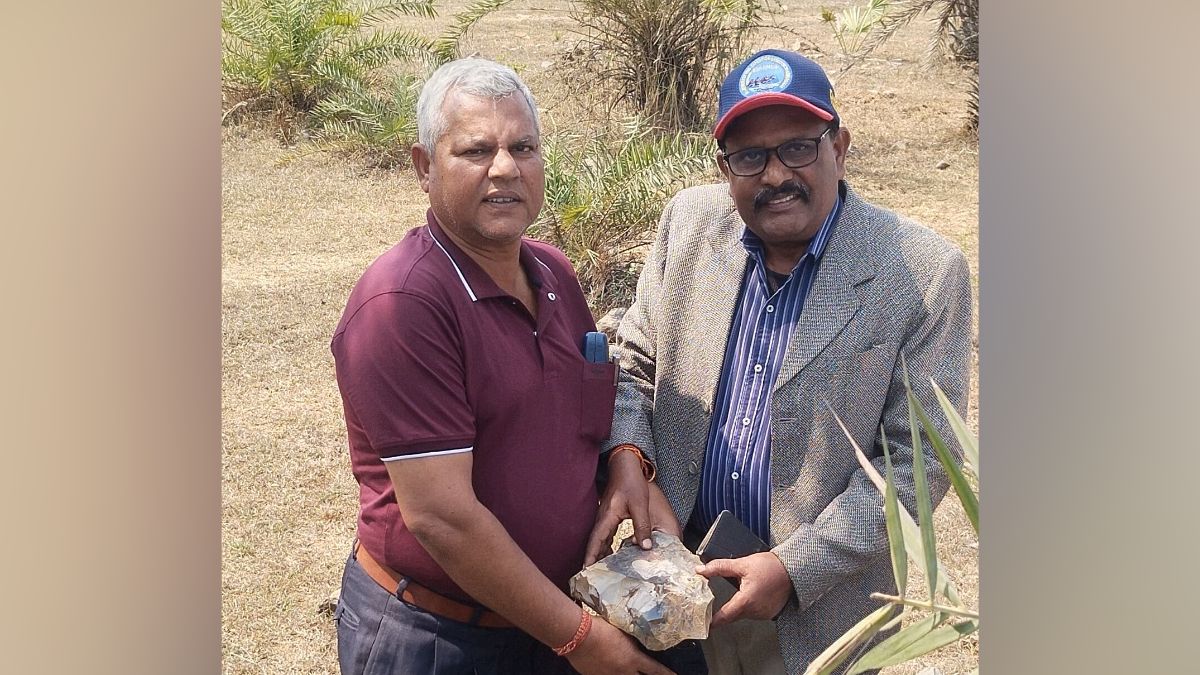
Forest ranger Ramchandra Paswan (left) and Dr Ranjit Kumar Singh hold a sample of the tree fossil. (Theorist Photo)
For over a century, Indian geologists, have systematically identified and classified Gondwana flora and petrified wood fossils. “There is an urgent need to safeguard these unique fossilized woods for future geologists, researchers, and science enthusiasts interested in the region’s scientific heritage,” said Dr Singh speaking to The Theorist.
Under the CPGG banner, the BSIP (Birbal Sahni Institute of Palaeosciences) has proposed a Geo-Heritage Development Plan in collaboration with the Jharkhand Forest Department’s Divisional Forest Officer, Manish Tiwari. This initiative seeks to preserve these exceptional petrified wood fossils with joint efforts from local communities, state authorities, and the central government.
ALSO READ: 289 candidates get appointment letters in Jharkhand amid recruitment drive
Dr. Singh has actively engaged with local villagers, administrators, the Forest Department, and Jharkhand’s eco-tourism sector to explore the development of a dedicated Geopark in the region. With vast potential for paleobotanical research, he has shared his expertise to systematically develop geo-sites. Given the unparalleled heritage value of these fossilized forests, he has proposed the establishment of a UNESCO-authorized Global Geopark to ensure their long-term conservation in their natural state.
This discovery marks a significant step towards preserving Jharkhand’s paleontological treasures, promoting eco-tourism, and fostering scientific research on fossilized ecosystems.