Written by Khushi Singh
The story of Kolkata’s churches is incomplete without the sound of their pipe organs. Brought to the city during the colonial era, these majestic instruments once carried hymns across soaring Gothic arches and neoclassical domes. Today, only a handful survive—some still played every Sunday, others standing silent, and a few dismantled altogether.
Their histories reveal not just changing worship practices, but also the ongoing struggle to preserve heritage against time, cost, and cultural amnesia.
St. John’s Church

Consecrated in 1787, St. John’s Church houses one of the best-preserved pipe organs in the city. (Photo by Khushi Singh)
Consecrated in 1787, St. John’s Church houses one of the best-preserved pipe organs in the city. Built by William Hill & Son & Norman & Beard Ltd of England, it contains around 1,500 pipes and is powered by an underground blower that pushes air into its ranks, controlled by manual keyboards and a pedalboard.
According to a member of the church, “This is one of the very few organs in Kolkata that not only exists but is also played every Sunday.” He noted that the organ is serviced twice a year at a cost of ₹15,000 to ₹20,000 each time, funded by the church authority.
At the center of this effort is organist Thomas Sriromony, who has played the instrument every Sunday for over two decades. “It’s like speaking to the past,” Sriromony says. “Each note carries the weight of centuries.” He views the organ not just as an instrument but as a living monument. “There’s something sacred about the pipe organ,” he reflects adding, “It doesn’t just play music. It breathes history.”
ALSO READ: Kolkata Durga Puja committees lay stricter ID checks for Dhakis this year, but most remain tight-lipped about it
Despite waning interest and the physical challenge of playing such a massive instrument, Sriromony continues, driven by both passion and purpose. “I’m not just playing for the congregation. I’m playing for everyone who came before us—and everyone who might still listen, if we keep it alive.”
St. James’ Church

Built in 1864 and locally known as Jora Girja, St. James’ Church still houses one of the grandest pipe organs in eastern India. (Photo by Khushi Singh)
Built in 1864 and locally known as Jora Girja, St. James’ Church still houses one of the grandest pipe organs in eastern India. But for the past 15 to 20 years, the instrument has been silent.
A staff member at the church, who requested anonymity, explained, “We did try to repair it at one point, but the cost was just too high. We couldn’t manage it.” Today, the organ still stands inside the sanctuary—majestic, but mute.
Its imposing frame, dusty keys, and oxidized pipes now serve as a quiet reminder of the church’s musical past. “It’s heartbreaking to see it like this,” the same staff member added, “but unless there’s external funding or a major initiative, we don’t see it coming back to life anytime soon.”
St. Thomas’ Church
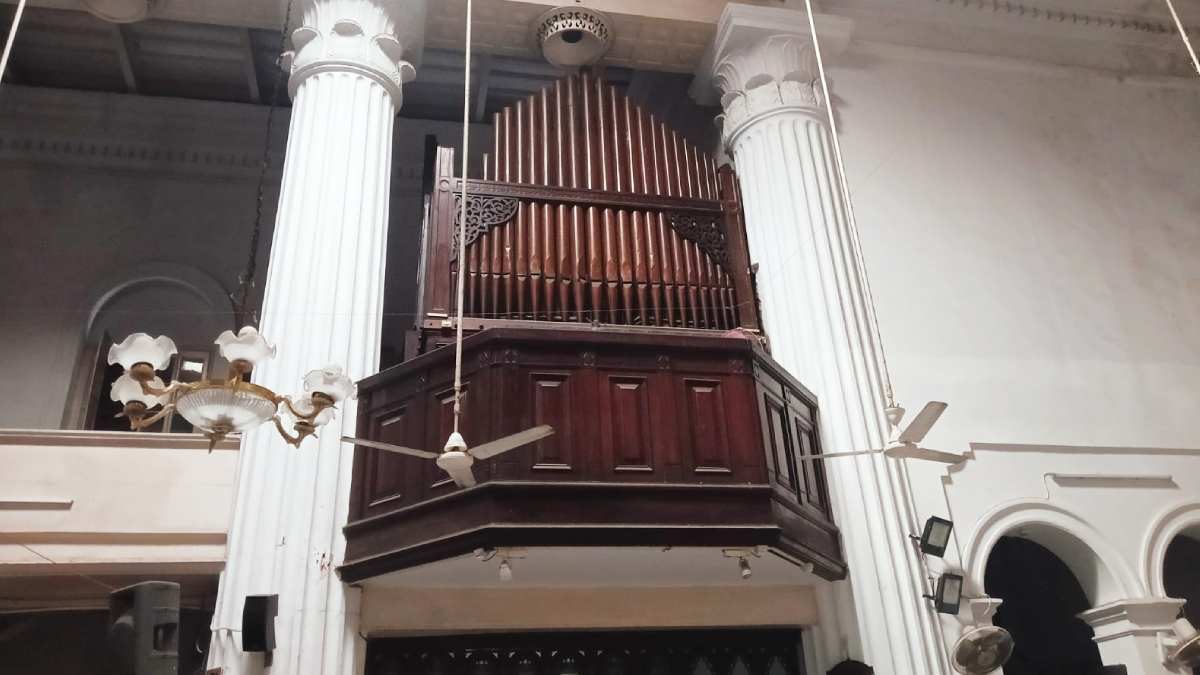
The organ at St. Thomas’ Church remains operational—but only just. Maintenance is infrequent and costly. (Photo by Khushi Singh)
The organ at St. Thomas’ Church remains operational—but only just. Maintenance is infrequent and costly. Father Daniel Chatterjee shared, “We get technicians from Germany every three years. It costs around ₹1 lakh each time.”
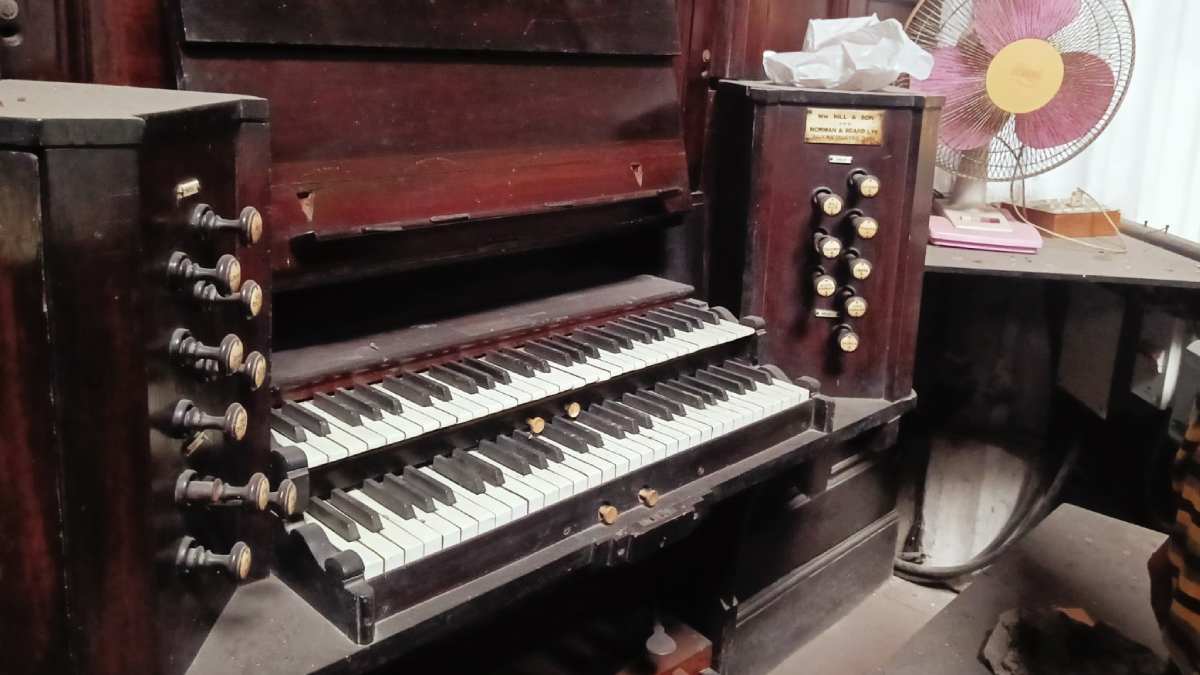
The organ at the St Thomas’ Church was last played on Easter Sunday by Obed Pakianathan, a longtime organist whose recent illness has put the instrument into temporary silence. (Photo by Khushi Singh)
The organ was last played on Easter Sunday by Obed Pakianathan, a longtime organist whose recent illness has put the instrument into temporary silence. “The organ waits for him, in a way,” Father Chatterjee mused. “It’s not just the instrument—it’s also the player that gives it breath.”
Union Chapel Church
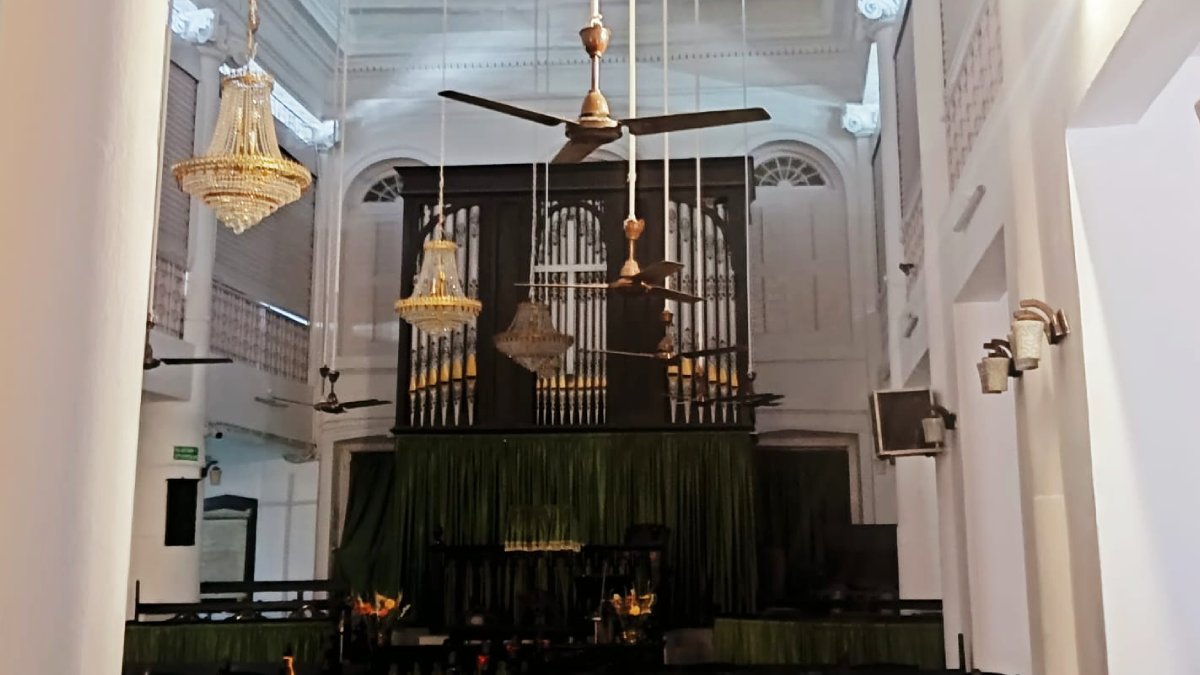
At Union Chapel, the pipe organ is not just maintained—it is celebrated. (Photo by Khushi Singh)
At Union Chapel, the pipe organ is not just maintained—it is celebrated. Played every Sunday by Kaustav Lei, a teacher at the adjoining school, the instrument fills the chapel with music each week.
ALSO READ: Who is ‘Hindoo Stuart’? A British officer who defended Indian traditions
“It’s old, yes, but it still speaks,” Lei says. “I think of it like an elder in the room—someone you listen to with respect.” Since the premises function as a school during the week, visitors are only allowed on Sundays. For many, worship is the only opportunity to hear the organ’s voice.
Wesleyan (Osmond Memorial) Church
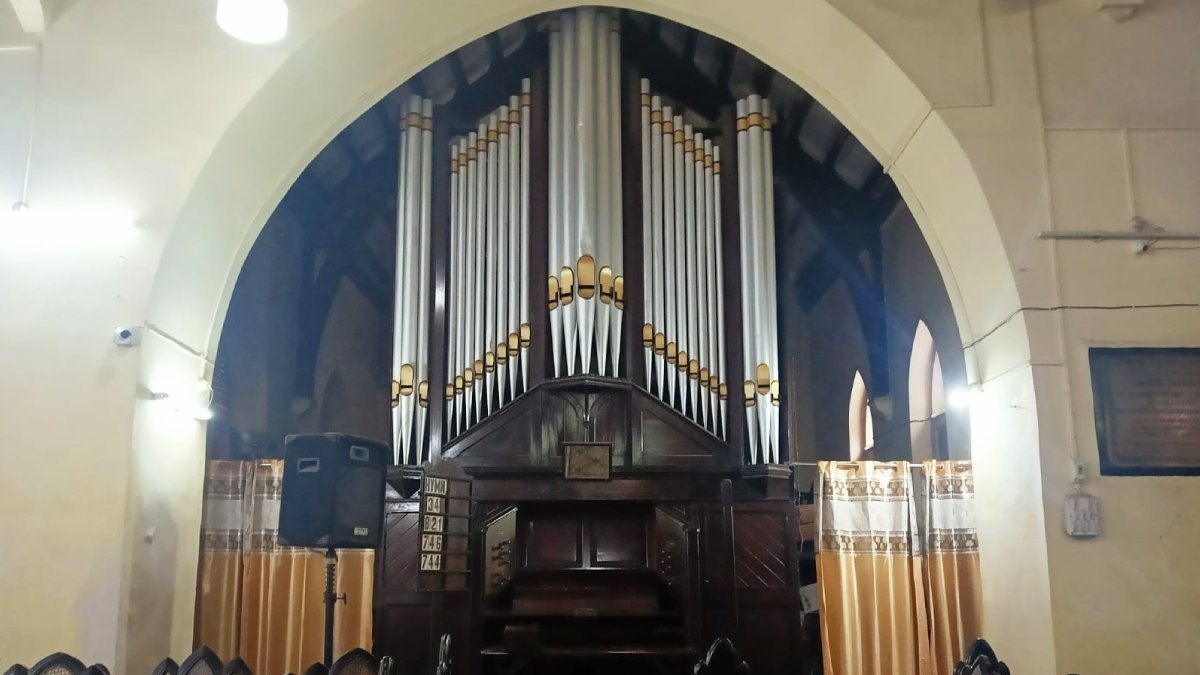
Built in 1866, the Wesleyan Methodist Church (now Osmond Memorial Church) once echoed with the majestic tones of its organ. (Photo by Khushi Singh)
Built in 1866, the Wesleyan Methodist Church (now Osmond Memorial Church) once echoed with the majestic tones of its organ, played for over two decades by Johny Purty. Today, that sound has faded.
A church office member, who also chose not to reveal his name, said, “We haven’t used the organ for about three or four years now. The piano is easier, cheaper, and more reliable.” Access to the instrument is restricted, and visitors need prior permission.
Though the organ remains intact, its silence grows louder with each passing year. “Unless someone brings it back,” the staff member added, “we might lose it forever.”
Old Mission Church

A photograph from the Facebook page of the Old Mission Church shows the grand pipe organ.
Founded in 1770 by Swedish missionary Rev. Johann Zachariah Kiernander, the Old Mission Church boasts one of Kolkata’s oldest still-functional pipe organs. For over 50 years, it has been cared for and played by Victor Ambett.
“This organ is like my own child,” Ambett says. “It’s been with me through joys, funerals, weddings—you name it.” His long-standing dedication has kept this colonial-era relic not just alive but meaningful in contemporary worship. “As long as I can play, it will not fall silent,” he adds with quiet resolve.
Thoburn Memorial Methodist Church
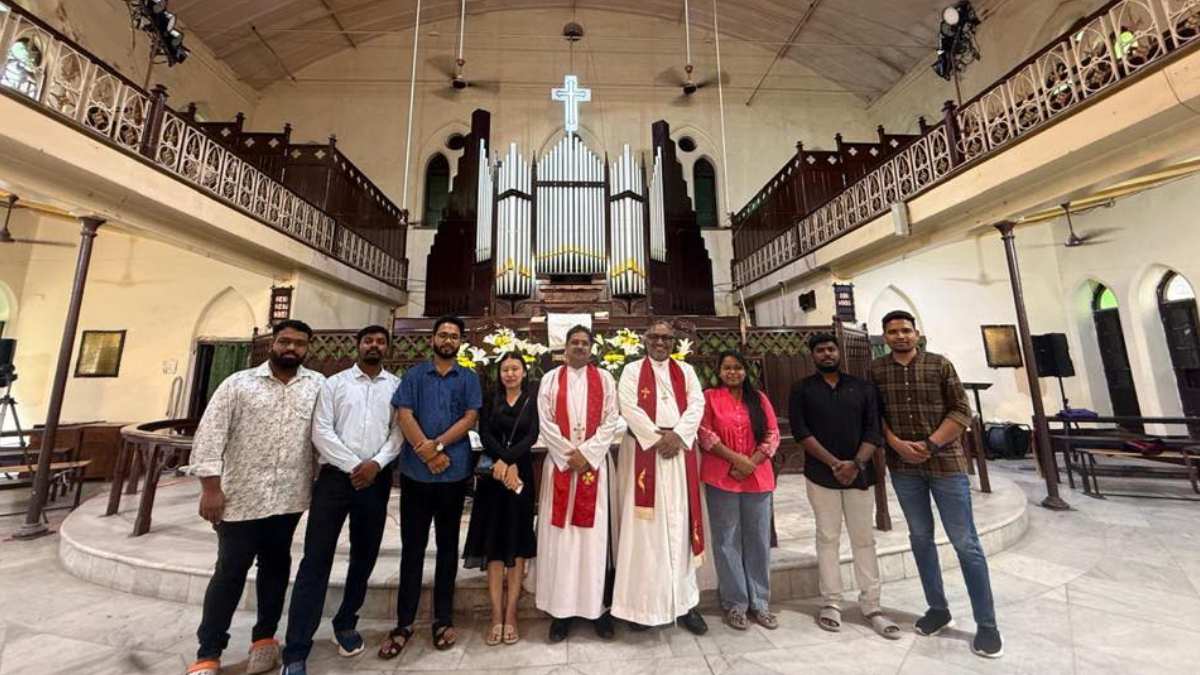
Established in 1873 by Dr. J.M. Thoburn, the Memorial Methodist Church remains a bright spot in Kolkata’s pipe organ landscape. (Photo: Thoburn Methodist Church/Facebook)
Established in 1873 by Dr. J.M. Thoburn, the Memorial Methodist Church remains a bright spot in Kolkata’s pipe organ landscape. The pipe organ here is in full working condition and is played every Sunday by Abhinav Aaron Andrews.
“It’s not just about tradition,” Andrews explains. “It’s about connection—spiritual, historical, musical. The organ bridges centuries every time it plays.” This regular use keeps Memorial Methodist among the few churches where the organ remains a vibrant part of worship.
St. Paul’s Cathedral
Once the proud home of a grand Henry Willis pipe organ, St. Paul’s Cathedral has since moved to electric alternatives. The original pipe organ was removed, then replaced by a Hammond electric organ, and now by a Viscount Vivace 40.
This evolution reflects both practical and symbolic changes. “It was a magnificent instrument,” one long-time congregant recalled, “but the maintenance was just too difficult.” While the electric organ now fills the space with sound, many lament the loss of the cathedral’s once-thundering original voice.
ALSO READ: A British sahib who painted glimpses from rural Bengal and loved animals — Who is Colesworthey Grant
Kolkata’s pipe organs are more than musical instruments—they are historical artefacts, cultural touchstones, and emotional anchors. Each surviving organ tells a story not just of its church, but of the city itself: its colonial past, its liturgical evolutions, and its ongoing dialogue between preservation and progress.
Some organs, like those at St. John’s, Old Mission, and Memorial Methodist, continue to ring out with dignity. Others, like those at St. James’ and Wesleyan, sit in silence—awaiting either resurrection or final repose.
In the words of Thomas Sriromony, “These instruments aren’t just heard. They’re remembered.”
(Khushi Singh is an intern with The Theorist)