Written by Manshi Mundhra
In much of the Middle East, the relationship between Muslims and Jews has long been shaped by conflict, political fault lines, and decades of mistrust, with the Israeli–Palestinian crisis at its core. In sharp contrast, Kolkata tells a different story — one not of division, but of quiet, enduring harmony.
Here, far from the tensions of the region, Muslim families have cared for historic Jewish synagogues — Maghen David, Beth-El and Neveh Shalome — for generations, nurturing a legacy of mutual respect and shared heritage that stands as a powerful reminder of what peaceful coexistence can look like.
At Neveh Shalome, Sheikh Masood Hossain has been working as caretaker for the past 20 years, continuing a tradition passed down from his grandfather.
“My nanaji used to take care of this synagogue before me. Even after he passed away, I continued his work. It has been 20 years now,” he said.
ALSO READ: The fading music of Kolkata’s pipe organs: A saga of practical migration & cultural amnesia
Hossain explained that the responsibility is a collective one.
“All three synagogues in Kolkata — Neveh Shalome, Beth-El, and Magen David — are cared for by members of our extended family. We are all relatives and together we look after these synagogues,” he shared.
For him, there is no difference between the places of worship. “I take care of the synagogue like my own masjid. I don’t feel there is any difference between a masjid and a synagogue. Both are houses of God,” Hossain added.
Generations of Service at Maghen David
At the iconic Maghen David Synagogue, caretaker Rabool Khan shared his own journey.
“I am the second generation taking care of the Magen David Synagogue, and I have been here for 22 years now. Before me, my father had dedicated his life to looking after the synagogue. When he began facing health issues, Nahum told me, ‘Since your father’s health is not good nowadays, you will now be appointed to take care of the synagogue in your father’s place.’ Since then, I have been faithfully serving and ensuring that the synagogue remains well-maintained and respected.”
Honouring Traditions at Beth-El Synagogue
Siraj Khan, the caretaker of the Beth-El Synagogue, proudly continues a family tradition of service that began with his grandfather.
“I am the third generation working here. Before me it was my grandfather and then my father who took care of this synagogue. I have been taking care of the Beth-El Synagogue for around 20 years now,” he said.
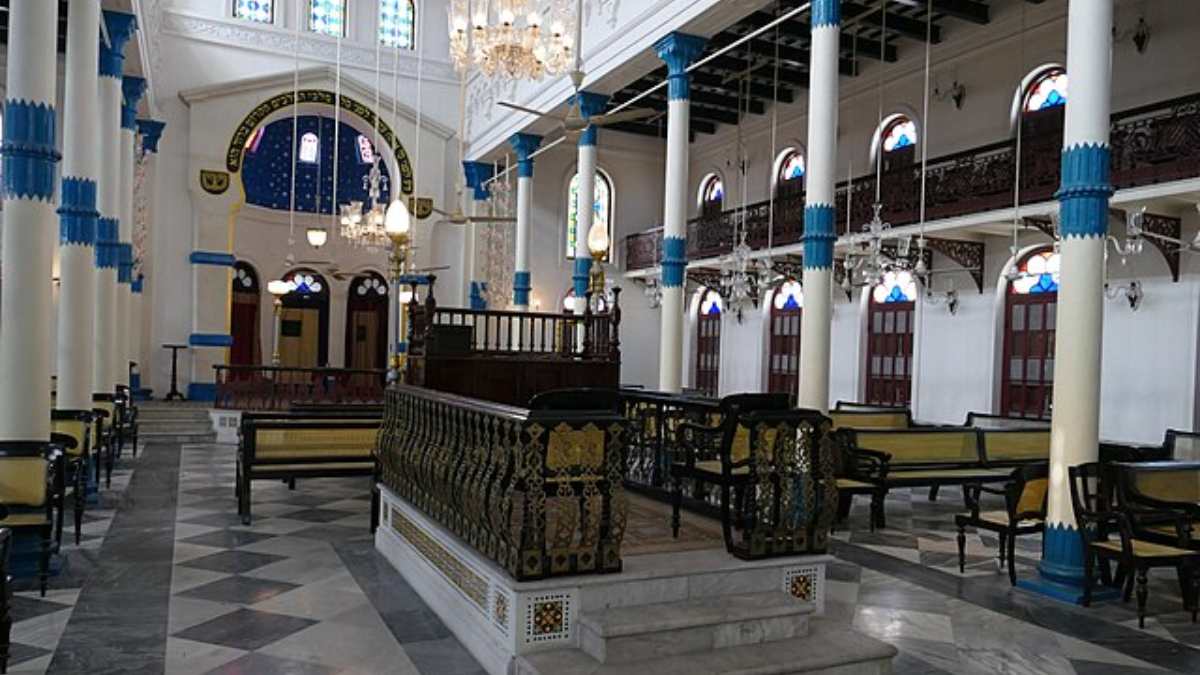
Siraj Khan, the caretaker of the Beth-El Synagogue, proudly continues a family tradition of service that began with his grandfather. (Photo: Wikimedia Commons)
He added, “I will continue to do so until my last breath. But after me there will be no one from my family to take care of this synagogue.”
Concluding on a heartfelt note, he shared, “All three of us — Rabool, Hossain, and I — have the same situation. Until our last breath, we will continue to serve, doing God’s work and taking care of the synagogues. What happens after us will be decided by the Jewish community of Kolkata, who will choose who takes on this responsibility.”
A Community Rooted in Peace
David Ashkenazy, Chairperson of the Jewish Community of Kolkata, reflected on the unique situation of the city’s Jewish community.
“We are all citizens of India, far removed from the realities of the Middle East conflict. While tensions may exist elsewhere, Kolkata has always remained calm for the Jewish community. At its peak, there were around 5,000–6,000 Jews in Kolkata, but today the community has dwindled to just a few families. Yet from the arrival of the first Jew in Kolkata until now, there has always been peace,” he said.
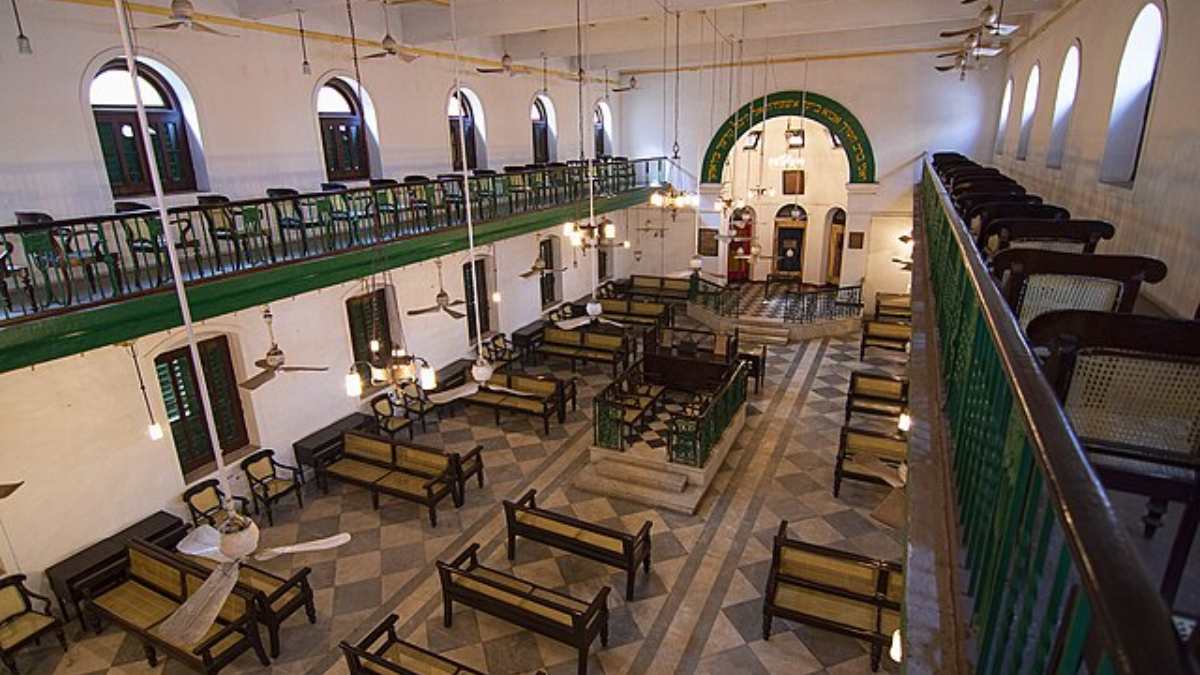
At Neveh Shalome, Sheikh Masood Hossain has been working as caretaker for the past 20 years, continuing a tradition passed down from his grandfather. (Photo: Wikimedia Commons)
He added, “The synagogues are managed by salaried staff who follow instructions, and they do not receive funding from outside sources. But these caretakers are much more than staff — they are like family to us. While our religions may be different, we are united by respect, love, and friendship.”
Preserving Sanctity and Tradition
Explaining why public entry is limited, Ashkenazy shared, “The synagogue is not a museum — it is a place of worship and will always remain so. To preserve its sanctity, entry is restricted. We have several Jewish religious groups visiting every year and everyone is welcome, but visitors must follow the rules and restrictions of the synagogue, just like in any other religious place. There is nothing wrong with that.”
ALSO READ: How a 124-year-old ‘Street Orderly Bin’ became Kolkata’s last link to its civic past
Concluding, he said, “From Friday evening until sunset on Saturday, we observe the Sabbath and visitors are not allowed. On religious festival days, the synagogues remain closed to the general public so that Jews visiting from elsewhere can come and pray. These synagogues were built for one purpose only — for prayer — and it is our responsibility to uphold their sanctity.”
(Manshi Mundhra is an intern with The Theorist)