Written by Tanisha Mishra and Gouravi Sharma
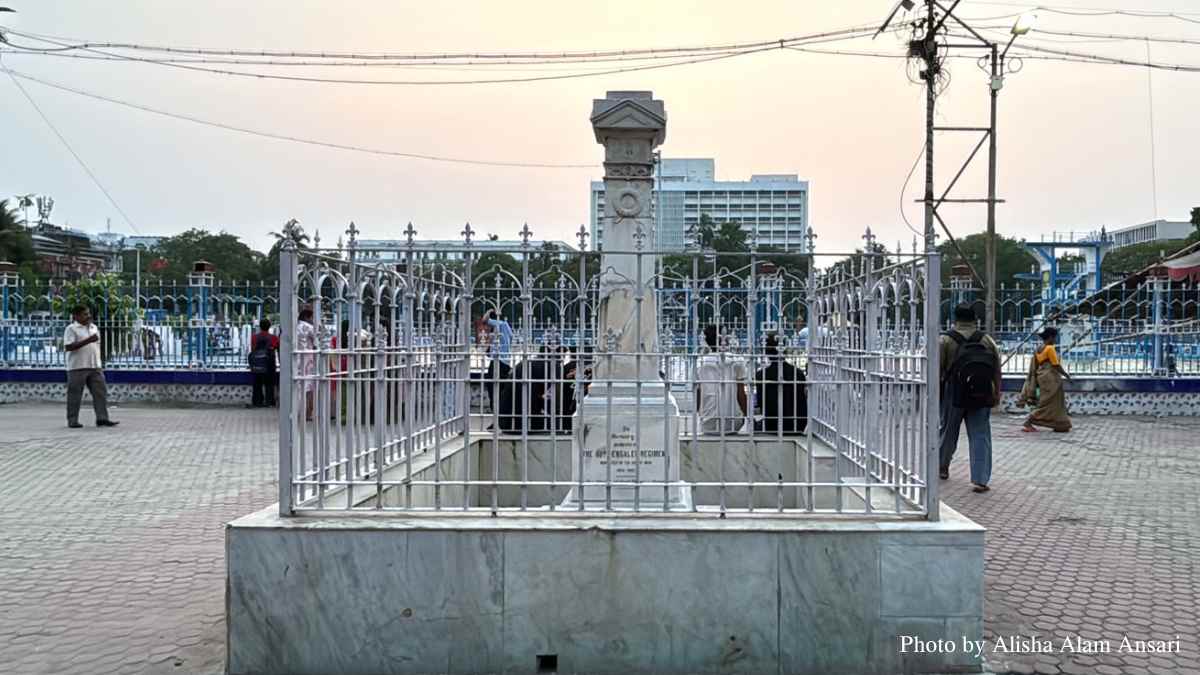
In the quiet corners of Kolkata, a monument stands not just in stone, but in silence, waiting for Bengal to remember its sons who marched for a war not their own. In the heart of Kolkata, where history murmurs through every street, stands a relatively obscure yet deeply poignant tribute to Bengal’s military legacy — the Bengalee Regiment Monument.
This rare memorial commemorates the 49th Bengalee Regiment, the first and only all-Bengali infantry unit in the British Indian Army during World War I.
Breaking Colonial Stereotypes
Formed in 1917, the 49th Bengalee Regiment marked a historic shift in British colonial military policy. Traditionally, the British Indian Army recruited from what they termed the “martial races” — Punjabis, Sikhs, and Gorkhas. Bengalis, particularly the educated middle class or bhadralok, were notably absent from the ranks.
According to Amitabha Gupta, a noted columnist and researcher on built heritage, “The monument contains information about the deaths in the war, which was part of World War I. The British didn’t have enough men to form an army, so they recruited soldiers from Indian population. They didn’t take many from Bengal because they doubted the loyalty of Bengalis.”
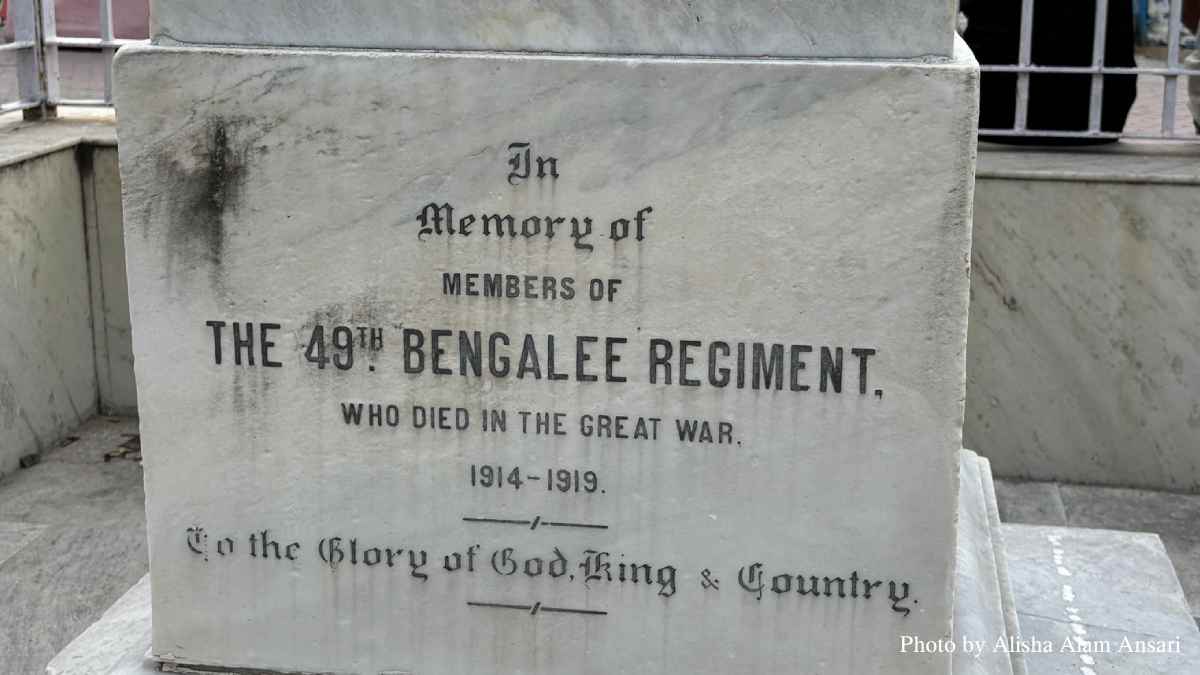
This rare memorial commemorates the 49th Bengalee Regiment, the first and only all-Bengali infantry unit in the British Indian Army during World War I. (Photo by Alisha Alam Ansari)
Gupta also noted, “A total of 228 people from Bengal joined the war. It was known as the Bengali Paltan or the 49th Bengalee Regiment. Their training began in Karachi on June 26, 1917. Bengali poet Qazi Nazrul Islam also joined the war. Netaji Subhas Chandra Bose had also applied for a post as a soldier, but he was rejected due to his poor eyesight.”
Service Without Combat
The regiment trained in Karachi (now in Pakistan) and was deployed in 1918 to Mesopotamia (modern-day Iraq), where they primarily undertook non-combatant duties: guarding supply lines, maintaining logistics, and securing vital communication routes. Their work, though away from the battlefield, was critical to the British war effort.
ALSO READ: Story of Kristo Das Pal — A forgotten journalist whom Kolkata remembers only through an ignored statue
Gupta clarified that Bengali soldiers “were not involved directly in combat. Instead, they were assigned duties like guarding, cookware duty, and other support roles. The 56 names mentioned on the monument are not of those killed in battle, but of those who died due to disease and accidents.”
The regiment was disbanded in 1920, but its legacy endured — not in tales of battlefield glory, but in what it represented: a symbolic turning point in colonial military history and Indian nationalist consciousness.
The Man Who Sculpted Bengalee Regiment Monument
The Bengalee Regiment Monument, erected in 1924 near the eastern entrance of College Square in Kolkata, was built by William Ingham Keir, says Gupta. It bears detailed inscriptions honouring the fallen — names, ranks, dates of death, and districts of origin, including Midnapore, Mymensingh, and Murshidabad.
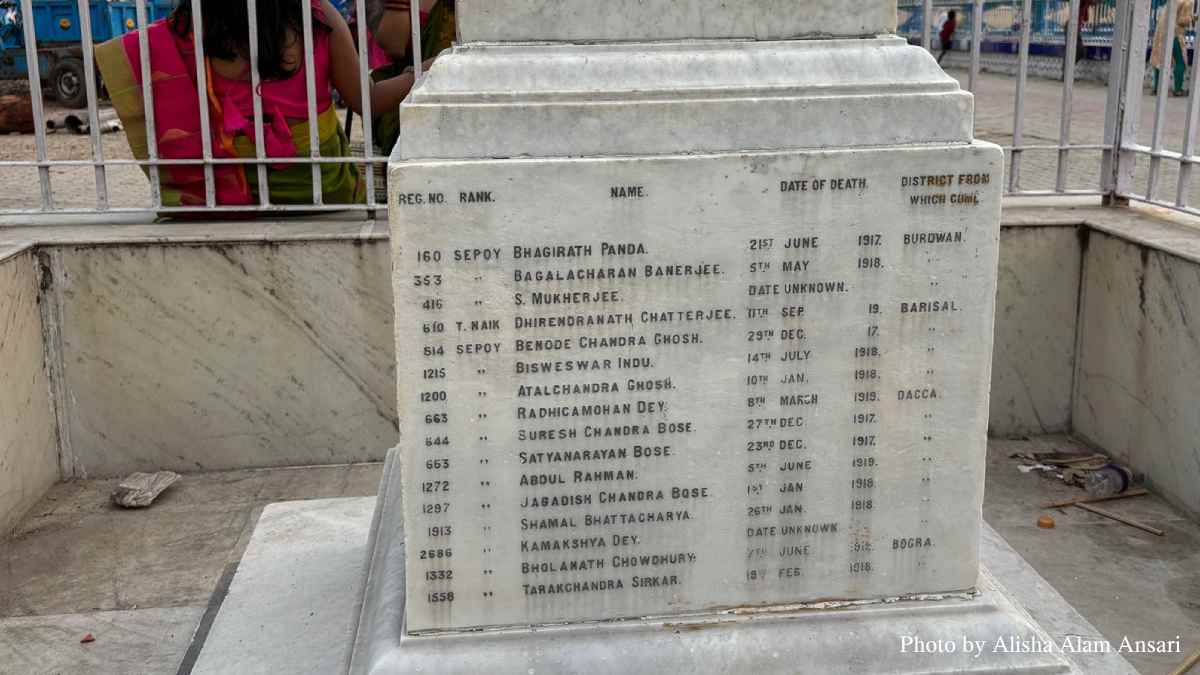
The Bengalee Regiment monument bears detailed inscriptions honouring the fallen — names, ranks, dates of death, and districts of origin, including Midnapore, Mymensingh, and Murshidabad. (Photo by Alisha Alam Ansari)
The monument has a narrow structure with Islamic arches and a marble pedestal, giving it an elegant and solemn appearance. But despite its historical and emotional weight, the memorial is often overlooked — hidden in plain sight amid the chaos of College Street.
Where Stone Meets Silence
“This isn’t just about the past,” said Debjani Mukherjee, professor at the THK. Jain College and a researcher in colonial Bengal studies. “It’s about identity, memory, and the quiet courage of ordinary men who chose to serve.”
She added, “The monument is a reminder that valour can come not only from wielding swords but from stepping into history when your presence wasn’t expected. It’s where history meets identity, and where stone meets silence.”
ALSO READ: The rise of street art in Kolkata: Colors, causes and creative resistance
Mukherjee also stressed the need for preservation and promotion: “The state should make efforts to promote the monument as a tourist destination and heritage site. It deserves recognition, not just as a war memorial, but as a cultural and historical landmark.”
According to Shudhanto, who owns a shop near the memorial, said, “A tribute is offered here on the second Sunday of every November.”
The Bengalee Regiment Monument still stands — not merely as a structure of stone, but as a testament to forgotten footsteps, Bengali valour, and a legacy that demands remembrance.