Los Angeles has become the epicentre of growing national unrest as large-scale protests against US Immigration and Customs Enforcement (ICE) sweep through the city. What began as a reaction to a series of coordinated immigration raids on June 6 has now evolved into a sustained and increasingly confrontational demonstration against federal immigration policy and the militarized response by the US government. The unrest has been termed as the anti-ICE protests.
At the heart of the unrest is widespread anger over how ICE conducted its operations. Raids were carried out across multiple locations including garment warehouses, Home Depot parking lots, and local businesses in predominantly Latino neighborhoods.
These actions led to the detention of at least 44 individuals believed to be undocumented immigrants. Videos and eyewitness reports confirmed the presence of heavily armed officers, and in some areas, demonstrators claim they were met with tear gas, rubber bullets, and flash-bang grenades when they gathered to protest the arrests.
Why the anti-ICE Protests Began
The protests emerged almost immediately after the raids, fuelled by both community outrage and support from immigration advocacy groups. Activists argue that the raids are part of a larger, systematic attempt to suppress and intimidate undocumented communities, particularly Latino populations in Southern California.
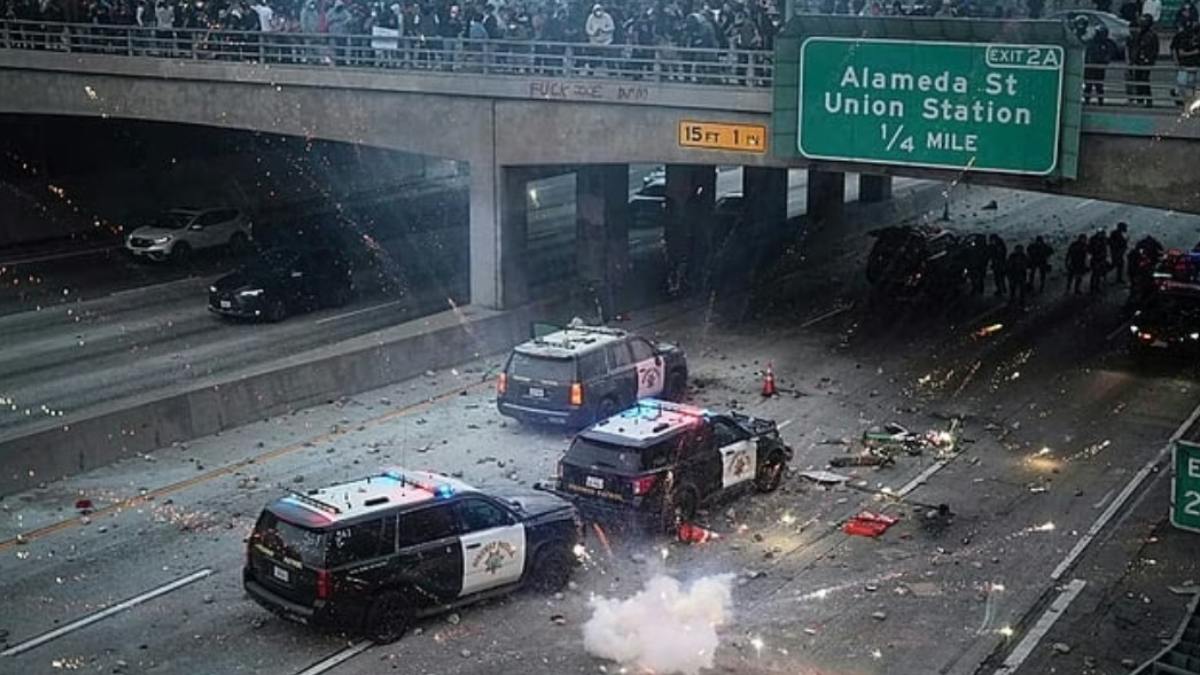
Raids were carried out across multiple locations including garment warehouses, Home Depot parking lots, and local businesses in predominantly Latino neighborhoods. (Photo: kaps78/X)
While ICE officials maintain that the actions were targeted enforcement operations against individuals with outstanding deportation orders, critics say the raids were arbitrary, unjust, and politically motivated. Demonstrators also point to what they consider disproportionate use of force by both local law enforcement and federal officers, which they say has escalated tensions unnecessarily.
“It’s not just about immigration anymore,” said an organizer of the anti-ICE protests on condition of anonymity. “It’s about how easily the federal government can deploy force against marginalized communities.”
Escalation on the Streets: Clashes, Curfews, and Civil Unrest
By the night of June 7, the protests had spread beyond ICE facilities into Downtown Los Angeles. Thousands took to the streets, blocking key routes like the 101 Freeway and staging sit-ins near City Hall. While many protests remained peaceful, pockets of violence began to emerge.
Police vehicles were set ablaze, storefronts—including a Jordan Flagship and an Apple Store—were looted, and clashes broke out between protesters and the LAPD. Videos circulating online showed some demonstrators arriving with face shields and gas masks, signaling a level of preparation not seen in earlier nights.
ALSO READ: ‘City would be burning right now’: Trump defends sending troops to Los Angeles
The city responded swiftly. On June 9, Los Angeles Mayor Karen Bass declared a local emergency and announced a nightly curfew between 8 pm and 6 am for parts of downtown. Over 190 people were arrested that evening, primarily for violating curfew and unlawful assembly. Mayor Bass called the violence during the anti-ICE protests “unacceptable,” but reaffirmed that most demonstrators were peaceful and had a constitutional right to protest.
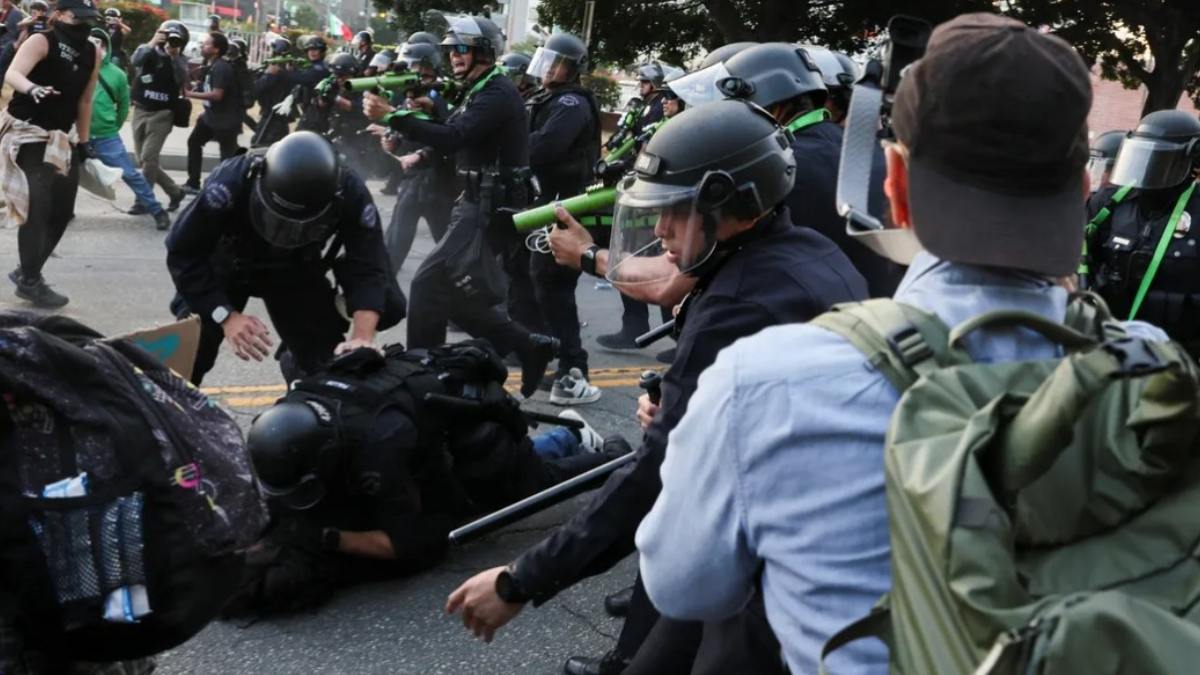
Critics say the raids were arbitrary, unjust, and politically motivated. (Photo: kaps78/X)
Federal Government’s Military Response Sparks Legal and Political Battle
The federal response has dramatically heightened tensions. President Donald Trump ordered the deployment of 2,000 California National Guard troops under federal authority (Title 10) and, within days, added another 2,000 Guard members and 700 US Marines.
These troops were sent to assist ICE and secure federal buildings throughout Los Angeles.
This marked the first time since the 1965 Watts Riots that the federal government deployed troops into California without state approval. Trump defended the move, saying Los Angeles would have “burned to the ground” without federal intervention.
White House officials, including immigration adviser Stephen Miller, framed the anti-ICE protests as a threat to public safety and claimed California officials were “failing to control their streets.”
California state officials strongly disagreed. Governor Gavin Newsom condemned the federal action as a “brazen abuse of power,” and on June 10, California Attorney General Rob Bonta filed a lawsuit challenging the legality of the deployment. The state argues that Trump’s use of Title 10 powers without consent violates state sovereignty and sets a dangerous precedent.
Mayor Bass also criticized the federal response, calling it “unnecessary” and “politically motivated.” In her public statements, she emphasized that the majority of protests had been peaceful and that Los Angeles was capable of managing the situation without federal troops.
Nationwide Solidarity and the Role of Misinformation
The protests in Los Angeles have sparked solidarity actions across the country, including in cities like San Francisco, New York, Atlanta, and Dallas. In San Francisco alone, more than 150 people were arrested during similar demonstrations.
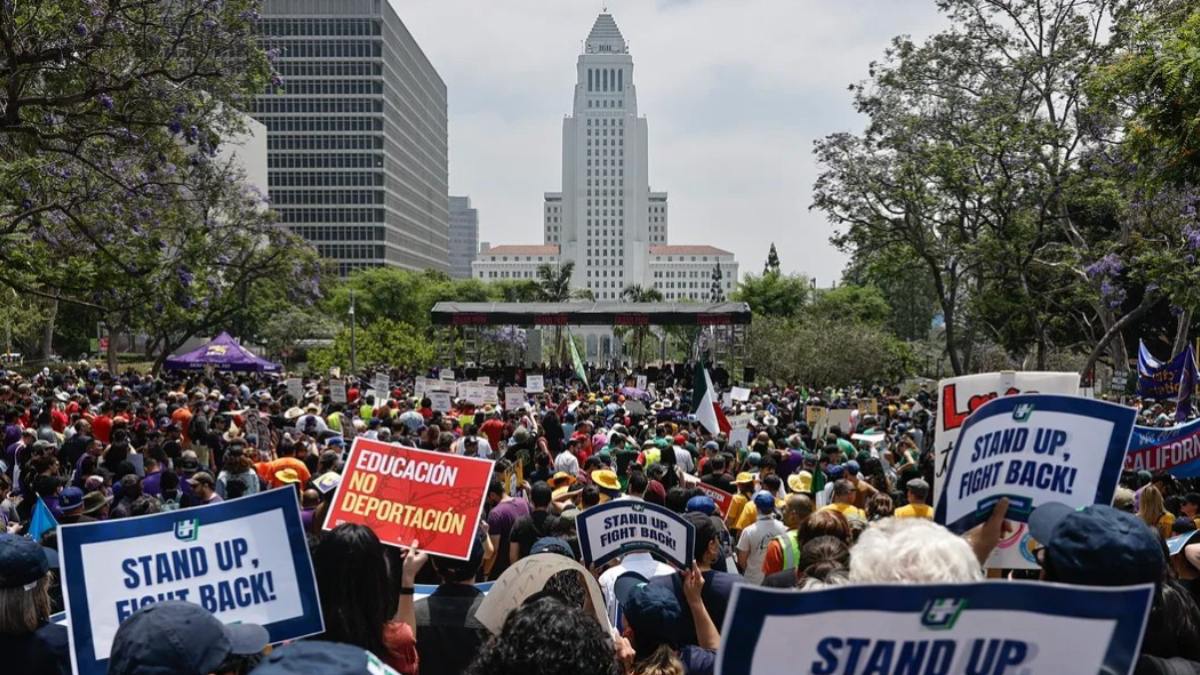
By the night of June 7, the protests had spread beyond ICE facilities into Downtown Los Angeles. (Photo: kaps78/X)
Meanwhile, disinformation has complicated public understanding of the events. Social media has seen an influx of viral videos and images—some real, others outdated or doctored—depicting burning police cars and supposed military crackdowns. Fact-checkers have warned the public to verify sources before spreading content online, as false narratives could inflame tensions further.
A Tipping Point in US Immigration and Protest Politics?
The anti-ICE protests in Los Angeles are not merely a response to one enforcement operation—they reflect deep national divisions over immigration, policing, and civil liberties. While President Trump has framed the unrest as the result of Democratic mismanagement, critics argue that the federal government has weaponized immigration policy for political gain.
As the situation continues to evolve, California’s legal challenge to the federal troop deployment could become a defining legal battle over states’ rights and the limits of executive power. For now, Los Angeles remains under curfew, National Guard troops are on patrol, and thousands of residents continue to raise their voices in protest—demanding accountability, reform, and the right to live without fear.



