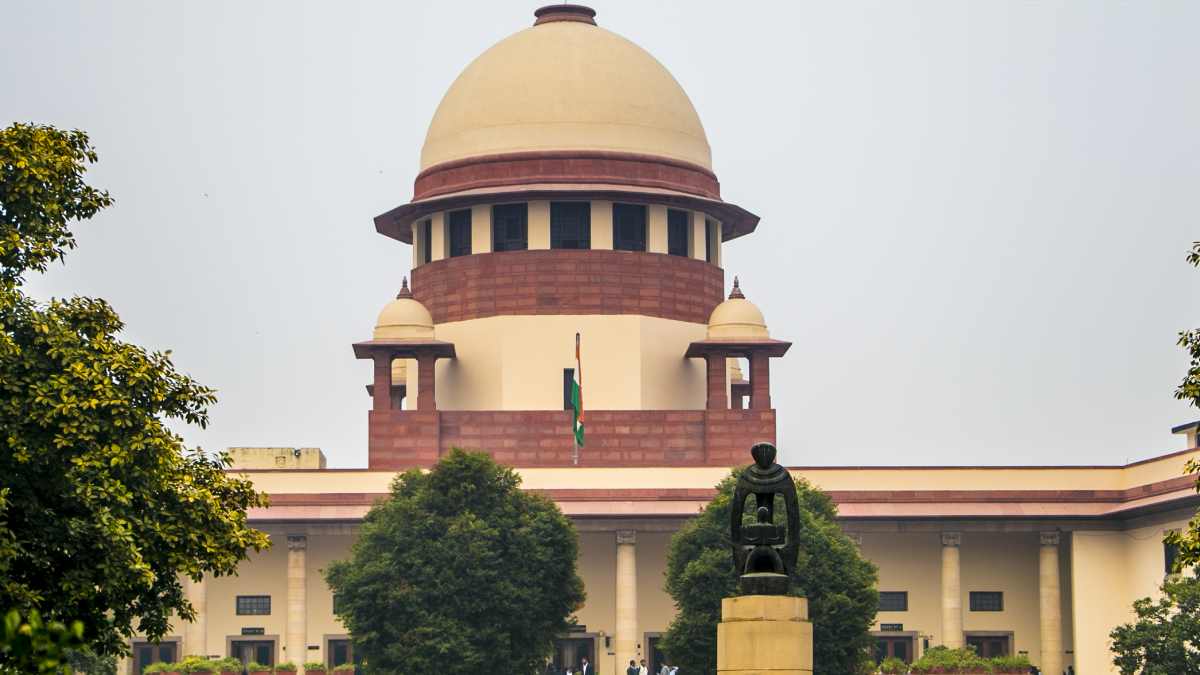
The Supreme Court of India on Wednesday made a significant observation regarding rape allegations in failed relationships, stating that not every romantic or arranged engagement that does not end in marriage should lead to criminal charges.
The court was hearing a plea by a man seeking to quash rape charges filed by his former fiancée, who claimed that she had engaged in sexual relations with the expectation of marriage.
A bench comprising Justice MM Sundresh and Justice Rajesh Bindal observed that in today’s world, morality and social norms have evolved, making it unreasonable to assume that every failed relationship equates to deceit or sexual exploitation.
“You are a major… it cannot be that you were hoodwinked into believing you would get married,” Justice Sundresh remarked. “With due respect, today the concept of morality, virtues is different with the younger lot. If we agree with you, then any relationship between a boy and girl in college, etc., will be punishable.”
ALSO READ: Pakistan attempts to cross LoC, Indian Army kills infiltrators in retaliatory firing: Report
The court also pointed out that sometimes, complaints such as these are influenced by traditional conservative values, where societal structures tend to place the blame on men due to systemic gaps.
“Consent Not Free in an Arranged Relationship”: Woman’s Counsel Argues
Advocate Madhavi Divan, representing the woman, countered the court’s remarks by stressing that the relationship in question was ‘arranged’ and not a conventional ‘romantic’ affair. She argued that the concept of free consent was missing in this scenario.
“This is not a romantic relationship that went sour. This was arranged. Consent in this case cannot be said to be ‘free consent’,” she stated, further explaining that breaking an engagement carries a strong social taboo, especially for women.
ALSO READ: ‘Shows insensitivity’: Supreme Court lambasts UP government over Prayagraj bulldozer action
Divan argued that the woman feared that her fiancé would not marry her if she did not engage in sexual relations, raising concerns about whether consent given under such pressure was truly voluntary or coerced.
“It may have been casual sex for him… but not for the woman,” she emphasized.
Court Urges a Broader Perspective, Asks If Conviction Can Be Secured
The Supreme Court, however, stressed the importance of considering the perspectives of both parties rather than being biased towards any one gender.
Justice Sundresh made a notable remark, saying: “I also have a daughter, but even if she were in this position, I would need to look at the broader perspective. In this case… can conviction be secured with such weak material?”
At the same time, the court acknowledged the emotional and social impact on the complainant, stating, “Ultimately, the woman is the victim.”
While no final ruling was made, the court confirmed it would continue hearing the man’s plea to quash the charges.