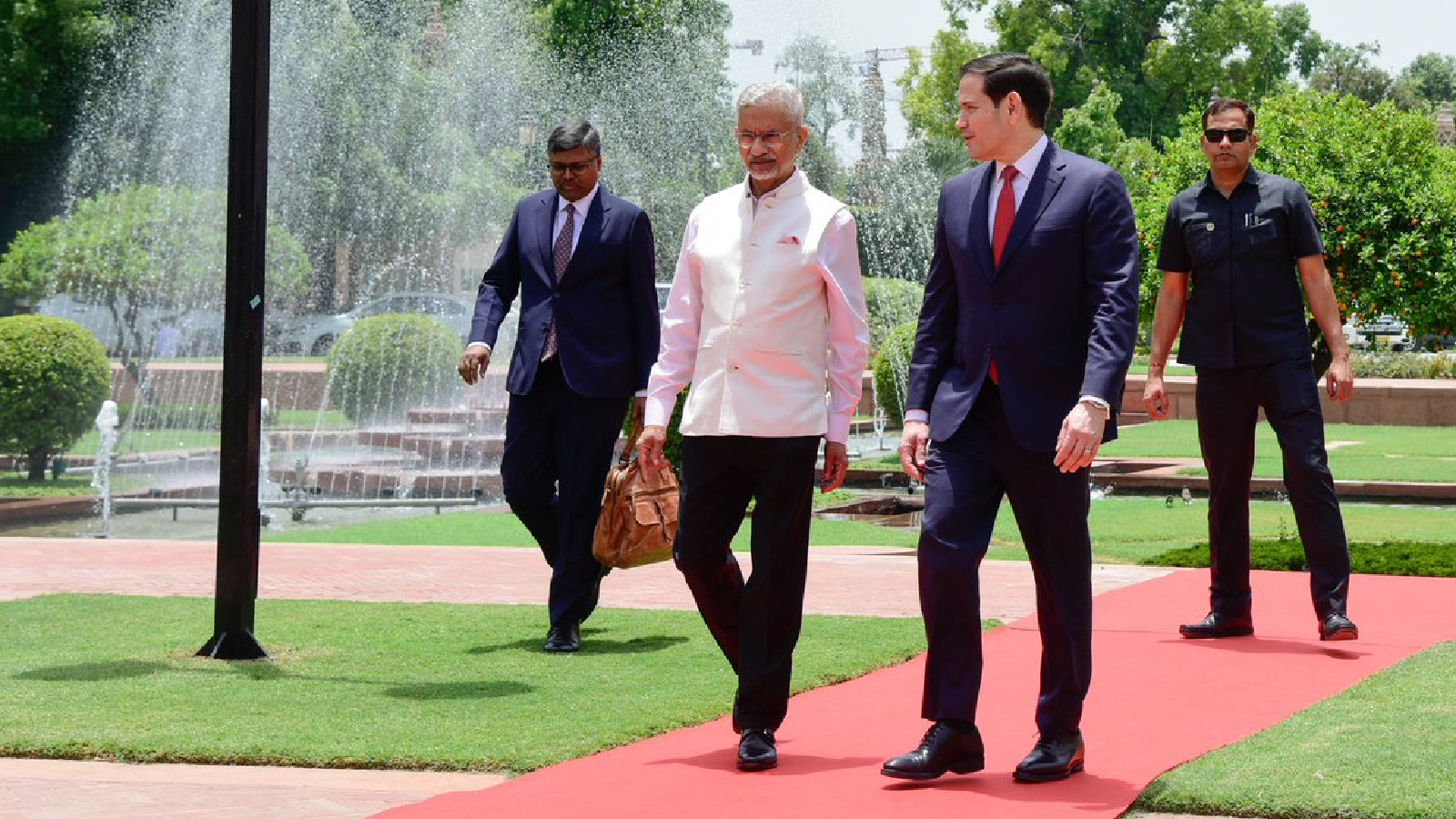
India has lodged a strong diplomatic protest with the United States following a US military strike on an oil tanker in the Gulf of Oman that resulted in the deaths of three Indian seafarers. External Affairs Minister S. Jaishankar spoke with US Secretary of State Marco Rubio on Friday and conveyed India’s concerns over the incident.
Jaishankar stated that the attack on a commercial vessel was unacceptable and stressed that “such lethal actions against commercial shipping are not justified.” The conversation came after India formally raised the issue through diplomatic channels.
Jaishankar posted on X.
Spoke to US Secretary of State Marco Rubio this evening. I reiterated India’s strong protest at the attacks by the US Navy in the Gulf that killed three Indian mariners. Such lethal actions against commercial shipping are not justified.
— Dr. S. Jaishankar (@DrSJaishankar) June 12, 2026
The Ministry of External Affairs (MEA) said that the US Chargé d’Affaires in New Delhi was summoned and informed of India’s strong concerns regarding the strike. Indian authorities urged the United States to ensure that military operations in the region take all necessary precautions to prevent civilian casualties.
According to the MEA, the protection of civilian lives and the safety of merchant shipping remain critical concerns amid escalating tensions in West Asia.
The diplomatic intervention followed confirmation that the three crew members who were initially reported missing after the strike have been found dead. The tanker, MT Settebello, had a total crew of 28 people on board, including 24 Indian nationals and four foreign nationals comprising two Pakistanis, one Ukrainian and one Russian.
Authorities said that 21 Indian crew members were rescued after the incident, while search efforts continued until the missing sailors were located and identified.
US Explains Reasons for Strike
The US military acknowledged carrying out the strike on the Palau-flagged tanker. According to US Central Command (CENTCOM), the vessel was targeted after allegedly failing to comply with instructions from American naval personnel and attempting to transport Iranian oil in violation of an ongoing US blockade.
CENTCOM stated that one of its aircraft engaged the vessel in the Gulf of Oman after repeated warnings and directions were allegedly ignored by the crew. The operation reportedly disabled the tanker.
MUST READ:Who were the 3 Indian crew members killed in US attack on oil tanker off Oman Coast
The strike took place during a period of heightened tensions across West Asia, where maritime activity has been affected by ongoing conflict and competing restrictions on shipping routes.
Commercial vessels operating in and around the Gulf of Oman and the Strait of Hormuz have faced increasing security challenges as regional hostilities continue to impact international trade and maritime movement.
The ongoing conflict in the Middle East has significant implications for India, which depends heavily on the region for energy supplies and trade routes. Escalating tensions can disrupt oil shipments, increase fuel prices, and affect economic stability. The conflict also raises concerns about the safety of Indian citizens and workers living across West Asian countries.