Written By Shruti Singh and Arpan Nag
Did you know that there is a place in Kolkata where you can actually touch moon soil—yes, you read that right. Nestled in Mukundapur, Kolkata, the Museum of Astronomy and Space Science, located within the Integrated Campus of the Indian Centre for Space Physics, offers visitors an out-of-this-world experience. From moon dust and Mars rocks to a mini space theatre and signed artefacts by astronauts, this Kolkata space museum is a galaxy of its own.
Inaugurated by India’s first astronaut, Wing Commander Rakesh Sharma, in October 2023, the museum showcases over 1,200 exhibits that bring the cosmos closer to Earth—blending education with awe.
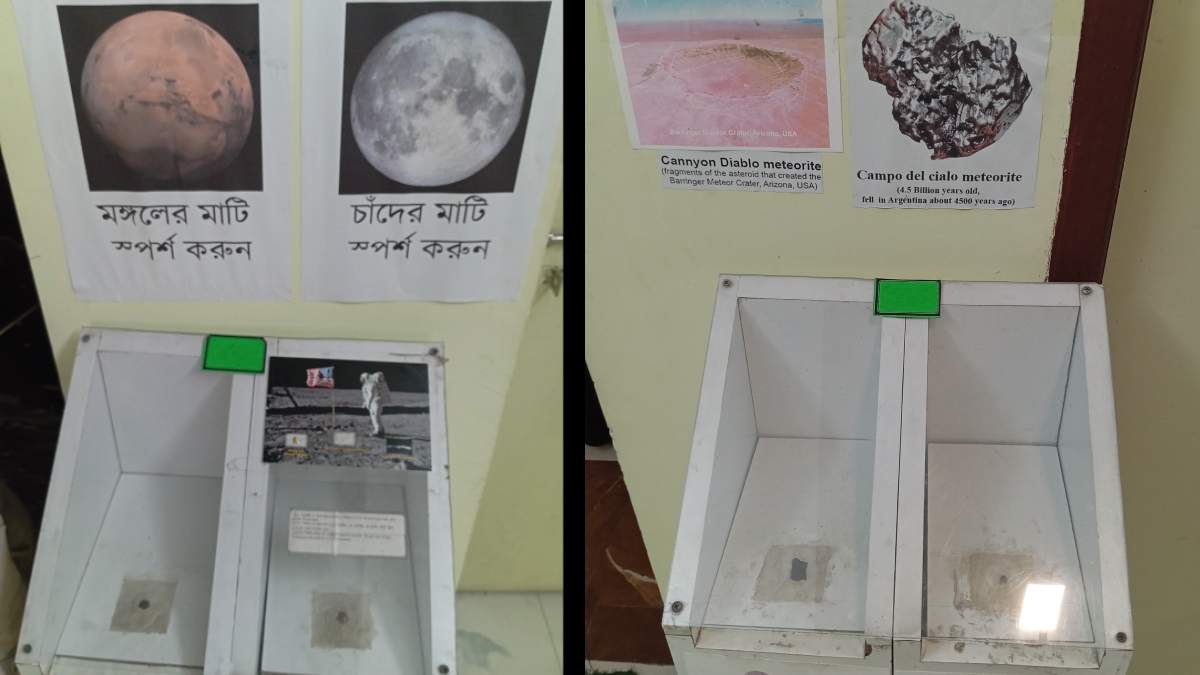
From moon dust and Mars rocks to a mini space theatre and signed artefacts by astronauts, this museum is a galaxy of its own. (Photos: Arpan Nag)
A Time Machine to the Stars
As visitors step into the Space Hall, they’re transported back to the early days of space exploration. The exhibit traces humanity’s skyward journey—beginning with hot air and gas-filled rubber and plastic balloons—and includes a replica of the Wright Brothers’ first airplane. The journey progresses to advanced space missions, featuring awe-inspiring items such as a body restraint strap used during NASA’s final space shuttle flight.
ALSO READ: Bengali rap’s bold new beat: Identity, language, and a rising sound
The hall also includes scaled models of Aditya L1, Sputnik, the Integral satellite, and the James Webb Telescope. Personal photographs of NASA astronauts, complete with autographs, line the walls. Even NASA cheque books are part of this rare collection. A large LED screen plays a brief documentary narrated live by Director Dr. Sandip Chakrabarti, offering deeper insights into each artefact’s significance.
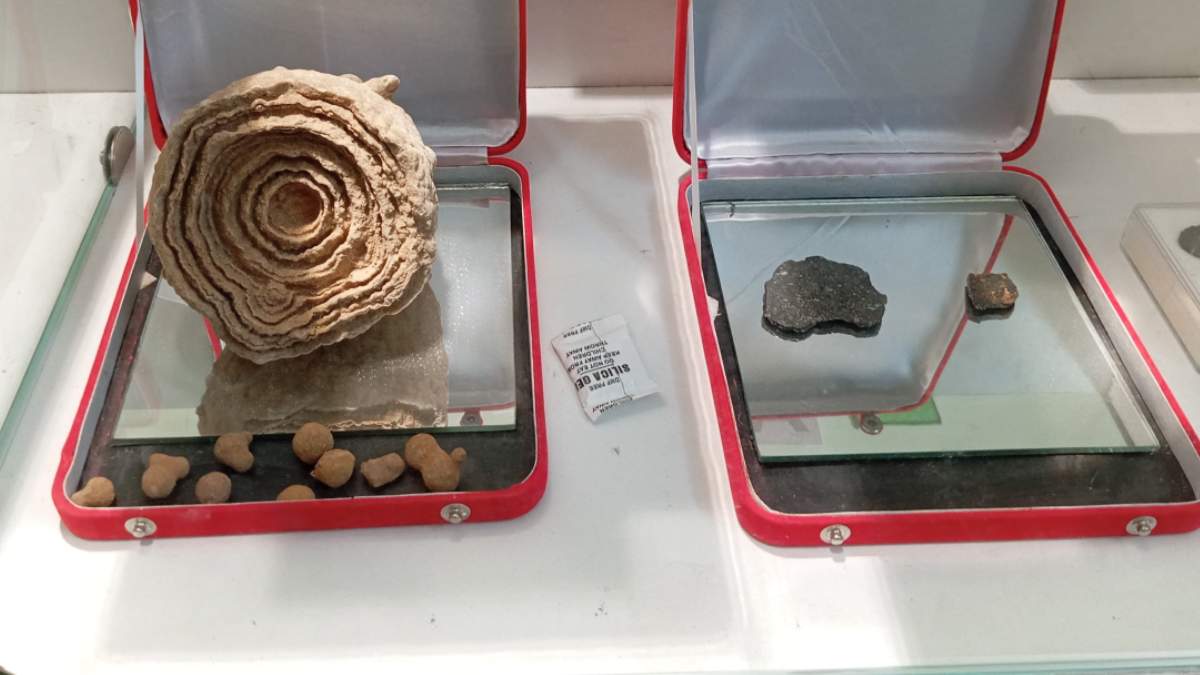
The museum is a treasure trove of space rocks, parts of meteorites and asteroids and much more. (Photo: Arpan Nag)
Voices Behind the Vision
We had a brief yet insightful conversation with Dr. Chakrabarti, a senior scientist who served at NASA from 1994–95 and is now an integral part of the museum’s growth.
“This museum is more than just a collection. It’s a tribute to mankind’s relentless quest for knowledge,” he said.
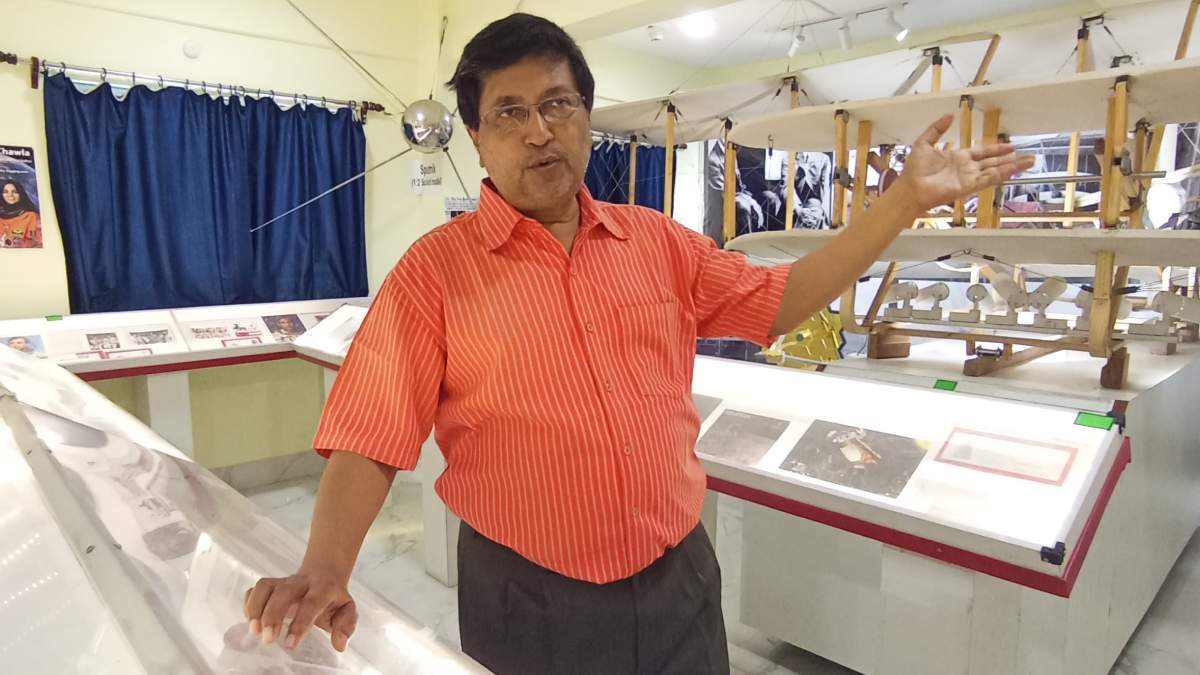
Dr. Sandip Kumar Chakrabarti, Director, Indian Centre for Space Physics, explains the various artefacts kept in the museum. (Photo: Arpan Nag)
When asked about the most prized possessions, he smiled, “The telescope gifted by Nobel laureate John Mathar and the original signed articles by greats like Orville Wright and Neil Armstrong hold both sentimental and scientific value. This place connects the cosmos to curious minds.”
Chakrabarti also hinted at the upcoming launch of a balloon launching station in Shiuri, which will be Eastern India’s first.
Curating the Cosmos
Dr. Chakrabarti, the driving force behind this celestial project, shared his journey. “Every piece in this museum has a story. I’ve collected most of these items myself—some were gifted, while others I secured through auctions,” he said with pride.
“I want people to know this museum exists. I hope that young minds interested in astronomy will come here to learn and explore.”
Beyond the main exhibit lies an expansive array of models and interactive installations. From a massive model of Apollo 11 to actual artefacts from the Apollo programme—including moon dust and Neil Armstrong’s hair—the detail is extraordinary.
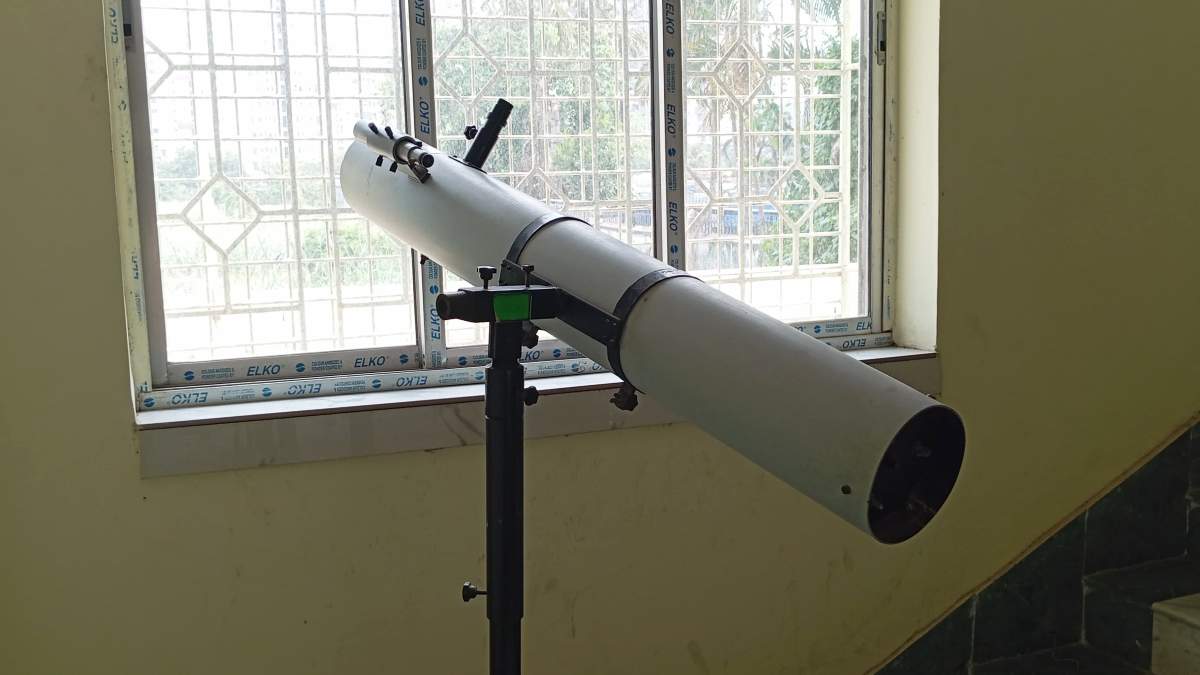
A real telescope housed at the museum. (Photo: Arpan Nag)
The Swami Vireswarananda Gallery showcases lunar and Martian rocks, fossils of cyanobacteria (Earth’s first lifeforms, dating back 3.7 billion years), and miniature figures of iconic scientists. Visitors can also explore a 30-metre optical telescope model, Foucault’s pendulum demonstrating Earth’s rotation, and a curved space-time exhibit based on Einstein’s theories. A gravity table offers hands-on interaction, while the Hall of Fame includes original diaries of Prof. Meghnad Saha (1950–54) and Prof. Satyendra Nath Bose’s unified theory calculations.
ALSO READ: The curious tale of Rani Putul — A clay doll that keeps Queen Victoria alive in Bengal
This Kolkata space museum also features first-day stamp covers, Phoswich detectors, and a model of the Saturn V rocket donated by Pulakash Bhattacharya from the USA.
Honouring Indian Pioneers of Space Science
The Museum of Astronomy and Space Science is not just a scientific marvel—it’s a heartfelt tribute to Kolkata’s unsung heroes of space science, Ram Chandra Chatterjee and Stephen Hector Taylor Smith, whose pioneering work inspired its foundation. Inaugurated on October 27, 2023, by Rakesh Sharma, the museum combines heritage with futuristic ambition.
Sharma’s own contributions are showcased in a dedicated gallery featuring signed memorabilia and objects he used during his space journey.
The museum is a treasure trove of space rocks, , fossils of cyanobacteria (Earth’s first lifeforms, dating back 3.7 billion years), and much more. (Photo: Arpan Nag)
“When we decided to create this space, our goal was to ignite scientific temper in young minds,” said Dr. Chakrabarti during the inauguration.
Interactive Learning That’s Truly Universal
Visitors are drawn into the wonders of space through audio-guided explanations, interactive demos, and detailed models. The mini space theatre “Aruna” offers a 3D guided tour of the International Space Station, screened on a giant white canvas using special 3D glasses—adding a cinematic dimension to the experience.
The Museum of Astronomy and Space Science in Mukundapur is more than a place—it’s a journey through time and space. With over 1,200 meticulously curated exhibits, expert guidance, and immersive learning tools, it stands as a beacon of inspiration for science lovers across India.
This Kolkata space museum truly brings the galaxy closer to home. Open every day except Wednesdays, from 9 AM to 6 PM, with an entry fee of just ₹100, this hidden gem is a must-visit for dreamers, students, and stargazers alike.