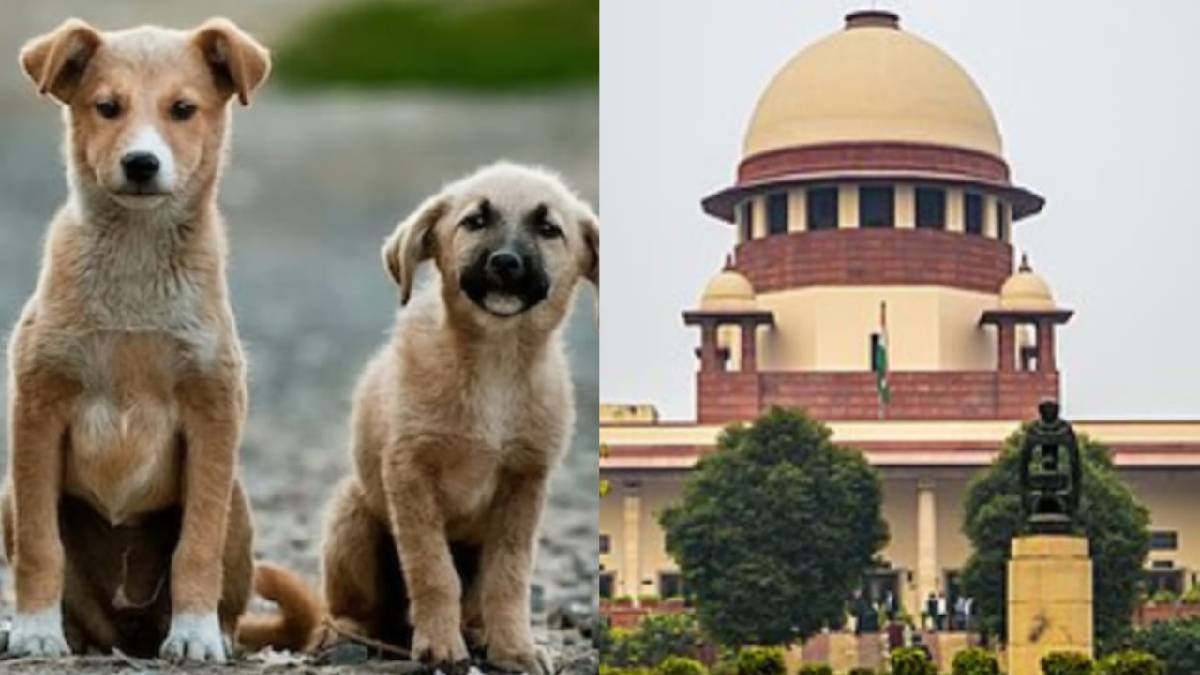
The Supreme Court on Friday modified its earlier order on the treatment of stray dogs, laying down a new framework that focuses on vaccination, sterilisation, and controlled feeding. A three-judge bench of Justices Vikram Nath, Sandeep Mehta, and NV Anjaria also expanded the scope of the case, transferring all related matters across India to the apex court to frame a uniform national policy.
ALSO READ: Supreme Court modifies order on stray dogs, allows release after sterilisation
Here are the major takeaways from the Supreme Court’s order:
1) Stray Dogs to Be Vaccinated and Released in Same Area
The court ruled that sterilised and vaccinated stray dogs must be released back into the same area they were picked up from. However, dogs found with aggressive behaviour or rabies will be immunised but not released.
“Municipal authorities shall comply with para 12, 12.1 and 12.2, prohibition on release of strays shall be stayed. They shall be dewormed, vaccinated, etc, and sent back to the same area. Those dogs with aggressive behavior or with rabies shall be immunized and not released,” Justice Vikram Nath stated.
2) Feeding Only in Designated Spaces, Not on Roads
The court prohibited feeding stray dogs on public roads. Instead, civic bodies, including the Municipal Corporation of Delhi (MCD), must set up designated feeding spaces in each ward, based on the local dog population. Notice boards must be installed at these sites, making it clear that dogs should only be fed in those designated areas.
3) Legal Action for Violations
Individuals found feeding stray dogs outside the designated feeding zones will face legal consequences under the relevant framework.
4) National Policy in the Works
The Supreme Court transferred all stray dog-related matters from across the country to itself, signalling that a uniform national policy will be framed.
This ruling modifies an earlier order of August 11 by Justices JB Pardiwala and R Mahadevan, which had directed that all stray dogs in Delhi-NCR be captured and housed in shelters within eight weeks. That decision came amid rising dog bite and rabies cases, with 37 lakh bites and 54 suspected rabies deaths reported in 2024. The earlier order also required shelters for at least 5,000 dogs. However, after strong objections from animal rights activists and public debate, the court reviewed and revised its position.