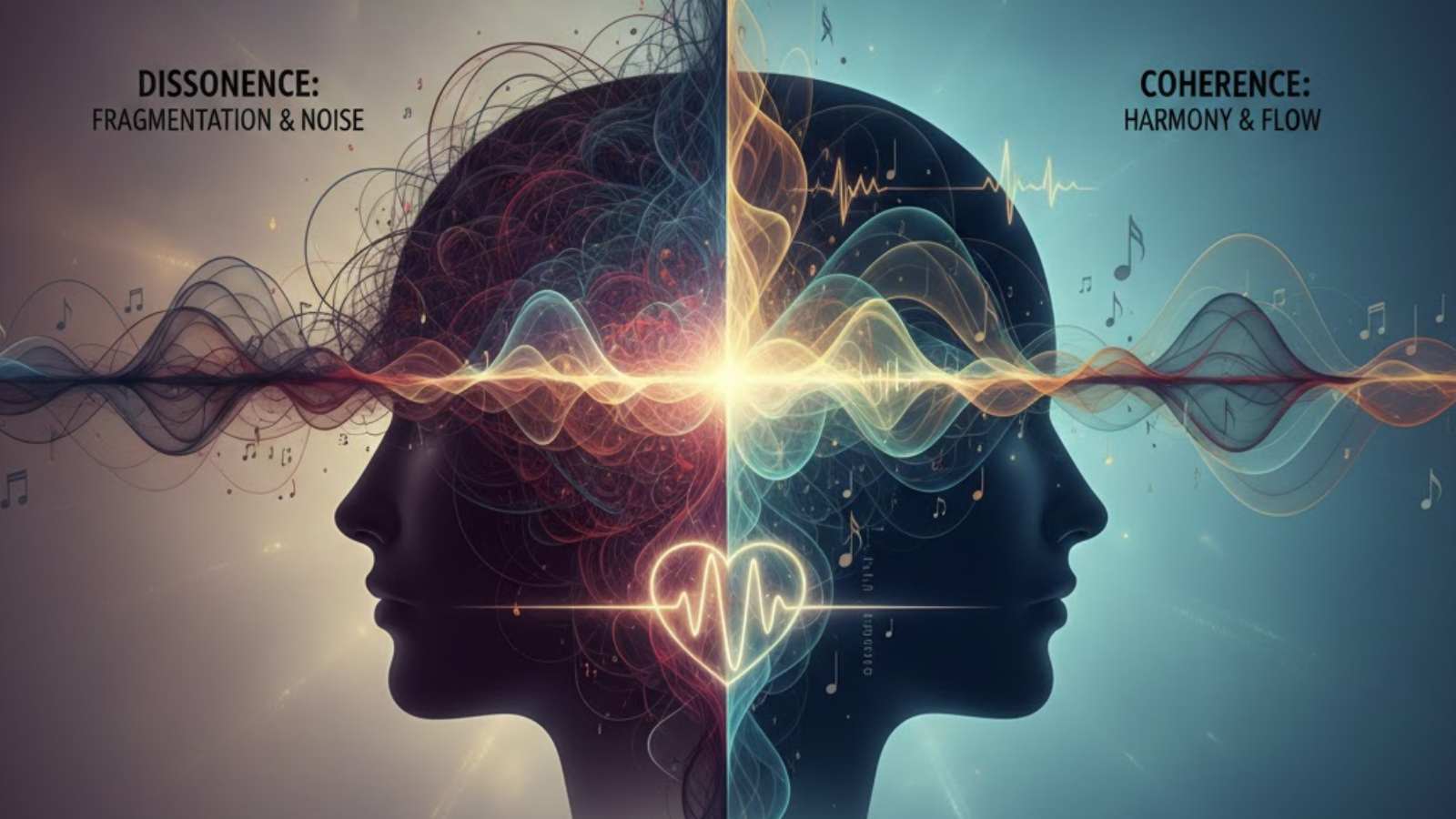
Emotions are not just feelings we experience in the mind or heart – they move through the body as energy. Each emotional state carries its own rhythm, quietly shaping our mental and physical well-being by influencing how the body breathes, moves, and responds.
`
How Emotions Live in the Body
Every emotion leaves a physical imprint. Anger speeds up the heart and tightens muscles. Sadness slows breathing and creates heaviness in the chest. Fear contracts the body into alertness, while joy softens muscle tone and brings a sense of expansion. These changes are not symbolic, they are real physiological shifts.
When emotions arise, they affect heart rate, breath, hormones, and muscle tension almost instantly. In this way, emotions act like internal frequencies, tuning the body either toward balance or strain.
Why Processing Matters More Than Control
When emotions are allowed to move through us – felt, expressed, and acknowledged – the nervous system naturally returns to balance. The mind and emotional brain work together, restoring clarity and coherence.
But when emotions are suppressed or ignored, they don’t disappear. They remain stored in the body as unresolved tension. Over time, this creates chronic stress patterns: constant alertness, fatigue, anxiety, or physical symptoms that seem to have no clear cause.
MUST READ: The hidden intelligence of sound: Why sound has shaped consciousness long before science could explain it
What we resist emotionally, the body carries.
The Mind and Body Are Not Separate
Mental health cannot be separated from physical health. A mind stuck in worry or hypervigilance keeps the entire system under strain, affecting immunity, digestion, sleep, and energy levels. The body and mind echo each other’s state.
This is where sound and music becomes especially powerful. Sound and music therapy, voice work, and gentle vibration help the nervous system release stored emotional energy. Instead of forcing healing, sound allows the body to reorganize itself, moving from tension toward integration.
When emotional energy begins to flow again, clarity returns—not just in the mind, but throughout the body.
The Unsound Mind: Dissonance, Not Disorder
The phrase “a sound mind” is older than psychology, older than psychiatry, and perhaps older than language itself. Long before the mind was dissected into diagnoses and disorders, human beings intuitively understood something simple yet profound: a healthy mind is one that is in tune.
Not silent or empty, but coherent.
A sound mind was never meant to imply perfection. It pointed instead to internal harmony – a state where thought, emotion, body, and awareness move together in rhythm rather than conflict.
ALSO READ: What makes a sound mind? The hidden physics of mental wellbeing and harmony
And if a sound mind is harmony, then what, truly, is an unsound mind?
Reframing Mental Struggle as Dissonance
Labelling the unsound mind as “disorder” pathologizes a natural response to discord, but viewing it as dissonance; a misalignment of inner rhythms, offers clarity and compassion. Like clashing notes in a symphony, our physiological, emotional, and cognitive systems fall out of harmony, creating cacophony rather than flow. This perspective aligns with neuropsychology, where imbalance isn’t brokenness but a call to realign.
Sources of Inner Dissonance
Dissonance builds from layered stressors that disrupt homeostasis:
- Chronic stress: Sustained cortisol floods keep the HPA axis (hypothalamic-pituitary-adrenal) in overdrive, blocking shifts to restorative states.
- Unresolved emotional experiences: Trauma lodges in the limbic system, replaying as implicit memories that hijack present awareness.
- Prolonged survival mode: Fight-flight-freeze dominance locks sympathetic nervous system activation, exhausting resources without recovery.
- Suppression rather than expression: Bottled emotions create somatic tension, amplifying vagal nerve dysregulation.
- Internalized expectations and identities: Societal or self-imposed roles fragment authenticity, fuelling cognitive dissonance in the prefrontal cortex.
These converge to trap the mind in discord.
The Physiology of Stuck Alertness
In dissonance, the nervous system resists downshifting: brainwaves dominate in high-beta ( \beta > 18 Hz) or low-gamma ranges, signalling hypervigilance rather than alpha-theta coherence for integration. When the body is in a state of dissonance, the nervous system struggles to relax. The brain remains locked in high alert, operating in fast brainwave patterns associated with vigilance and stress rather than calm awareness. Thoughts begin to loop and race, often replaying worries or unresolved experiences.
ALSO READ: The emotional physics of sound: Why we feel before we understand
At the same time, the body tightens. Muscles stay subtly braced, breathing becomes shallow, and emotions remain unprocessed, sitting quietly but heavily beneath the surface. This state isn’t caused by lack of willpower or emotional weakness. It’s a biological response. When the nervous system does not receive enough signals of safety, it stays on guard, prioritizing survival over rest, integration, or healing.
This State Is Reversible
The good news is that this kind of stuck alertness is not a personality flaw. It’s rather a temporary physiological and energetic state. When the nervous system regains coherence, the noise settles. Practices like sound therapy, music therapy, conscious breathing, and gentle nervous-system regulation help guide the brain out of high alert and into slower, restorative rhythms associated with healing and emotional processing.
Recognizing this shifts the narrative. Instead of blaming ourselves for feeling tense, restless, or overwhelmed, we begin to understand that the body is simply waiting for cues of safety. And when those cues arrive through rhythm, resonance, breath, or voice – the system naturally softens, moving from survival mode into presence.
Sound: The Nervous System’s First Language
Sound reaches us before meaning does.
Long before we understand words or form thoughts, we respond to vibration. Sound is not just something we hear—it is the nervous system’s first language, shaping our experience of the world before logic, memory, or reason come online.
Even before birth, we are immersed in sound. In the womb, a developing foetus listens to the steady rhythm of the mother’s heartbeat, the rise and fall of her breath, and the emotional tone of her voice. These vibrations travel through fluid, imprinting rhythm and safety directly into the forming nervous system. This early exposure organizes the brain in ways that sight and cognition cannot—because sound reaches the brain faster.
Sound waves travel directly to the brainstem and emotional centres of the brain. That is why tone, rhythm, and cadence affect us instantly, often before we know why we feel the way we do.
Why Sound Bypasses Thought
Think about how your body reacts to a sudden loud noise. Before you can label it or understand it, your heart jumps, your muscles tense, and your breath changes. That’s because sound takes a shortcut—it activates emotional and survival centres of the brain in milliseconds.
On the other hand, a soft hum, a familiar voice, or a soothing melody can calm the body just as quickly. Without explanation or effort, the nervous system shifts into safety. Heart rate slows. Breathing deepens. The body listens long before the mind understands.
ALSO READ: What ancient civilizations knew about sound that modern science is finally proving
This is why babies are soothed by lullabies even when they don’t understand the words. It’s not the language that matters—it’s the vibration.
How Sound Shapes Memory and Emotion
More than a century ago, scientist Ivan Pavlov demonstrated how sound creates powerful emotional associations. In his experiments, dogs learned to associate the sound of a bell with food. Eventually, the sound alone triggered a physical response.
This same mechanism operates in humans. A song from childhood can bring tears without warning. A particular tone of voice can instantly create comfort—or fear. These reactions don’t pass through logic. They live in the body, stored as emotional memory.
Sound becomes a bridge between past and present, carrying meaning without needing explanation.
Why This Matters for Healing
Because sound speaks the body’s first language, it has immense therapeutic potential. Practices like chanting, humming, rhythmic breathing, and sound therapy work not by forcing change, but by gently re-tuning the nervous system.
These vibrations help the brain and body move from dissonance to coherence—from tension to regulation. In many ways, healing through sound is not about learning something new, but remembering something ancient.
Sound doesn’t ask us to analyse, but to listen. And when we do, the body often knows exactly how to respond. It’s why chants or music therapy resolve trauma – speaking the body’s first language to rewrite old scripts.
The Sound Mind: Coherence, Not Control
A sound mind is not a mind without challenges. It is a mind that can meet challenge without fragmentation.
Neuroscience offers a useful lens here. A well-regulated mind shows fluid movement between brain states:
- alertness when needed,
- calm when possible,
- rest when required.
The prefrontal cortex (clarity and reasoning), the limbic system (emotion), and the autonomic nervous system (stress response) communicate without overwhelming one another. No part shouts louder than the whole.
Neuroscience reveals a regulated mind shifts seamlessly: beta waves fuel alertness for action, alpha sustains calm focus, theta invites restorative insight, and delta anchors deep rest.
Fear, anger, grief, or doubt arise but transit through, like notes in a melody without lodging as dissonance. Absent is mental shouting; present is pulse, where thought harmonizes with feeling and breath. This rhythmic capacity defines soundness: not perfection, but return.
In lived experience, a sound mind:
- responds rather than reacts
- processes emotions instead of suppressing them
- returns to equilibrium after disturbance
- holds inner quiet even amid outer noise
It is not the absence of thought, but the absence of mental shouting.
You may still feel fear, anger, grief, or uncertainty – but these emotions move through rather than settle in.
A sound mind has rhythm.
A sound mind embodies resilient coherence, navigating challenges through fluid neural harmony rather than rigid control.
The Role of Sound in Regulation
Sound has a unique ability to influence the nervous system because it operates at the same level as emotion – rhythm, vibration, and resonance.
Sound harnesses rhythm, vibration, and resonance to mirror emotions, gently guiding the nervous system toward regulation without force.
Mechanisms of Sound in Nervous System Regulation
Sound aligns with emotional frequencies by entraining physiological rhythms: rhythmic patterns synchronize brainwaves to alpha/theta states for calm integration; humming activates vagal pathways via nasal cavity vibrations, boosting parasympathetic tone; slow tempos lower cortisol by mimicking resting heart rates; vocal toning synchronizes breath and cardiac coherence, as exhalations elongate during sustained notes.
Research-Backed Effects
Studies confirm these dynamics – entrainment shifts beta dominance to restorative waves, reducing hyperarousal. Sounds and rhythms help calm an overactive nervous system. When the brain is guided away from constant alertness and into slower, more restorative patterns, stress levels naturally reduce.
Practices like humming, toning, and rhythmic sound stimulate the vagus nerve, which signals safety to the body. This improves heart rate variability—a key marker of emotional resilience and nervous system health. Slower tempos and steady sounds have also been shown to reduce stress hormones like cortisol, especially when experienced for 15 to 20 minutes or more.
Sound as Conscious Medicine
When listening turns intentional, sound transforms into a healing modality. In sound therapy, frequencies like 432 Hz or binaural beats entrain brainwaves, harmonizing overstimulation into coherence – much like ancient practices in spiritual psychology. This isn’t passive; it’s an act of presence where vibration meets vibration, rewiring neural pathways for resilience. Over time, it heals trauma by attuning the unsound to its rhythmic core, turning noise into symphony.
Tuning the Mind, Not Fixing It
Mental health is not about eliminating discomfort. It is about restoring coherence.
Restoring coherence through tuning reframes mental health as a return to innate rhythm, not eradication of struggle.
Coherence Over Elimination
Mental health thrives not by silencing discomfort but by realigning thought, emotion, breath, and body into shared vibration. A sound mind pulses rhythmically like alpha waves syncing heartbeat to breath, embracing waves of disturbance without fracture. Overwhelm in the unsound mind signals overload, not weakness, echoing limbic hyperarousal that sound gently recalibrates.
Healing as Rhythmic Return
True healing sidesteps control, initiating with tuning: vocal hums entrain vagal coherence, slow chants mirror prenatal cadences, toning invites suppressed emotions into resonant flow. As systems harmonize, the nervous system downshifts naturally – cortisol ebbs, clarity surfaces, transforming rigidity into fluid resonance.
The Resonant Mind Rediscovered
A sound mind embodies harmony’s return, not disturbance’s absence; rigidity yields to music-like adaptability. Listening reawakens this primal design, where mind resonates as symphony, softens in rhythm, and remembers its vibrational essence.