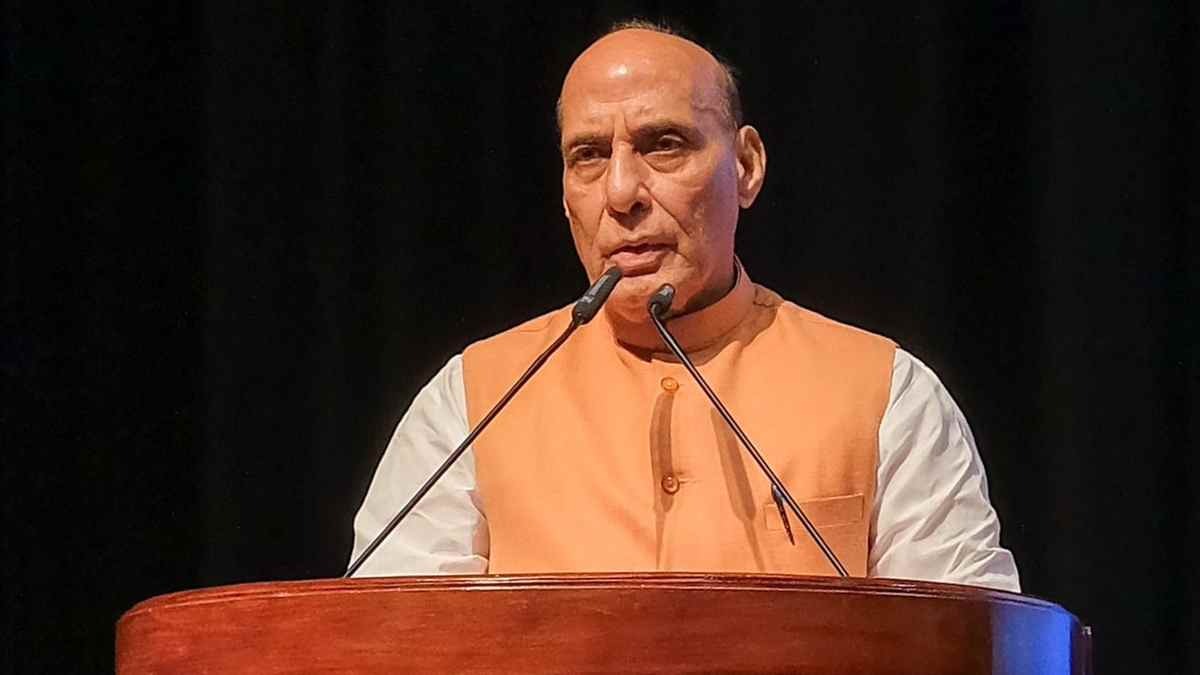
India’s Defence Minister Rajnath Singh took a resolute stand against terrorism at the Shanghai Cooperation Organisation (SCO) Defence Ministers’ Summit in Qingdao, China, by refusing to sign a joint communiqué that he believed would undermine India’s position on terrorism, particularly in light of the recent Pahalgam terror attack.
Sources revealed that China, which currently chairs the SCO, along with its close ally Pakistan, attempted to downplay the threat of terrorism in the draft document. In response, Singh stood firm and refused to sign any declaration that failed to adequately reflect India’s zero-tolerance policy toward terrorism. As a result, the SCO members could not issue a joint statement.
This was the first direct encounter between the defence ministers of India and Pakistan since the deadly Pahalgam attack and India’s subsequent Operation Sindoor. According to sources, there were no pleasantries exchanged between Singh and Pakistan’s Defence Minister Khawaja Asif, reflecting the ongoing tensions between the two nations.
Rajnath Singh Calls Out Double Standards on Terrorism
During his address at the summit, Rajnath Singh delivered a pointed condemnation of cross-border terrorism, implicitly targeting Pakistan without naming it. “Some countries are using cross-border terrorism as an instrument of policy to provide shelter to terrorists. There should be no place for such double standards. SCO should not hesitate to criticise such nations,” Singh stated.
ALSO READ: Pahalgam attacker were Pakistanis, LeT terrorists: NIA confirms
He strongly referred to the April 22 Pahalgam terror attack in Kashmir’s Baisaran Valley, which claimed the lives of 25 tourists and one local. Singh emphasized the attack bore clear similarities to past assaults carried out by Lashkar-e-Taiba (LeT). The Resistance Front (TRF), widely believed to be a LeT proxy, had claimed responsibility for the attack.
India’s concerns were further heightened when China-backed Pakistan succeeded in removing TRF’s name from the April 25 UN Security Council statement condemning the Pahalgam attack. Singh used the platform to reiterate India’s policy of zero tolerance and the urgent need for decisive global action against terrorism.
He also defended India’s military response—Operation Sindoor—which involved the targeted destruction of nine terror camps deep within Pakistani territory. “India was exercising its legitimate right to self-defence to deter future cross-border attacks,” he asserted.
ALSO READ: Rare earth minerals, magnets to US for exchange of Chinese students ‘using’ US institutes: Trump confirms trade deal with China
The summit, attended by defence ministers from all ten SCO member states including China, Russia, Pakistan, and India, highlighted the growing divide within the bloc over how to address terrorism, with India emerging as the most vocal advocate for accountability.