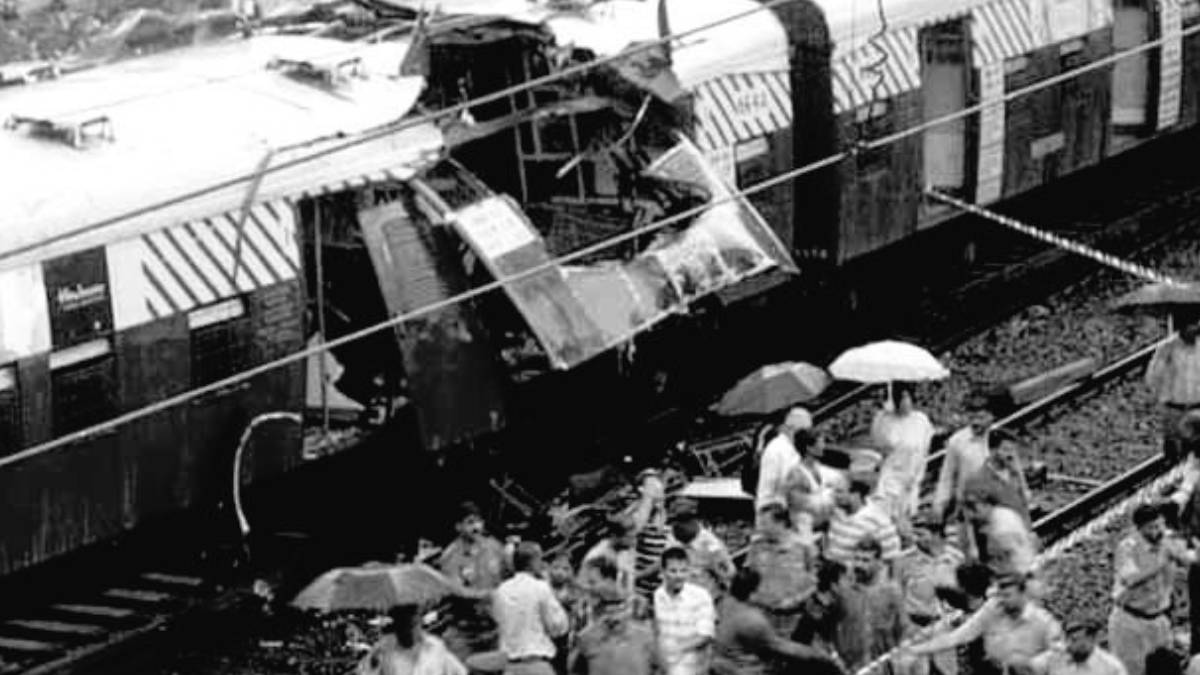
2006 Mumbai Train Blasts: In a significant development, the Maharashtra government has announced plans to challenge the Bombay High Court’s acquittal of 12 individuals convicted in the 2006 Mumbai train blasts case. Terming the verdict “shocking,” Chief Minister Devendra Fadnavis confirmed that the state will move the Supreme Court to appeal against the judgment.
“I will go through the entire order. I have discussed it with the lawyers, and the high court verdict will be challenged in the Supreme Court,” Fadnavis told reporters on Monday.
The acquittal, delivered by a special bench comprising Justices Anil Kilor and Shyam Chandak, overturned the 2015 convictions handed down by a special court. The bench categorically stated that the prosecution had “utterly failed” to establish the guilt of the accused, adding that it was “hard to believe the accused committed the crime.”
Court Criticises Flawed Probe and Evidence in 2006 Mumbai Bombings
The High Court sharply criticized the investigation and the quality of evidence presented by the prosecution. It noted that the prosecution failed to even establish the nature of the explosives used in the coordinated bombings, which tragically claimed over 180 lives on July 11, 2006.
ALSO READ: 2006 Mumbai Train Blasts: Bombay High Court acquits all 12 convicts after 19 years
The court also dismissed the state’s plea seeking confirmation of the death penalty for five of the 12 accused. In its scathing remarks, the bench highlighted that key witnesses were unreliable, and identification procedures were questionable. “The defence had raised serious questions about the test identification parade. Many witnesses remained silent for unusually long periods, some over four years, and then suddenly identified the accused. This is abnormal,” the bench observed.
Further, the bench pointed to confessional statements allegedly extracted through torture, emphasizing that such testimonies held no evidentiary value.
With the state preparing to approach the Supreme Court, the case, once again, returns to national attention as questions loom over justice, investigative accountability, and the burden of proof in terror cases.