Written by Vanshika Khandelwal
E-commerce has rapidly become part of everyday life, with people relying on platforms like Flipkart, Amazon, Meesho, Myntra and Snapdeal to shop for electronics, clothes, groceries, and even household essentials. With busy schedules keeping many away from physical stores, online shopping offers unmatched convenience — products can be compared, ordered, and delivered at the click of a button.
But while online shopping feels easier, many consumers are ending up paying more than they would in local markets. Behind the scenes, hidden costs such as high commission rates, return policies, packaging, and delivery charges are pushing up prices.
Why online shopping is more expensive
Local shop owners who sell through these platforms explain that the difference between offline and online prices comes down to platform charges and high return rates. Sellers are forced to raise prices to cover these costs, and ultimately, customers pay more.
Abhishek Bhatiya, owner of Paridhan in Kolkata, started his online business during the Covid-induced lockdown, selling kids’ clothing through Meesho.
“I started my online business during COVID on the Meesho platform, selling kids’ clothing. I faced many challenges, mainly high return rates. Customers often place COD orders but return products after a few days, and I have to bear both delivery and return charges. Some use the 7-day return policy after trying the clothes, causing losses,” he said.
Bhatiya pointed out that commissions play a major role in price differences.
ALSO READ: Home deliveries, live sessions & UPI payments: How the online boom is reshaping Burrabazar
“Local markets cover limited areas, but online platforms reach many customers, making online business very important. Regarding the price difference between online and offline, it occurs because platforms charge their own commissions. For example, Meesho used to charge 30% commission earlier. Another factor is the return ratio, which can be around 33%, including return charges and penalties. To adjust for these costs, the product price online is higher. I applied through the seller panel to start selling.”
Sellers juggle reach and rising costs
For some, e-commerce has been a way to expand their business beyond their local area, but it comes with trade-offs.
Vimal Kumar Mantri, owner of Ice Cube Collection, has been selling online since 2014.
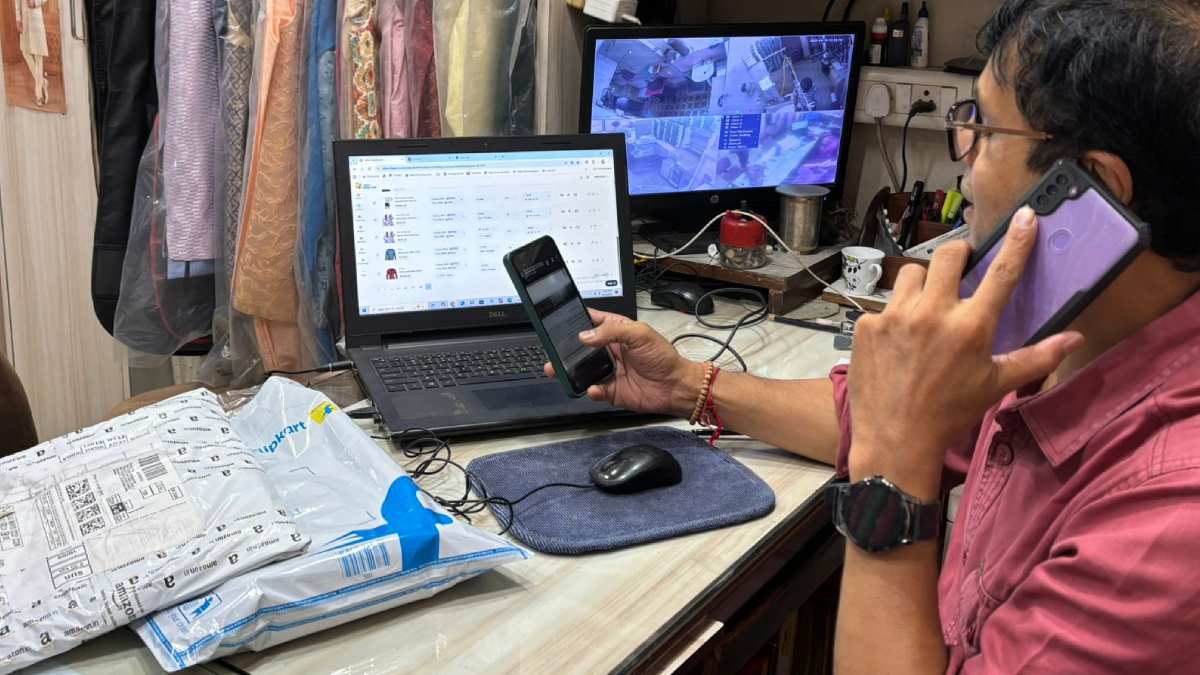
Sellers also benefit from broader reach and new business opportunities. But this convenience comes at a price — literally. Higher commissions, return penalties, and platform fees mean products often cost more online than in local shops. (Photo by Vanshika Khandelwal)
“I’ve been in this business since 2014. I started with Snapdeal and now work with Flipkart, Amazon, and Meesho. The price difference is mainly due to high commission charges of 25–30%, including GST,” he explained.
He added that despite challenges, global reach makes e-commerce attractive.
“I chose e-commerce because it allows me to do business with people worldwide, which is not possible offline. Returns are a big challenge, as customers sometimes misuse the policy. I handle packaging myself and use ads and discounts to compete. I work both online and offline and plan to keep growing as more people shop online,” said Mantri.
ALSO READ: This Kolkata Durga puja pandal breaks a mosque wall every year, but here’s the twist
Krishna of Manoj Textile, who sells on Utsav and Snapdeal, echoed similar concerns. “High return rates and uncertain payments make it difficult to be sure about good sales, and the high commissions from the company lead to the price differences. However, being online helps connect with more customers and increase sales.”
The trade-off: convenience versus cost
Customers continue to shop online because of the ease of browsing, ordering, and getting products delivered home. Sellers also benefit from broader reach and new business opportunities. But this convenience comes at a price — literally. Higher commissions, return penalties, and platform fees mean products often cost more online than in local shops.
While e-commerce has simplified life and expanded access to goods, buyers are increasingly realising that the hidden costs of online shopping are being passed down to them. For many, the choice is now between affordability in local markets and the convenience of e-commerce, even if it means paying extra.
(Vanshika Khandelwal is an intern with The Theorist)