Written by Subhajit Dasbhaumik
There are mornings when the city seems to whisper stories from another era. On August 24, as light rain fell over Dalhousie Square—today’s B.B.D. Bagh—I found myself standing before the grand Reserve Bank of India building, once the site of the old Customs House. It was here, 111 years ago, that one of the boldest episodes of India’s revolutionary history unfolded: the Rodda Arms Heist of 1914.
The walk I joined was led by independent researcher Amitabha Gupta, a man whose passion for the subject has turned him into a living archive of this extraordinary event. Having written extensively about the heist and even acted as a consultant for a DD Bangla documentary on the subject, Gupta has been conducting this walk since 2019. He had invited me to join this year’s edition, aptly titled “The Greatest Daylight Robbery Walk,” and I could not refuse.
A Rain-Soaked Reminder of History
As our small group huddled under umbrellas, Gupta noted with a smile that the morning of the heist itself—26th August 1914—had also been marked by light showers and dark clouds. In that moment, the past felt startlingly close.
The story he narrated was nothing short of breathtaking. On that day, Bengali revolutionaries, with support from Marwari compatriots, executed a flawless operation in broad daylight. They vanished with 50 Mauser C96 pistols and 46,000 Kynoch cartridges while the consignment was being transported from the Customs House to the godown of R B Rodda and Company, a British arms retailer in Calcutta.
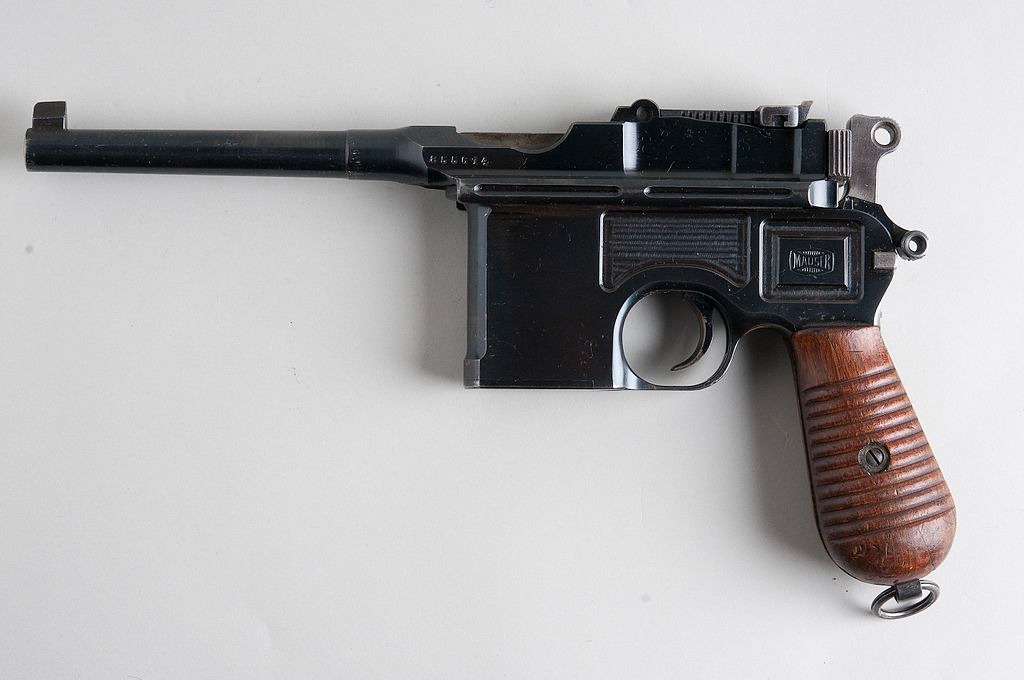
Mauser C 96 Pistol , (Photo: Wikimedia Commons)
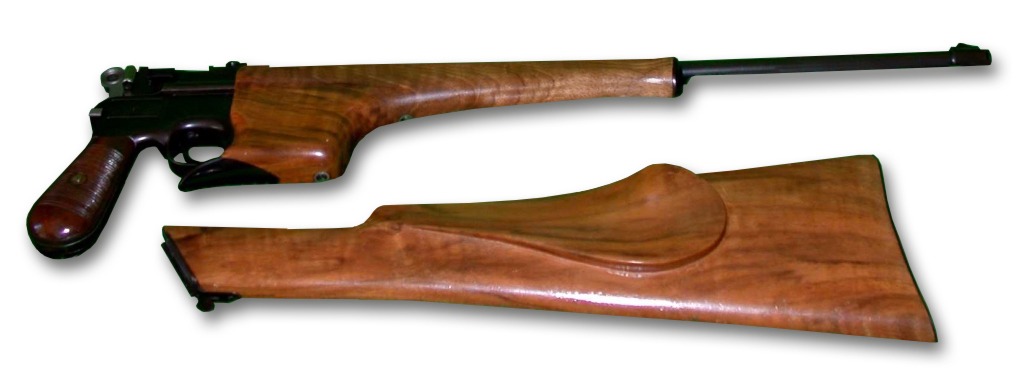
Mauser C 96 Pistol with shoulder Stock, (Photo: Wikimedia Commons)
The arms had arrived via the ship Tactician, meant to be cleared by Srish Mitra, a jetty clerk at Rodda and Company. But Mitra—known secretly as Habu—was no ordinary employee. Planted inside the company through Kalidas Mukherjee, Mitra was in fact working with members of Atmonnati Samiti and Dacca Mukti Sangha, organizations that included revolutionaries like Bipin Behari Ganguly, Anukul Mukherjee, Girindra Nath Banerjee, Srish Pal, and Haridas Datta.
ALSO READ: Story of Kristo Das Pal — A forgotten journalist whom Kolkata remembers only through an ignored statue
The Seventh Bullock Cart
Six bullock carts were officially assigned to carry the consignment to Vansittart Row, barely 350 metres away. But Mitra, with remarkable cunning, introduced a seventh cart driven by Haridas Datta, disguised as a garowan with the help of Marwari revolutionary Prabhudayal Himmatsinghka, who did his makeup.
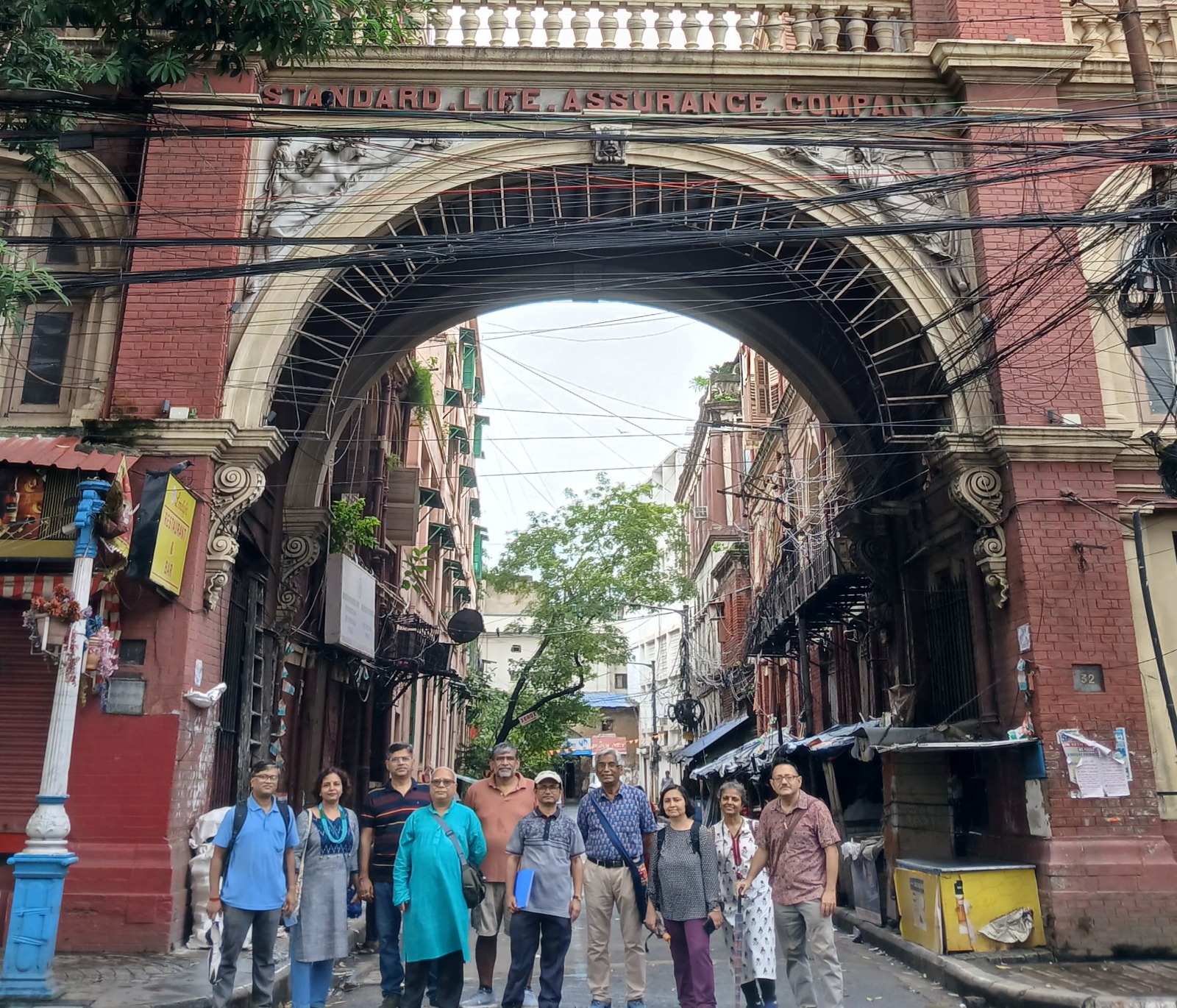
Amitabha Gupta (wearing a cap) with the participants of the walk in front of Vansittart Row which led to the godown of Rodda & Co. (Photo: Subhajit Dasbhaumik)
The seventh cart, loaded with the Mauser pistols, quietly broke away as the others entered Vansittart Row. It slipped unnoticed through R N Mukherjee Street, Mangoe Lane, Bentinck Street, Chandni Market, and finally Nirmal Chandra Street.
As we retraced these streets, the modern-day garbage vans clattering by seemed to echo the sound of those bullock carts from over a century ago. Gupta pointed out the gateway of the old Rodda Company building, still adorned with its original cannons, a silent witness to history.
From Chandni Market to Bowbazar
Our walk continued into the bustling lanes of Chandni Market. Gupta explained how the seventh cart had made its way to Subodh Mullick Square, long before Ganesh Chandra Avenue even existed. Today, a memorial to the Rodda Arms heist stands there, its four busts honouring the revolutionaries. The land was donated by the government, but the memorial itself was built by Gopal Mukhopadhay, nephew of Anukul Mukhopadhay—better known as ‘Gopal Pantha’.
We even spoke with Santanu Mukherjee, his grandson, who shared a few words before we pressed on.
ALSO READ: Did the British melt Maratha rifles for this dome? The history of Kolkata’s Gwalior Monument
On Nirmal Chandra Street, Gupta stopped by a shop, K C Mookherjee and Sons, where the wooden boxes containing the pistols and cartridges had once been unloaded. The area, Gupta explained, was then an iron yard. A car was supposed to pick up the consignment, but when it failed to arrive, the revolutionaries swiftly arranged for two hackney carriages. The cargo was transported to Jelia Para Lane near Bowbazar College Street crossing, at the house of Bhujanga Bhusan Dhur, a medical student and member of the Samiti. From here, the weapons were distributed.
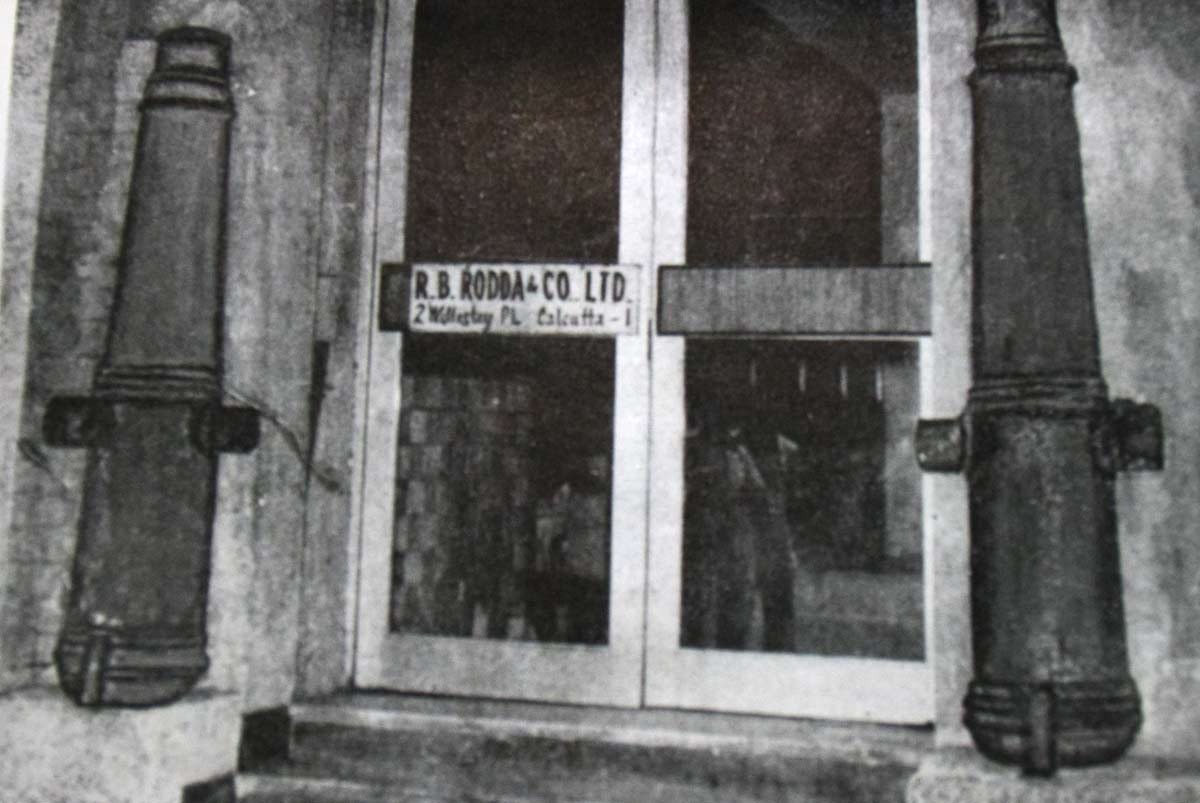
An old photograph of the entry gate of Rodda & Company.
The Aftermath
The daring operation became part of Kolkata’s folklore. These guns were known to be later used in at least 54 robberies and murders. Yet the “Missing Arms Case” was weak, as Mitra—its key player—had disappeared, fleeing first to Rangpur and later to Rava, a tribal village, where he vanished without trace. Many revolutionaries were arrested, but sentences ranged only between two and four years.
The walk concluded at Bhimnag’s sweet shop near Bowbazar and College Street crossing. Sharing sweets after a morning of stories, I felt as though I had briefly lived inside this thrilling chapter of India’s freedom struggle.
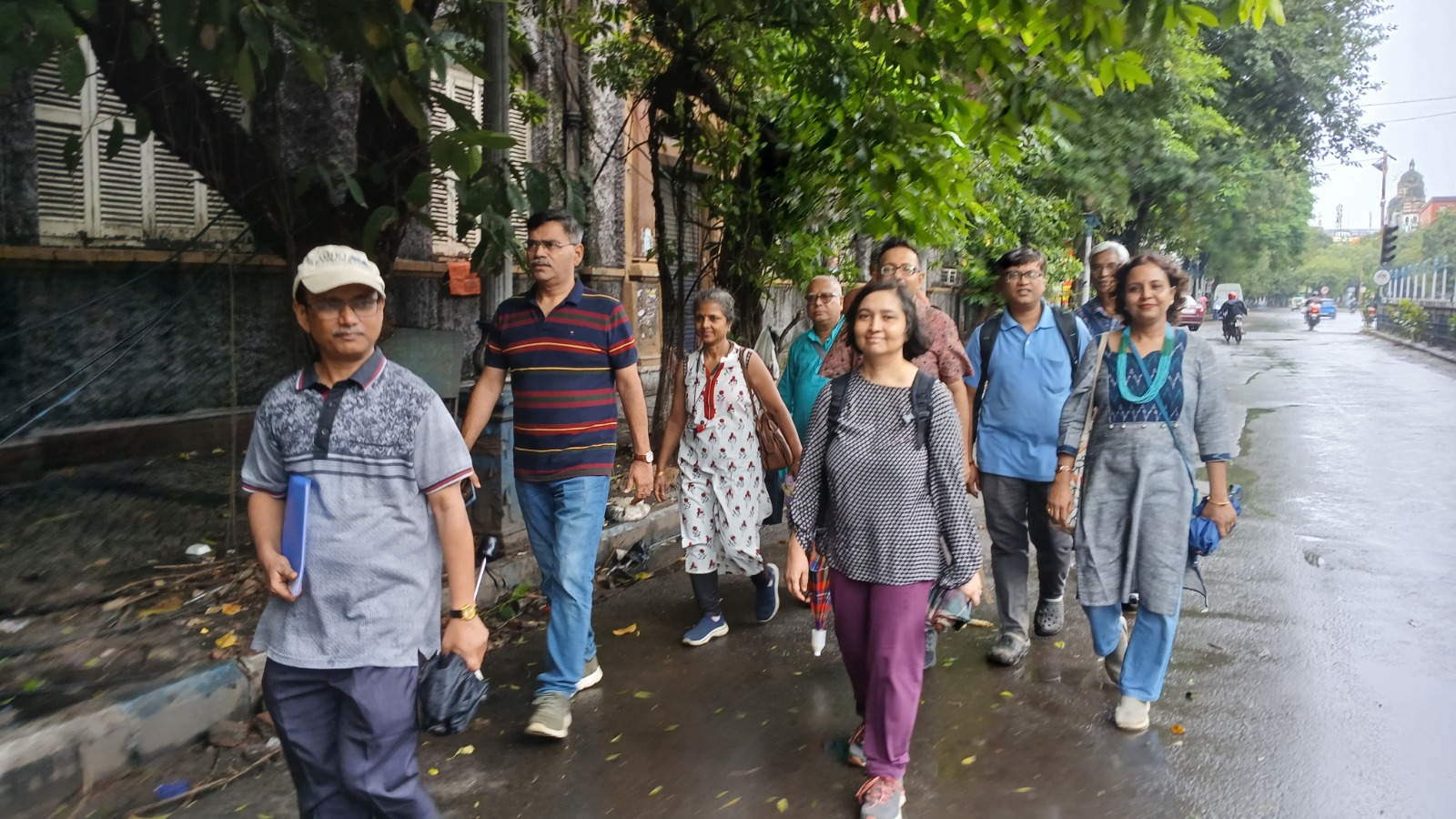
Amitabha Gupta leading the participants during “The Greatest Daylight Robbery Walk”. (Photo: Subhajit Dasbhaumik)
“Wonderful experience. It was like living through this thrilling chapter of India’s freedom struggle,” reflected Abhijit Dutta, a fellow participant.
As Satyabrata Guha, former Deputy Director General of the Geological Survey of India, aptly said: “Walking along the path of Rodda Arms Heist which took place 111 years back is witnessing the thrilling history of how the dreams and perfect planning of a group of young people made the almost impossible possible. The thrill hidden in each step still thrills even today.”