Iran has publicly admitted for the first time that its nuclear facilities were “badly damaged” following coordinated US and Israeli airstrikes during the recent 12-day conflict. The strikes, launched on June 21, targeted key Iranian nuclear installations in Fordow, Natanz, and Isfahan as part of what Washington called a measure to halt Iran’s nuclear ambitions.
Iranian Foreign Ministry spokesperson Esmail Baghaei told Al Jazeera on Wednesday, “Our nuclear installations have been badly damaged, that’s for sure.” The statement marks a shift from Tehran’s earlier claims that there were no signs of radioactive leaks or critical damage.
Tehran Demands US Compensation, Threatens UN Action
In a separate interview with a Lebanese news outlet, Iran’s Deputy Foreign Minister Saeed Khatibzadeh demanded that the United States pay compensation for the attacks or face formal complaint proceedings at the United Nations.
“Washington must pay compensation for the damages caused to Iran’s facilities or else Tehran will file a complaint with the United Nations on this matter,” he stated.
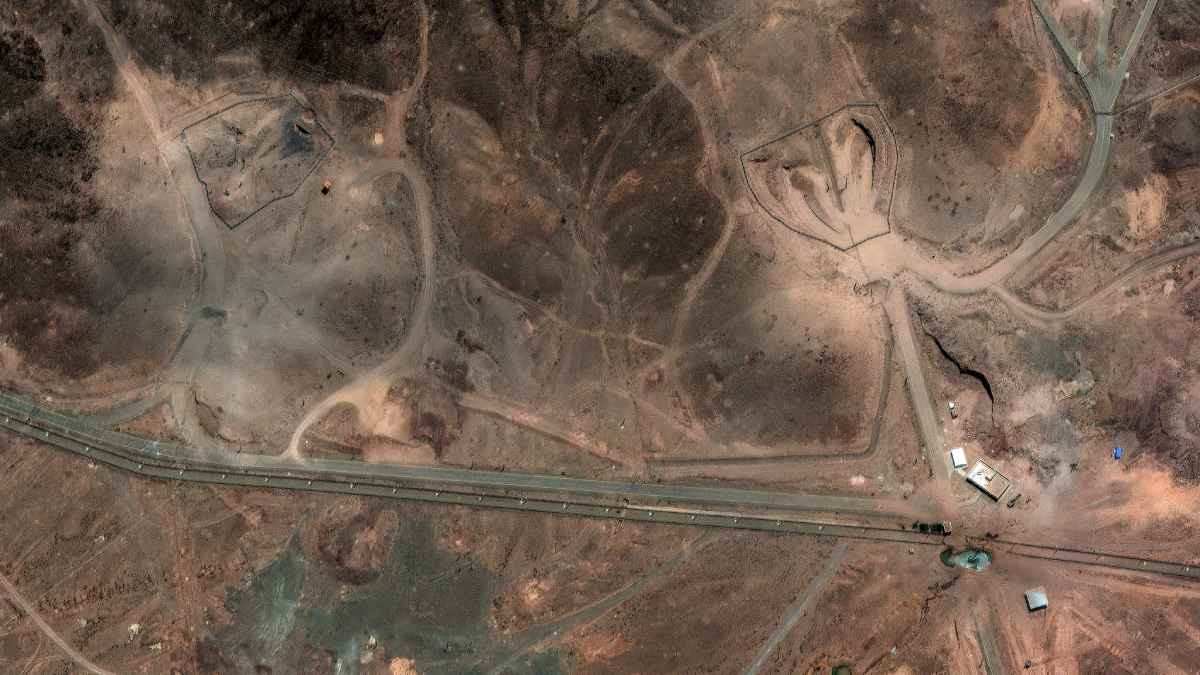
Satellite image released by Maxar
Satellite imagery released by Maxar Technologies confirmed extensive structural damage to nuclear sites at Natanz and Isfahan, and also showed damage at Mehrabad Airport in Tehran, which was hit by Israeli missiles during the same operation.
ALSO READ: From strategic allies to regional enemies: How Israel and Iran became bitter foes
Khatibzadeh further added, “We had no written agreement with the Zionist regime (Israel) that included any binding clauses. What happened was simply the halt of aggression by the Israelis.”
Trump’s Ceasefire Attempt Fails to Hold
Meanwhile, US President Donald Trump, who recently announced a ceasefire between Iran and Israel, criticised both nations for violating the truce within hours of its declaration.
“I have to get Israel to calm down. We basically have two countries that have been fighting so long and so hard that they don’t know what the f they’re doing,” Trump said, expressing his frustration.
ALSO READ: 37 hours non-stop from US to Iran, 3 nuclear sites hit | How US Air Force bombed inside Iran
Although he confirmed that all Israeli planes were ordered to return, Iran soon retaliated with missile strikes on Al Udeid air base in Qatar and Ain Al Asad base in Iraq, both of which house US troops. Iran described the counterattack as a response to Washington’s “blatant military aggression.”
Background: Operation Rising Lion
The escalation began with Israel’s Operation Rising Lion on June 12, which saw aerial strikes on Iranian soil. Israel justified the operation claiming Tehran was nearing nuclear weapon capability. In response, Iran launched waves of missile and drone attacks, resulting in significant civilian casualties and widespread infrastructure destruction on both sides.
The situation further intensified Gulf tensions, with multiple countries shutting down their airspace, disrupting international air traffic, and reviving fears of prolonged regional instability.