By Mahek Chhabra and Tanisha Mishra
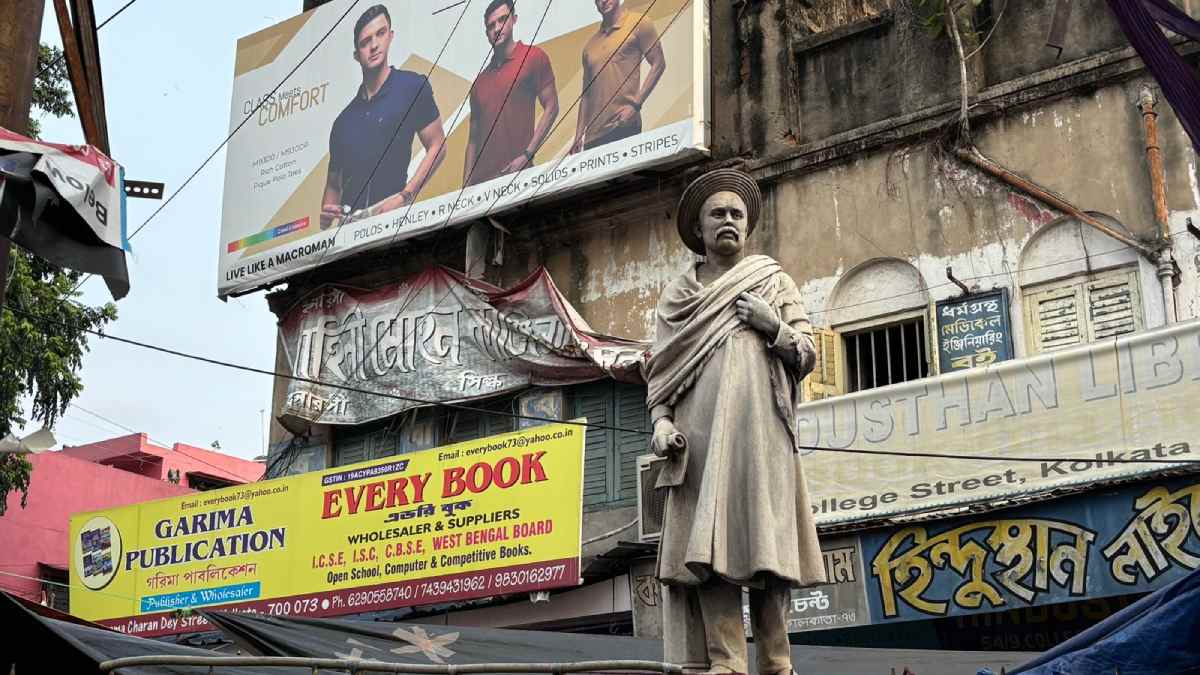
In the heart of Kolkata, amidst the academic bustle and crowded footpaths of College Street, stands a statue that many pass by without a second glance. It belongs to Kristo Das Pal—once a towering figure in Indian journalism, politics, and reform, now largely forgotten by public memory.
Born in 1839 in then Calcutta, Kristo Das Pal rose from modest beginnings to become one of colonial Bengal’s most influential voices. A brilliant student of the Oriental Seminary and Hindu Metropolitan College, he was deeply inspired by reformist ideals.
Pal began his journalistic journey under Harish Chandra Mukherjee at The Hindu Patriot—a publication he would eventually lead. Under his editorship, the newspaper transformed into “a platform for bold yet balanced critique of colonial policies.”

In the heart of Kolkata, amidst the academic bustle and crowded footpaths of College Street, stands the statue of Kristo Das Pal, that many pass by without a second glance. (Photo: Alisha Alam)
Noted columnist on built heritage Amitabha Gupta remarked, “He wielded the pen not as a sword, but as a scalpel—cutting through injustice with reason and precision.”
From Pen to Policy: A Trailblazer in Colonial Governance
Kristo Das Pal’s influence extended far beyond journalism. Appointed Municipal Commissioner in 1863, he climbed the political ladder to join the Bengal Legislative Council in 1872, and later the Viceroy’s Legislative Council in 1883—an extraordinary accomplishment for an Indian at the time.
ALSO READ: Ever touched real Moon soil or seen Neil Armstrong’s hair? This Kolkata museum has it all
“Pal’s entry into the Viceroy’s Council marked a symbolic breakthrough—an Indian seated among imperial policymakers,” Gupta noted.
In recognition of his public service, Pal was conferred the title of Rai Bahadur in 1877 and made a Companion of the Order of the Indian Empire (C.I.E.) in 1878. “In a time of exclusion, he was recognized not for birth, but for brilliance,” Gupta emphasized.
A Vanishing Memory Amid the Streets of Kolkata
Despite his accolades and impact, Kristo Das Pal’s legacy is quietly fading. “Kristo Das Pal wrote articles fearlessly, without hesitation,” said Gupta. “He had no bloodline; none of his children survived; but his legacy is etched through his writings. Hardly anybody remembers him today.”
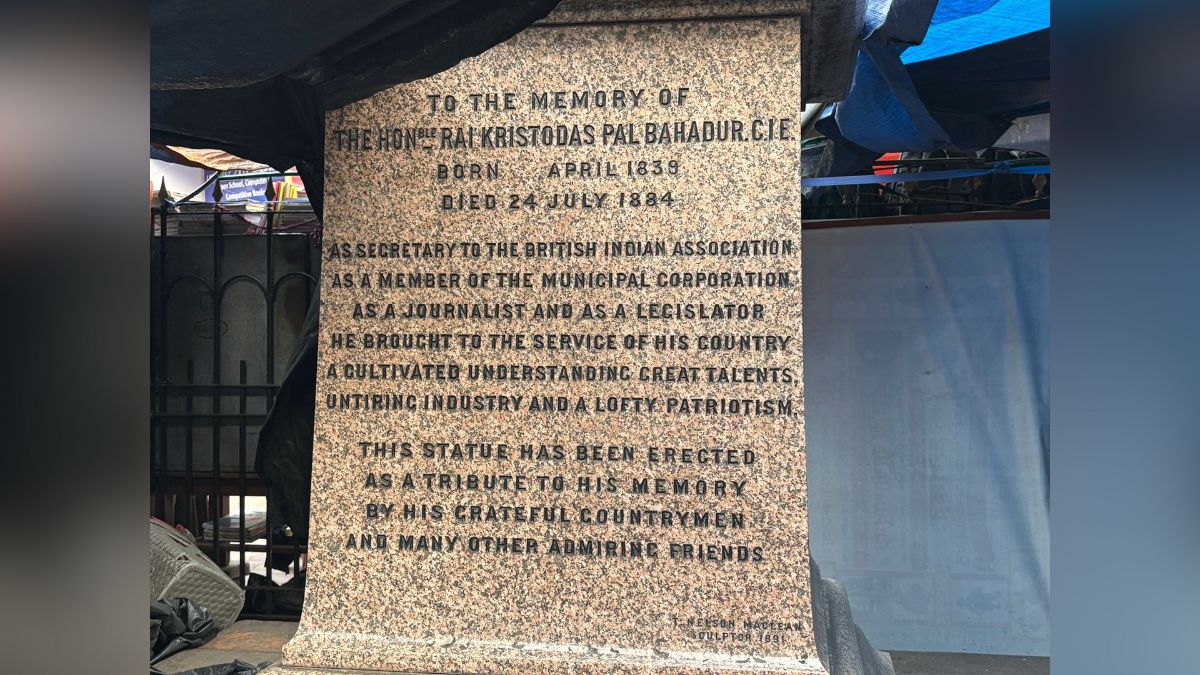
The engravings beneath the statue of Kristo Das Pal briefly mention his achievements. (Photo: Alisha Alam)
Gupta underscores the importance of his statue. “If this statue wasn’t here, you wouldn’t even be asking about him. Our school books don’t mention him. It’s only because the statue exists that the curiosity begins.”
A Statue that Speaks to the Past
The statue of Kristo Das Pal, who died on July 24, 1884, sculpted by renowned artist Thomas Nelson Maclean, stands at the symbolic intersection of College Street, surrounded by historic institutions like Presidency College and Calcutta University. Its placement is both meaningful and intentional—a tribute to the man’s enduring connection with Bengal’s intellectual heart.
ALSO READ: The curious tale of Rani Putul — A clay doll that keeps Queen Victoria alive in Bengal
Gupta believes that modern mediums can help revive interest in such forgotten figures. “Writing is commendable, but to engage the newer generation, short reels or videos are more effective. Visual content on social platforms can help bring forgotten figures like him back into the spotlight.”
More than a relic, the statue of Kristo Das Pal serves as a gateway to rediscover a man who defied exclusion with intellect, earned honors through merit, and helped shape India’s early public discourse.