Written by Shruti Singh & Arpan Nag
In the quiet villages of Howrah district, a clay doll named Rani Putul tells a story few expect — one that honours Queen Victoria, even as memories of British colonisation still sting. In a country where the scars of imperial rule run deep, this curious tradition stands out: artisans lovingly craft a regal figurine that pays homage to the very empress who once ruled over them. It’s a paradox preserved in clay — a bizarre yet enduring tribute to a colonial monarch, shaped by hands that inherited both history and hardship.
Rani Putul is far more than just a doll — she is a cultural icon, a silent storyteller, and a symbol of Queen Victoria’s lasting influence on the artisans of Bengal. Crafted meticulously by generations of skilled potters, this queen-like doll embodies both artistic heritage and colonial history.
“She may look like just another clay figure, but Rani Putul carries history in her curves and crown,” said an artisan from Howrah’s Uluberia.
A Tradition Standing the Test of Time
At a time when interest in traditional clay dolls is waning, Rani Putul continues to hold her ground. She is not merely a decorative item but a living reflection of Bengal’s colonial past. “We don’t just make dolls,” one artisan remarked. “We shape stories with our hands.”
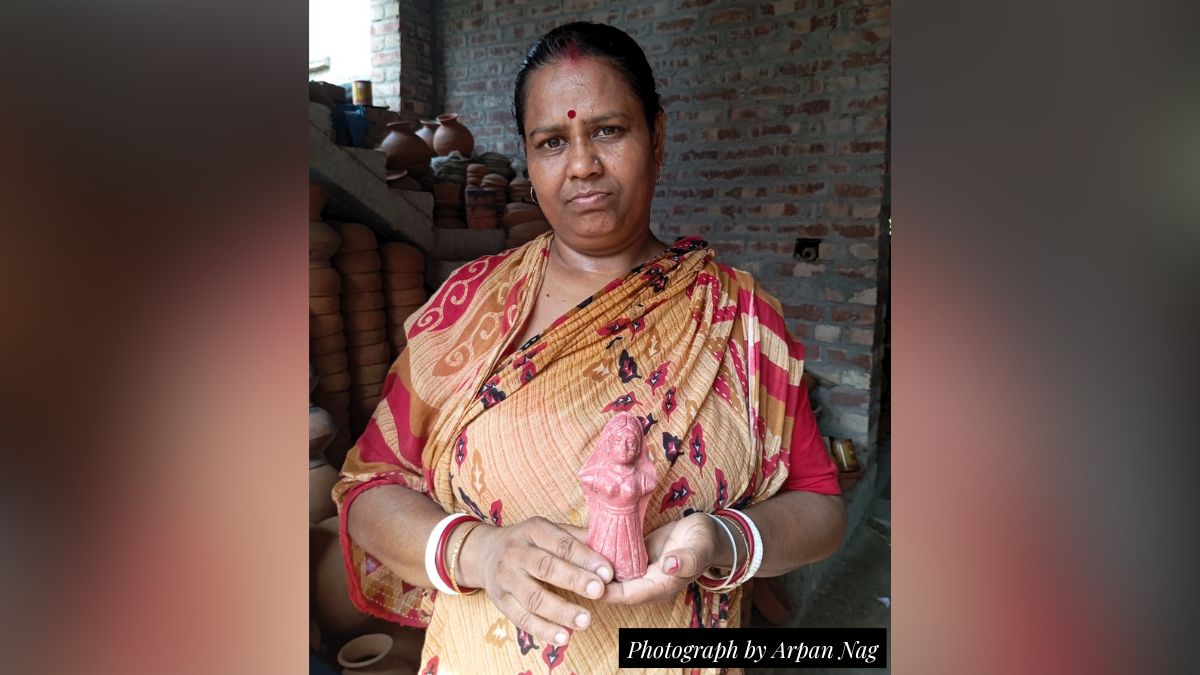
The creator and the creation: Clay artist Pompa Pal holds out a Rani Putul, says ‘My father taught me the art’. (Photo: Arpan Nag)
This unique doll is one of the lesser-known cultural treasures of the Howrah region — a queen crafted from clay, shrouded in folklore, mystery, and silence.
Rani Putul dolls are made across various villages in Howrah, including Jagatballavpur, and Uluberia. Each doll is crafted with traditional techniques passed down through generations. “Even in Kolkata, people don’t really know about us or our Rani Putul,” said Pompa Pal, an artisan, expressing the fading visibility of their heritage craft.
ALSO READ: Former BJP MP, also a Union Minister, John Barla joins TMC, says West Bengal development being stalled by BJP, Suvendu Adhikari
The origins of Rani Putul can be traced back to 1877, when Queen Victoria was declared Empress of India. Following this, Bengal saw a surge in development initiatives under British rule. “The people admired her, and this doll became one of our ways to show it,” explained a senior potter. Artisans in Howrah began creating these dolls as a tribute to the new monarch.
A Family Legacy Passed Through Generations
Pal, a potter from Uluberia, is one of the many artisans keeping the tradition alive. “My father taught me how to make Rani Putul,” she shared. “It’s more than a job — it’s our family’s legacy.”
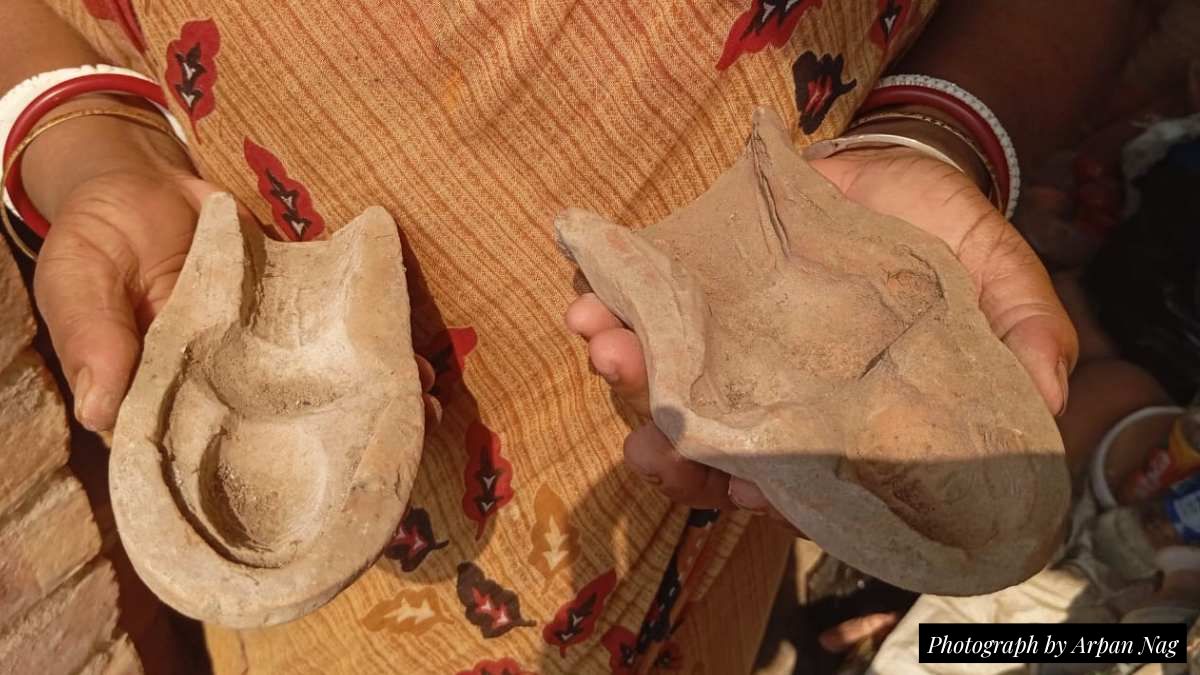
The hands that make them, the moulds that shape them | Smaller Rani Putuls sell for Rs 15 a piece while the bigger ones cost Rs 30. (Photo: Arpan Nag)
The dolls are made using two clay moulds that are joined together to form the body. Each figure is adorned with a gown, necklace, and a tiny crown. These handmade dolls are usually sold at local fairs like the Poush Mela, held between December and January. “The small ones go for ₹15, the bigger ones for ₹30,” Pal said. “But middlemen buy in bulk and sell them for double.”
She also noted a rise in demand: “People have better incomes now. Earlier, they couldn’t afford such items.”
Rising Recognition for a Hidden Gem
Saraswati, another artisan who has been part of the craft for over a decade, spoke about how Tatiberia village began gaining visibility. “Two people came here and helped promote our work,” she recalled. “Since then, more people from cities have come to know about Rani Putul.”
Though Rani Putul never speaks, her silence speaks volumes. In an age dominated by digital storytelling, her tale continues to be passed down by word of mouth, grounded in tradition. She reminds us of the importance of preserving stories not just from the present but also from the past — and her story is one worth hearing.
(Shruti Singh & Arpan Nag work as interns with The Theorist)