Shehbaz Sharif Khamenei Meeting Updates | In a significant geopolitical development, Pakistan Prime Minister Shehbaz Sharif and Field Marshal Asim Munir have visited Tehran in a bid to reset relations with Iran — just over a year after the two countries conducted tit-for-tat airstrikes on each other’s territory. The catalyst for this diplomatic thaw appears to be the shared stance on Gaza, with both nations united in condemnation of Israeli actions in the region.
Sharif and Munir met with Iran’s Supreme Leader Ayatollah Seyyed Ali Khamenei and newly elected President Masoud Pezeshkian, emphasizing Muslim unity and pledging closer cooperation on regional peace, especially in the context of Palestine.
Gaza: The Common Ground
During the meetings, Khamenei praised Pakistan’s refusal to normalize ties with Israel, calling such moves “a blatant betrayal of the Palestinian cause.” He remarked, “The situation in Gaza has reached a point where even people in Europe and the United States are protesting their governments, yet some Islamic governments stand alongside the Zionist regime.”
According to The Tehran Times, Khamenei highlighted Pakistan’s resilience to Western pressure, saying: “Pakistan has never succumbed to the temptations to engage with the Zionist regime.”
Prime Minister Sharif, speaking to Dawn, echoed this sentiment and condemned Israel’s actions as “untold misery” inflicted upon Gaza’s population. He reaffirmed Pakistan’s solidarity with Iran, stating, “It is high time that the international community used its influence to bring a lasting ceasefire in Palestine.”
Kashmir Raised, Iran’s Response Measured
Sharif also raised the issue of Kashmir during his meeting with Khamenei, referring to India’s recent airstrikes in Pakistan and Pakistan-occupied Kashmir following the Pahalgam terror attack. Sharif lauded Iran’s “positive role” during that phase of heightened tensions.
ALSO READ: Iran-US’s ‘constructive’ nuclear talks in Rome and all you need to know
At a joint press conference after the Shehbaz Sharif Khamenei meeting and with President Pezeshkian, Sharif extended an olive branch to India, saying Pakistan was ready for dialogue on “longstanding problems”, including Kashmir, water-sharing, and trade. “We want peace in the region through talks and on the table,” he said.
Iran’s public response was cautious but supportive. Khamenei stated on X (formerly Twitter), “We are delighted with the end of conflicts between Pakistan and India and hope that the differences between the two countries will be resolved.” Iranian state media IRNA added that Pezeshkian called for dialogue to promote a durable ceasefire and long-term peace.
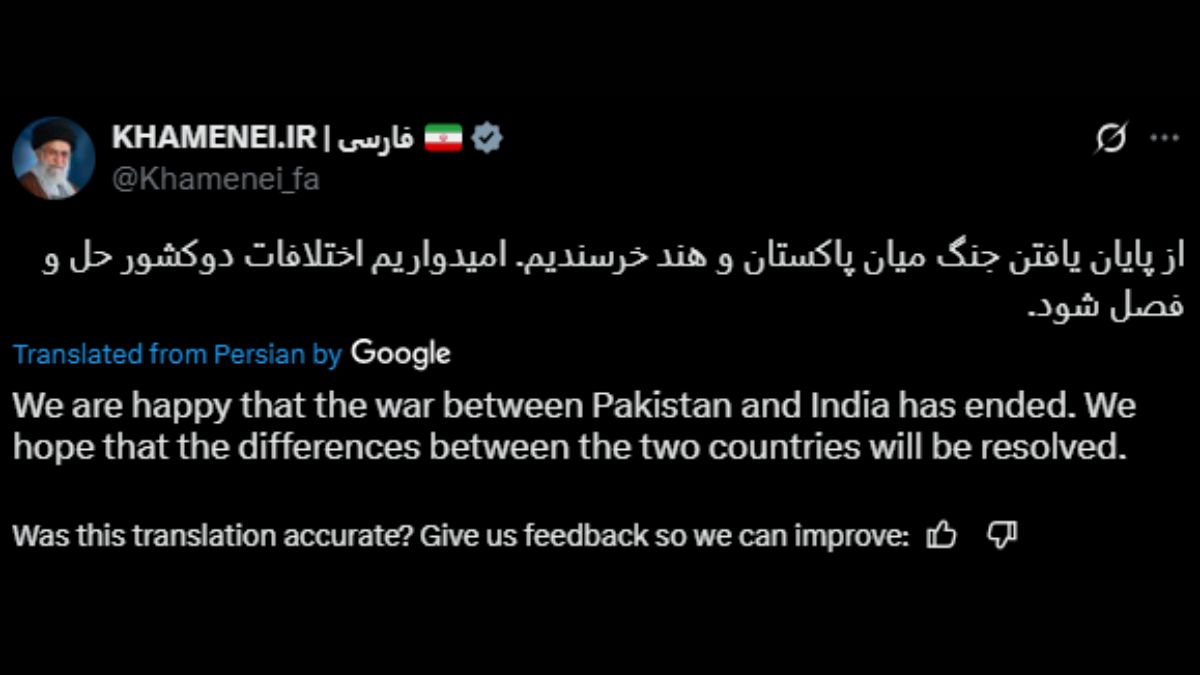
Khamenei’s measured response to India-Pakistan conflict on X
From Airstrikes to Diplomacy: A Reset in Ties
Tensions between Iran and Pakistan had escalated dramatically in January 2024, when Iran launched airstrikes into Pakistan’s Balochistan province targeting the terrorist group Jaish al-Adl. In response, Pakistan retaliated with strikes inside Iran, hitting the Baloch Liberation Front.
But now, the tone has changed. The US Defense Intelligence Agency, in a recent global threat assessment, noted that “Pakistan and Iran have taken steps, including high-level meetings, to de-escalate tensions.” Khamenei himself emphasized the historic friendship between the two nations, recalling Pakistan’s support during the Iran-Iraq war.
“At a time when the world’s warmongers have many incentives to create conflicts, the only way to ensure security is unity among Muslim nations,” Khamenei asserted.
India’s Delicate Balancing Act with Iran
While Pakistan warms up to Iran, India continues to tread carefully. Earlier this month, New Delhi hosted Iranian Foreign Minister Abbas Araghchi for the 20th India-Iran Joint Commission Meeting. External Affairs Minister Dr. S Jaishankar reiterated India’s opposition to terrorism in all forms and emphasized regional cooperation. The meeting also included a briefing on Operation Sindoor, India’s response to the Pahalgam attack.
Iran had offered to mediate between India and Pakistan, calling both “brotherly neighbours.” However, India has firmly maintained that its dispute with Pakistan is bilateral and non-negotiable beyond the issue of Pakistan-occupied Kashmir and terrorism.
The Gaza Conflict as a Geopolitical Pivot
India’s neutral position on the Gaza conflict contrasts with the unified Iran-Pakistan stance. New Delhi has called for a two-state solution, condemned the Hamas attacks, and urged humanitarian relief in Gaza — but stopped short of taking sides. In contrast, the Iran-Pakistan alignment appears to be strengthening over their shared pro-Palestinian rhetoric and opposition to Israeli and Western influence.
The Gaza crisis, it seems, has not only drawn attention to Israeli aggression but also provided a diplomatic bridge between old rivals like Tehran and Islamabad.