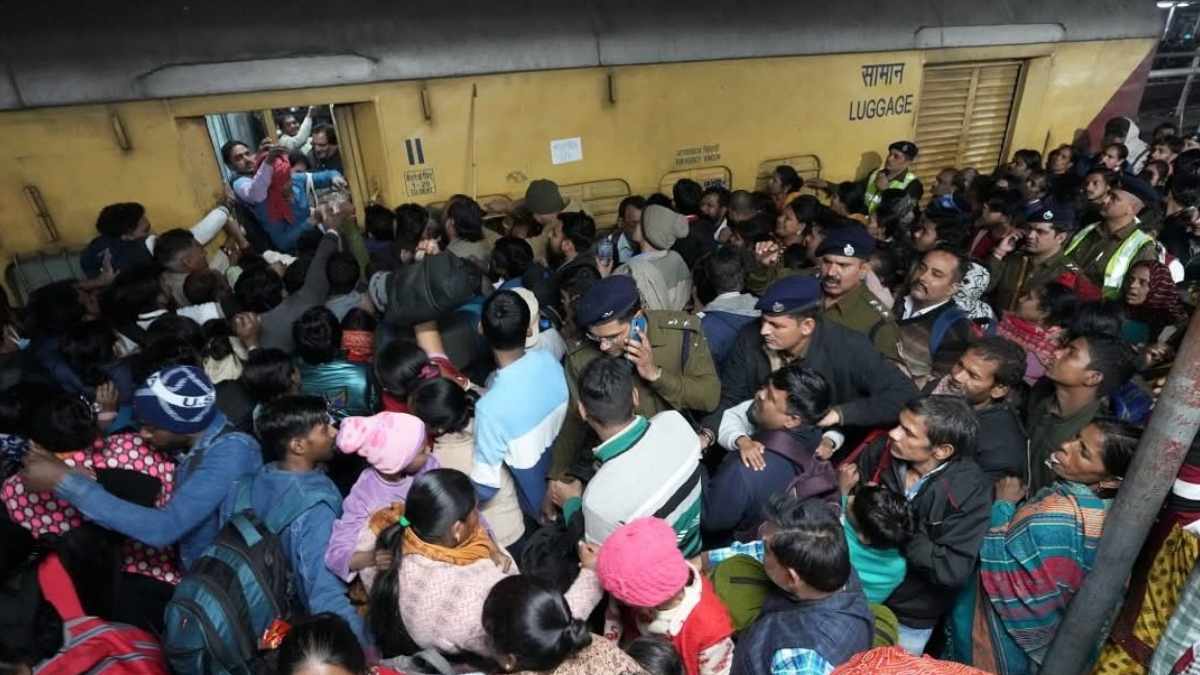
The Delhi High Court on Wednesday came down heavily on the central government and Indian Railways over the tragic stampede at New Delhi Railway Station last week that claimed 18 lives, including 11 women and five children. The court demanded an explanation for the continued overselling of tickets beyond the permissible capacity of train coaches and sought urgent responses from the concerned authorities.
Court Questions Overcrowding, Ticket Sales
A division bench comprising Chief Justice DK Upadhyay and Justice Tushar Rao Gedela strongly criticized the failure to enforce safety regulations and prevent overcrowding. “Why did the number of tickets sold exceed the number of berths? That is a problem,” the court remarked, expressing its displeasure over the blatant violation of Section 147 of the Railways Act, which mandates limits on the number of passengers per coach.
The court emphasized that a simple implementation of the existing regulations could have averted the disaster. “Every railway administration is under a statutory mandate to fix a certain number of passengers per coach, and this number must be exhibited conspicuously outside the coach,” the court added.
ALSO READ: A huddle with PM Modi before the big announcement: BJP to convene meet ahead of naming Delhi CM today
Solicitor General Tushar Mehta, representing the Railways, acknowledged the court’s concerns and assured that the Railway Board would conduct a thorough investigation into the lapses. The court has directed the authorities to present concrete measures to prevent similar tragedies in the future, with the next hearing scheduled for March 26.
Delhi Railway Station Stampede: What Happened?
The horrifying stampede at New Delhi Railway Station occurred as thousands of passengers surged towards platforms 14 and 15, desperate to board trains headed to Prayagraj for the Maha Kumbh. Despite overwhelming crowd pressure, station authorities continued selling tickets—approximately 3,000 within two hours, according to preliminary reports.
The situation worsened after the departures of the Shiv Ganga and Magadh Express trains, both heading towards Prayagraj. Rumors of a last-minute special train departing from platform 16 triggered panic, leading to the deadly crush.
Government’s Response and Denials
While initial reports suggested that mismanagement and last-minute changes contributed to the chaos, the Railway Ministry has denied allegations of a sudden platform change, calling such claims “wrong and misleading.” The ministry clarified that a high-level Northern Railway committee is leading the probe, rejecting suggestions that the Railway Protection Force (RPF) had conducted an inquiry.
Political Fallout and Rising Public Outrage
The Delhi stampede follows another major tragedy in Prayagraj, where 30 people lost their lives in a similar incident during the Maha Kumbh. These back-to-back stampedes have intensified opposition attacks on the ruling BJP, which governs both Uttar Pradesh and the central government.
ALSO READ: Mamata’s ‘Mrityu Kumbh’ jibe finds support from seer, ‘grave crime’
As the nation mourns these avoidable tragedies, the focus now shifts to the government’s next steps in ensuring rail passenger safety and preventing future stampedes. With the Delhi High Court’s intervention, all eyes will be on Indian Railways to see how it addresses the glaring safety lapses that have led to repeated disasters.