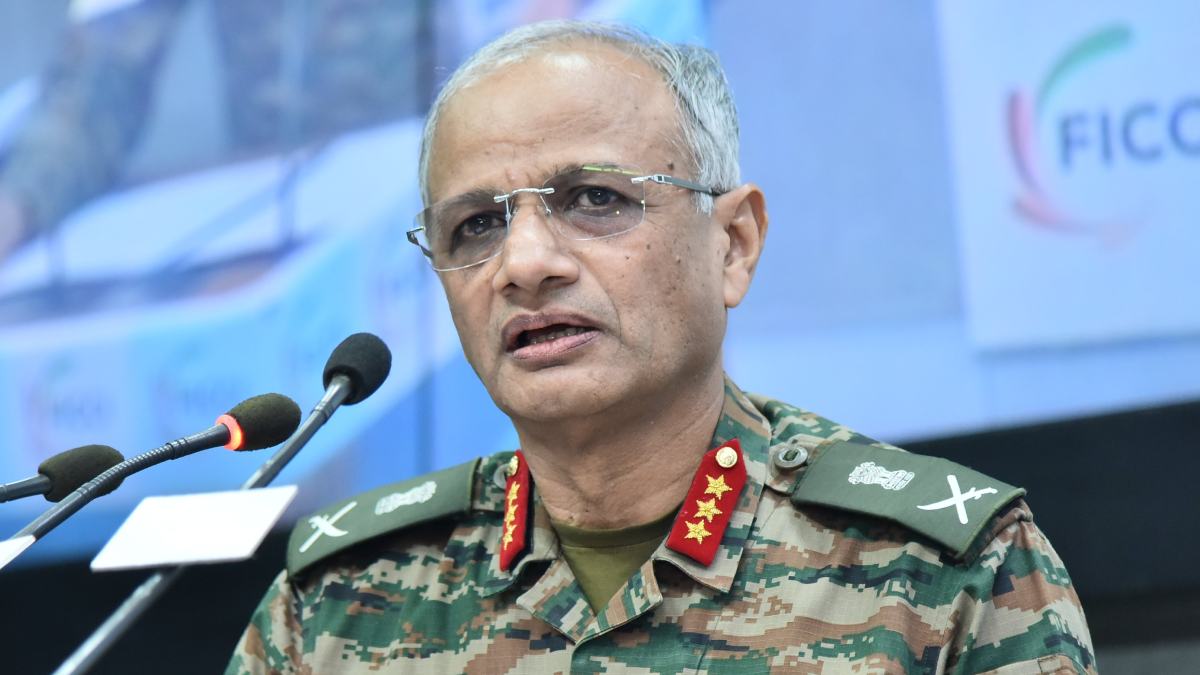
In a significant revelation, Deputy Chief of Army Staff (Capability Development & Sustenance) Lieutenant General Rahul R Singh has said that Pakistan received live intelligence from China during India’s four-day military offensive, Operation Sindoor. Addressing an event hosted by the Federation of Indian Chambers of Commerce & Industry (FICCI) in Delhi, Lt Gen Singh said New Delhi was forced to tackle “three adversaries” at the border — Pakistan, China, and Turkey.
“Pakistan was at the front. China was providing all possible support…Turkey also played an important role in providing the type of support it did,” he said.
The top Army official confirmed that Pakistan’s Director General of Military Operations (DGMO) was aware of India’s tactical positions in real time, thanks to Beijing’s help. “When DGMO-level talks were going on, Pakistan actually was mentioning that we know your…important vector is primed and it is ready for action. I would request you to pull it back. So, they were getting live inputs…from China,” Singh stated.
China, Turkey Supported Pakistan in Conflict: Army
Lt Gen Singh said 81% of Pakistan’s military hardware in the last five years came from China, allowing Beijing to test its weapons on a real battlefield. “China is able to test its weapons against other weapons, so it’s like a live lab available to them,” he explained.
ALSO READ: ‘Had 30-40 seconds to react’: Pakistan PM aide on India’s Brahmos missile use
He further accused China of employing the ancient military strategy of “killing with a borrowed knife,” using Pakistan to attack India while staying out of direct conflict. “China, of course, the good old victim, kill by a borrowed knife…He would rather use the neighbour to cause pain than get involved in the mud-slinging match on the Northern Border,” Singh added.
The general also highlighted Turkey’s growing strategic alignment with Pakistan. He noted that Turkish President Recep Tayyip Erdoğan met Pakistan PM Shehbaz Sharif after the operation and offered “resolute support” against India, particularly in intelligence sharing and counter-terrorism.
Operation Sindoor: Background and Aftermath
India launched Operation Sindoor on May 7 in retaliation for the April 22 terror attack in Pahalgam, Jammu and Kashmir, where Pakistan-backed terrorists killed 26 civilians, most of them tourists. The four-day conflict saw India carry out precision strikes on nine terror camps in Pakistan and Pakistan-occupied Kashmir.
ALSO READ: Pakistan admits it requested ceasefire after India pounded 2 of its air bases
In response, Pakistan launched waves of drone attacks across Indian border regions, with Jammu and Kashmir’s Poonch and Rajouri districts suffering the most damage. At least 10 Indian civilians were killed in J\&K and Punjab. India claimed to have neutralised over 100 terrorists during the operation.
A ceasefire was announced on May 10. It later emerged that Pakistan had reached out for de-escalation within 48 hours of the Indian offensive.