What is the Indus Water Treaty? It’s Impact and More: In a historic and unprecedented move, India has suspended the Indus Waters Treaty (IWT) with Pakistan following the April 22 terrorist attack in Pahalgam, Jammu & Kashmir, which killed 26 people, including one foreign national. This bold response marks a significant escalation in India’s approach to cross-border terrorism and could have far-reaching consequences for the region’s water, food, and energy security.
The decision was approved by the Cabinet Committee on Security (CCS) after intelligence agencies confirmed direct cross-border linkages to the Pahalgam massacre, which was claimed by The Resistance Front (TRF), an affiliate of Lashkar-e-Taiba.
What is the Indus Waters Treaty?
Signed in 1960 and brokered by the World Bank, the IWT is one of the world’s most enduring water-sharing treaties, having survived multiple India-Pakistan wars, diplomatic breakdowns, and international crises.
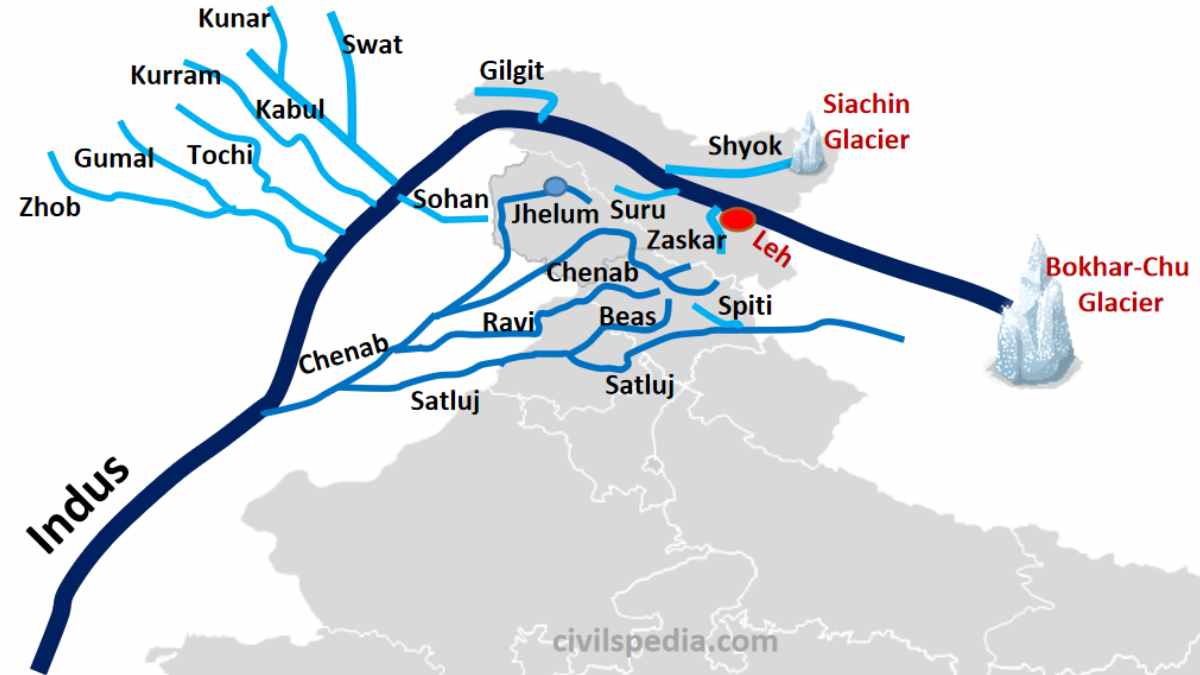
Under the treaty India was allocated the eastern rivers—Ravi, Beas, and Sutlej, Pakistan received rights to the western rivers—Indus, Jhelum, and Chenab, and India could use the western rivers non-consumptively for hydropower and limited irrigation, but could not block or alter flows significantly.
India, under normal conditions, received 33 million acre-feet (MAF) of water annually (about 41 billion cubic metres), compared to Pakistan’s 135 MAF (99 bcm), which was 80 percent of the total system.
ALSO READ: India’s 1st response to Pahalgam Terror Attack: Attari-Wagah border shut, Indus Water Treaty suspended
Why the Suspension Devastates Pakistan
For Pakistan, the Indus river system is existential:
- 80 percent of its cultivated land—around 16 million hectares—relies on these waters.
- 93 percent of this water is used for agriculture, growing wheat, rice, cotton, and sugarcane.
- Urban centres like Lahore, Karachi, and Multan depend on the Indus for drinking water.
- Hydropower stations like Tarbela and Mangla are powered by uninterrupted river flows.
- The river system supports nearly 237 million people, with 61 percent of the Indus Basin population living in Pakistan.
- Agriculture alone contributes nearly 25 percent of Pakistan’s GDP.
If India reduces or blocks flows from Indus, Jhelum, and Chenab, Pakistan could face food insecurity, with potential collapse of grain production, urban water shortages, triggering panic and unrest, energy crises, as hydropower plants run dry, and rural economic collapse, with loan defaults, unemployment, and mass migration.
India’s Strategic Shift: “Hitting Where It Hurts”
India has threatened to review the IWT multiple times in the past after major terror attacks, such as Uri (2016) and Pulwama (2019), but this is the first time the treaty has been formally suspended. The move signals a strategic shift in New Delhi’s posture, effectively using water as leverage in the ongoing battle against Pakistan-sponsored terrorism.
“This time, the message is clear: there will be consequences for terrorism. And they won’t just be diplomatic,” a senior government official told reporters.
ALSO READ: Who is Syed Adil Hussain Shah? The lone local who died fighting terrorists in Pahalgam attack
Suspending the treaty removes the legal constraints on India’s control over the western rivers. While large-scale water diversion may take years of infrastructure upgrades, the political signal is immediate and powerful.
What’s Next: Diplomatic Fallout, Legal Tussles, and Global Attention
Pakistan has yet to issue an official response, but sources in Islamabad say the government is preparing to raise the issue at international forums, including the United Nations and World Bank, which remains a guarantor of the treaty.
Legal experts anticipate:
- Potential arbitration proceedings at The Hague.
- Calls for international mediation to reinstate the treaty.
- Diplomatic pressure from global powers concerned about regional instability and water wars.
ALSO READ: Sketches of 3 suspected terrorists behind Pahalgam terror attack released
The suspension also coincides with India’s broader retaliatory measures, including namely shutting down the Attari-Wagah border crossing, expelling Pakistani diplomats declared persona non grata and revoking bilateral cultural and trade exchanges.
A Calculated Gamble Amid Global Tensions
While India’s move may face international scrutiny, it also resonates domestically, with strong public support for tougher action against terrorism. With elections around the corner and security a top voter concern, the government’s actions may also be politically strategic.
Water, once a symbol of cooperation, has now become a tool of strategic pressure, and the Indus Waters Treaty suspension could mark the beginning of a new phase in India-Pakistan relations—one where terror and water are now inextricably linked.