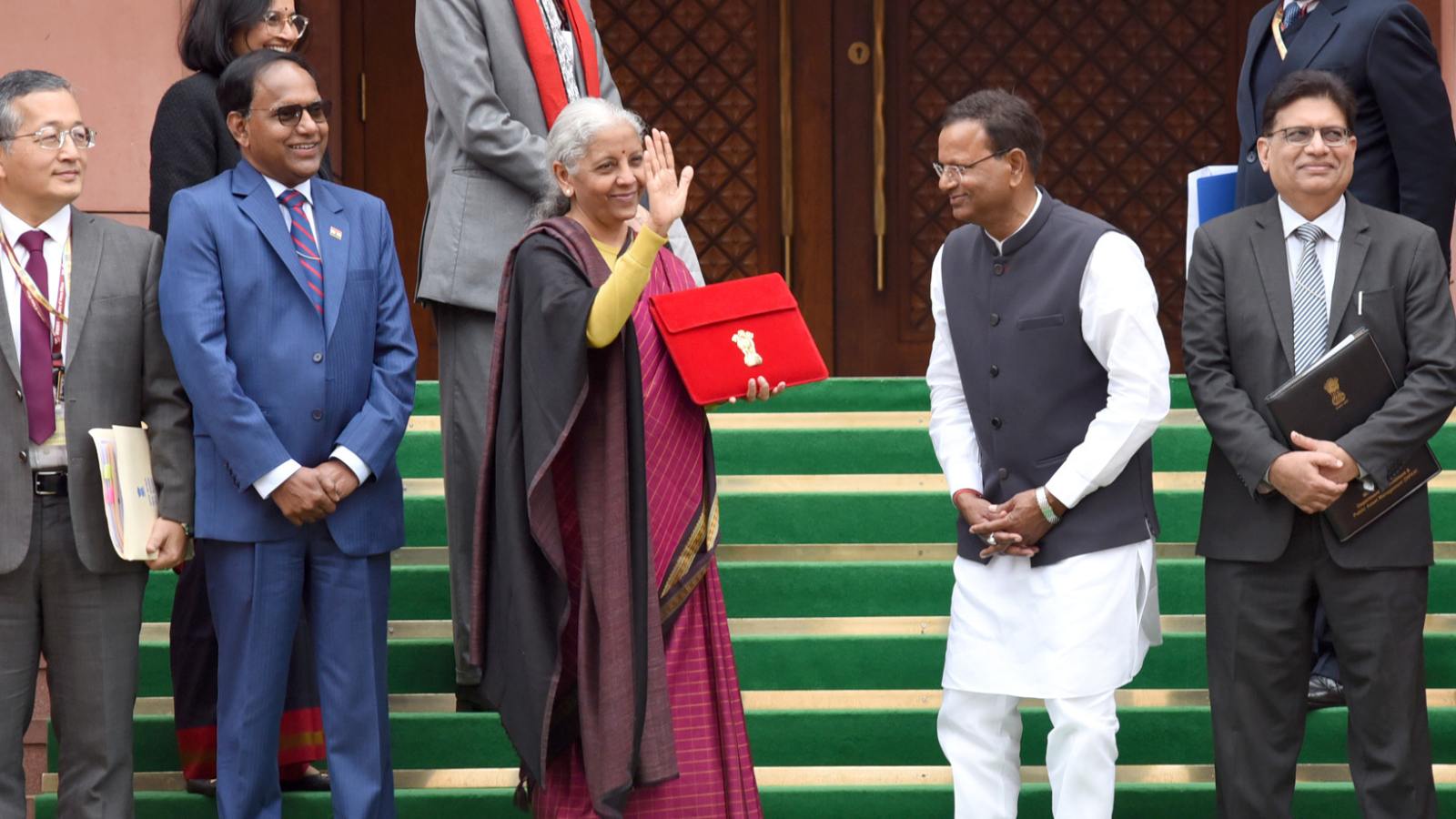
Union Finance Minister Nirmala Sitharaman on Saturday announced the setting up of dedicated rare earth corridors as part of the Union Budget, a move aimed at strengthening India’s domestic manufacturing base and reducing dependence on imports of critical minerals.
`
Speaking during her Budget address, Sitharaman said the Centre will support mineral-rich states in building focused infrastructure for rare earth production and movement.
According to the announcement, the proposed rare earth corridors will connect Odisha, Kerala, Andhra Pradesh and Tamil Nadu.
“A scheme for rare earth permanent magnets was launched in November 2025. We now propose to support the mineral-rich states of Odisha, Kerala, Andhra Pradesh and Tamil Nadu to establish dedicated rare earth corridors,” Sitharaman said.
The move builds on the rare earth permanent magnets scheme introduced last year.
What Are Rare Earth Corridors?
Rare earth elements are a group of minerals used in a wide range of modern technologies, including electric vehicles, wind turbines, mobile phones, defence equipment and advanced electronics. Permanent magnets made from rare earth minerals are particularly critical for clean energy and high-end manufacturing.
The proposed corridors are designed to create an organised domestic network for mining, processing and transporting rare earth minerals. By linking mineral-rich regions, the government aims to improve supply chains, reduce costs and speed up domestic production.
MUST READ: Sunetra Pawar takes oath as Maharashtra 1st woman Deputy CM
These four states are known to have rare earth mineral deposits, especially along coastal and mineral belts. They also have ports, industrial zones and existing infrastructure, which can support processing and transportation.
The government believes targeted support to these regions can help build a strong and integrated domestic ecosystem for rare earth minerals.
Link to Rare Earth Magnet Scheme
The corridor plan complements the rare earth permanent magnets scheme launched in November 2025, which focuses on boosting local manufacturing for sectors such as electric mobility, renewable energy and electronics.
A steady domestic supply of raw minerals, officials believe, is essential to make such manufacturing viable and competitive.
In her speech, Sitharaman said the Budget focuses on building domestic manufacturing capacity and improving energy security. She noted that India’s growth trajectory has been marked by steady expansion and controlled inflation, supported by policy measures that have ensured macroeconomic stability.
She also highlighted how new technologies and artificial intelligence are increasing demand for critical minerals and water, and said these technologies can act as force multipliers when supported by the right systems.
Reducing Global Supply Risks
Globally, rare earth supply chains are concentrated in a handful of countries, making them vulnerable to disruptions. Such disruptions can directly affect industries like clean energy, electronics and defence.
By developing its own rare earth corridors, India aims to secure key inputs needed for future growth, reduce exposure to global uncertainty, and build a more self-reliant manufacturing ecosystem over time.