Union Home Minister Amit Shah on Thursday said the Centre is committed to accelerating development across states through focused and collective efforts. Speaking at the 27th Eastern Zonal Council meeting held in Ranchi, Shah addressed regional concerns raised by leaders from Jharkhand, Bihar, Odisha, and West Bengal.
The high-level meeting was attended by Jharkhand Chief Minister Hemant Soren, Odisha Chief Minister Mohan Charan Majhi, Bihar Deputy Chief Minister Samrat Choudhary, and West Bengal Minister Chandrima Bhattacharya. The discussion covered a range of topics including coal dues, infrastructure development, and tribal welfare.
Shah assured the states of full central cooperation in tackling the Naxal threat and stated that it would be eradicated by March 31, 2026.
Jharkhand Raises 31 Demands, Focus on Coal Dues and Tribal Rights
Chief Minister Hemant Soren raised 31 specific demands on behalf of Jharkhand, which included Rs 1.36 lakh crore in dues from central coal PSUs and the need for safe mine closures. He also called for job creation through MSMEs, a separate Sarna religious code for tribals, and improvements in infrastructure, including a proposed Metro project.
ALSO READ: ‘Centre should take steps to ensure safety in J&K’: Mamata in meeting with Omar Abdullah
Soren further urged the Centre to extend to Jharkhand the special assistance benefits currently provided to Northeastern states and sought amendments to the Coal Bearing Areas (Acquisition and Development) Act to ensure that land is returned to the state after mining operations.
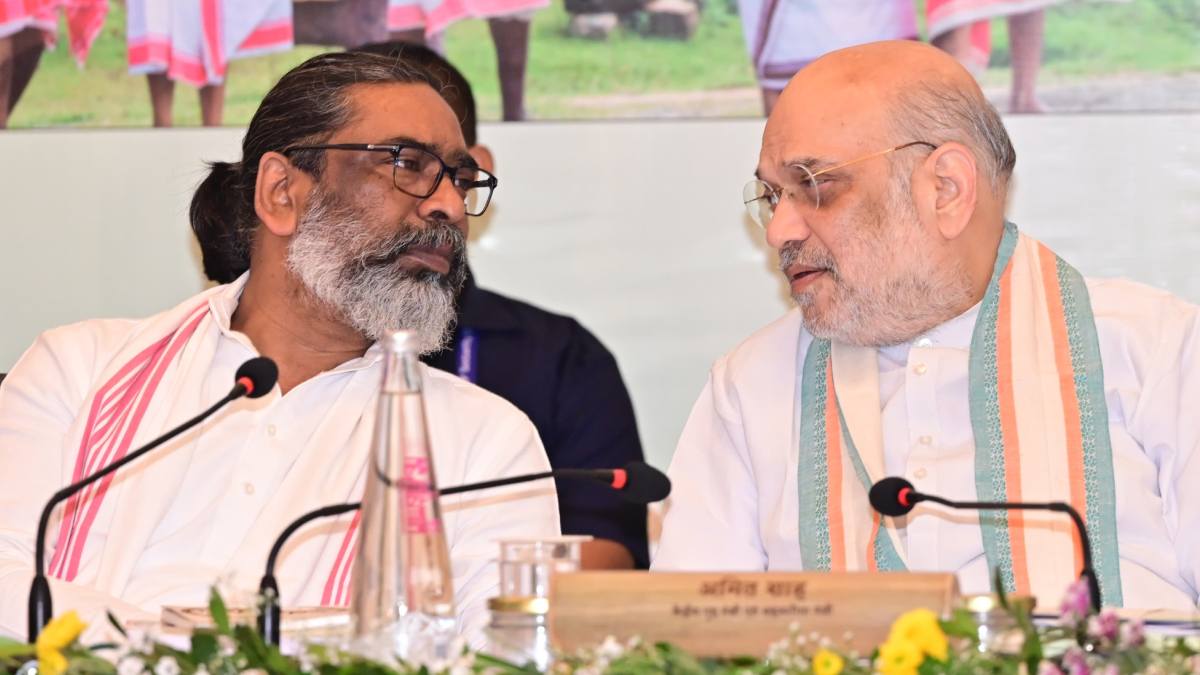
Jharkhand CM Hemant Soren and Union Home Minister Amit Shah at the meeting, in Ranchi, on Thursday. (Theorist photo)
Additionally, he emphasized the need for captive power plants by mining companies, utilising 30% of production within the state to boost employment.
Bihar Seeks Resolution of Post-Bifurcation Asset Division
Bihar Deputy Chief Minister Samrat Choudhary said a committee had been formed to resolve long-standing issues relating to asset division between Bihar and Jharkhand post their 2000 bifurcation.
He also welcomed the Supreme Court’s decision to allow the Election Commission to proceed with its Special Intensive Revision (SIR) of electoral rolls in Bihar.
Zonal Council Platform Facilitates Interstate Collaboration
The Eastern Zonal Council was established under the States Reorganisation Act, 1956. It serves as a key platform for discussions on regional cooperation and national issues such as fast-tracking sexual offence cases, rural banking access, and emergency response systems.
ALSO READ: Man, his family slit throat of estranged wife, mutilate live-in partner’s genitals in Odisha’s Jajpur
According to officials, unresolved matters from permanent committees headed by chief secretaries of member states are escalated to full council meetings for final review.
Prime Minister Narendra Modi has consistently advocated for cooperative and competitive federalism, with zonal councils acting as a structured mechanism for Centre-state dialogue.