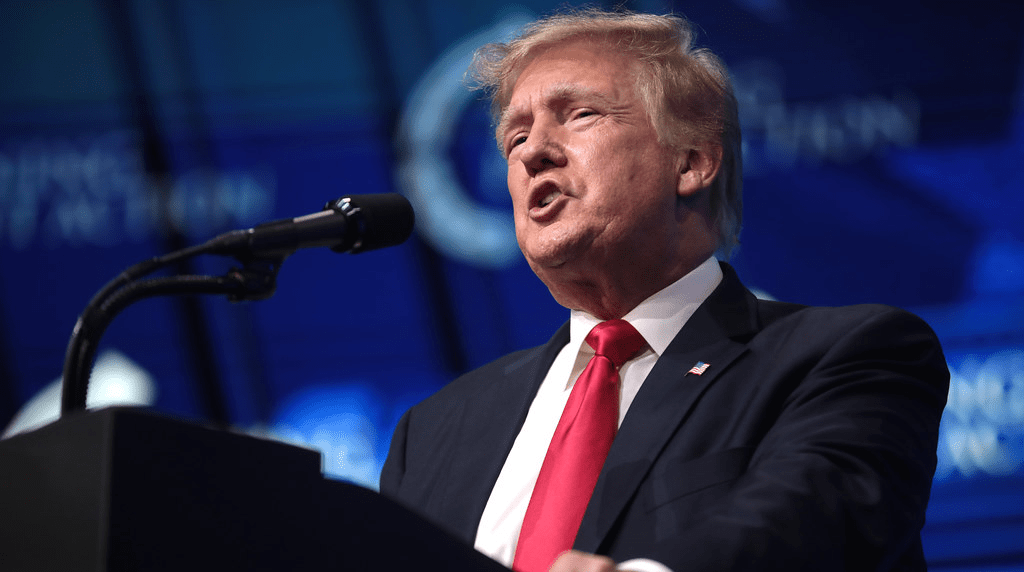
Former President Donald Trump’s promise to end renewable energy initiatives on the “first day” of a potential second term has sent shockwaves through the industry, triggering significant drops in renewable energy stocks. In a recent statement, Trump pledged to put an immediate stop to offshore wind farms, declaring, “We are going to make sure that that ends on day one.” His comments have raised alarm among investors and companies involved in the clean energy sector.
According to Reuters, the impact on the stock market was swift and severe. Orsted, the world’s largest offshore wind developer, saw its shares tumble by as much as 14%. Meanwhile, major wind turbine manufacturers such as Vestas and Nordex saw declines of around 11% and 7.5%, respectively.
This is not the first time Trump has made controversial statements regarding renewable energy. In his previous presidential campaign, he claimed that solar power required vast amounts of land—citing the need for entire deserts to accommodate solar farms. However, the Solar Energy Industries Association (SEIA) counters this claim, stating that most utility-scale solar installations today occupy less than 600,000 acres of land, far less than the areas Trump had suggested.
Trump’s remarks are raising concerns that he could follow through on his threats to reduce or eliminate tax incentives for renewable energy projects, a move that could severely hinder the sector’s growth. Furthermore, Trump has signaled plans to dismantle environmental regulations introduced by the Biden administration, which could ease restrictions on fossil fuel industries and shift national energy policy back toward prioritizing coal, oil, and natural gas.
Also read: World leaders offer congratulations following Donald Trump’s stunning election victory
Additionally, Trump’s stance on electric vehicles (EVs) has evolved in recent months. While he previously criticized EVs, even calling them a “hoax,” he has now softened his position, largely due to support from Tesla CEO Elon Musk. Trump recently admitted at a rally that his change of heart was influenced by Musk’s endorsement, saying, “I’m for electric cars—because Elon endorsed me.” Despite his newfound support, Trump still maintains that electric vehicles are only practical for a small segment of the population.
Trump’s energy policy proposals have raised serious questions about the future of the renewable energy sector in the U.S. If he moves forward with his plans, it could threaten the growth of clean energy industries, especially with regard to solar power, which has been bolstered by tax incentives under the Inflation Reduction Act. With solar stocks already seeing declines, industry insiders fear that a second Trump presidency could destabilize the momentum of America’s clean energy transition.
However, the extent to which Trump could implement these policies would depend on factors such as congressional support and resistance from states, businesses, and environmental groups. Despite this uncertainty, the potential shift in U.S. energy policy is already causing widespread unease among those invested in renewable energy.