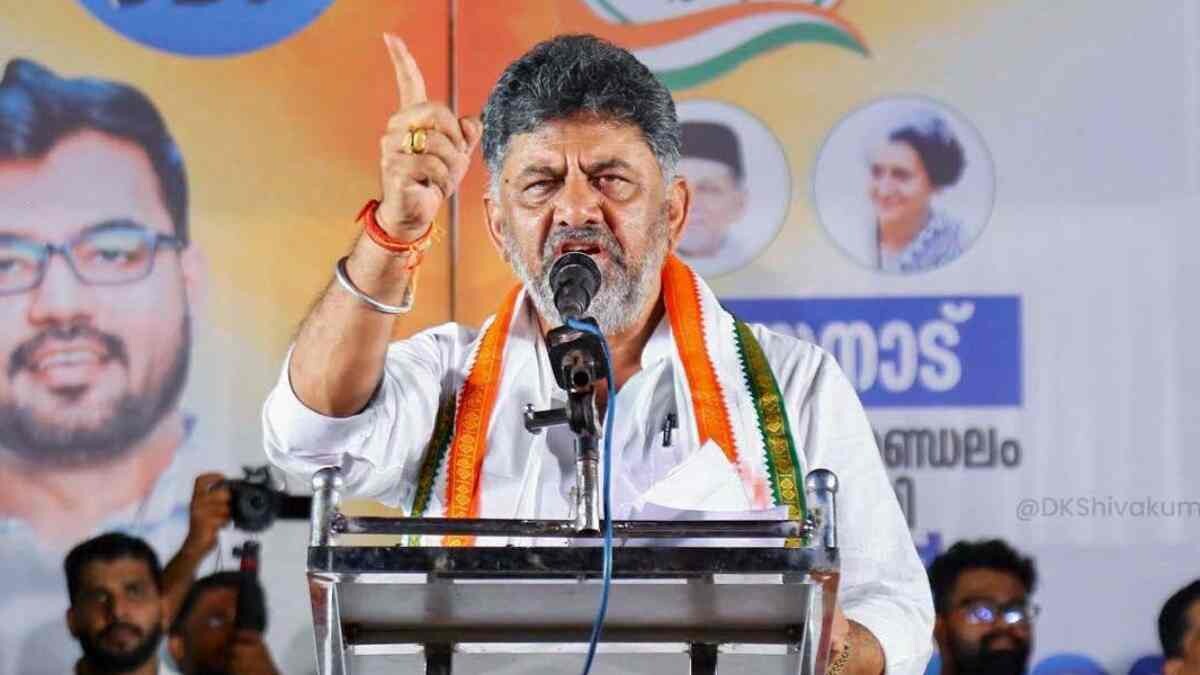
In a significant relief for Karnataka Deputy Chief Minister and Congress leader D K Shivakumar, the Karnataka High Court on Thursday dismissed a Central Bureau of Investigation (CBI) plea challenging the state government’s decision to withdraw its consent to investigate a corruption case against him. The court ruled the plea as “non-maintainable,” marking a crucial victory for the senior Congress leader.
The bench, comprising Justices K Somashekhar and Umesh Adiga, rejected the CBI’s challenge to the Congress government’s decision on November 28, 2023, to revoke consent for the investigation into alleged illegal assets held by Shivakumar. The court also dismissed a subsequent order from December 26, 2023, that referred the matter to the Lokayukta for further inquiry.
In its 67-page judgment, the court pointed out that the issues raised in the petitions should be addressed by the Supreme Court, which is currently handling similar matters in other cases.
The CBI’s plea, along with a similar petition filed by BJP MLA Basanagouda Patil Yatnal, had earlier been referred to a division bench due to the serious legal issues involved. Shivakumar was represented by senior advocates Kapil Sibal and Abhishek Manu Singhvi during the proceedings.
ALSO READ: Former IAS probationer challenges UPSC’s authority in fraud allegations
The CBI and the BJP MLA cited Supreme Court rulings, particularly the Khazi Lhendup Dorji vs CBI case from 1994, where it was determined that the revocation of consent for a CBI inquiry would not halt ongoing investigations. They argued that the withdrawal of consent by the Congress government should not obstruct the CBI’s probe into Shivakumar’s alleged disproportionate assets.
However, Shivakumar’s counsel argued that the original consent order from September 25, 2019, granted by the then BJP government, was issued with “mala fide” intent. They contended that the CBI’s involvement based on a void consent order would violate the principles of federalism, which are integral to the Constitution’s basic structure.
The case against Shivakumar, registered by the CBI on October 3, 2020, stemmed from an investigation by the Enforcement Directorate (ED) and a reference from the Income Tax Department, which led to allegations of corruption. The BJP government, under B S Yediyurappa, had granted the CBI permission to probe the matter.
In a related development, the Supreme Court on March 5 quashed the ED proceedings against Shivakumar, citing a November 2023 judgment in the Pavana Dibbur case. The apex court ruled that money-laundering charges under the Prevention of Money Laundering Act (PMLA) require a serious predicate offence, and in Shivakumar’s case, no such offence was linked to the funds allegedly laundered.
The ED had launched its investigation in 2018 following extensive income tax searches on properties linked to Shivakumar. The searches took place while Shivakumar was sheltering 42 Gujarat Congress MLAs to prevent potential poaching ahead of a crucial Rajya Sabha election.
The dismissal of these multiple cases against Shivakumar is seen as a significant step that could bolster his political career, potentially paving the way for his aspiration to become the chief minister during the Congress’s current tenure in Karnataka.