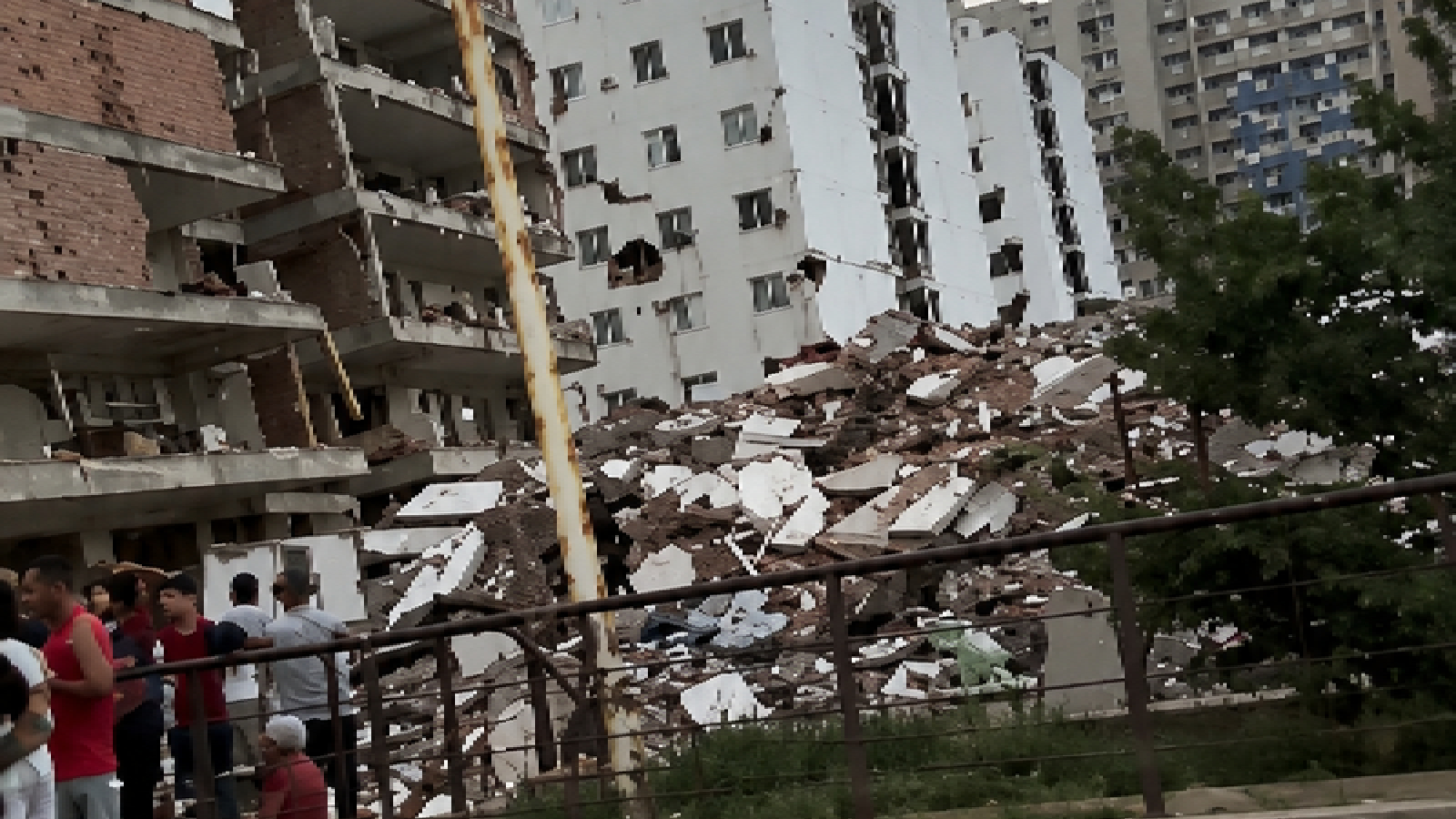
A magnitude 4.9 earthquake struck off Venezuela’s northern coast on Friday, days after two powerful earthquakes of magnitude 7.2 and 7.5, caused widespread destruction across the country. According to earthquake monitoring agency EMSC, the latest tremor occurred about 61 kilometres northwest of Maracay.
Residents in both Maracay and the capital, Caracas, reported feeling the shaking, although authorities have not yet released details of any new damage or casualties linked to Friday’s quake. The US Geological Survey has warned that the overall death toll could eventually exceed 10,000 as rescue teams continue searching through heavily damaged areas.
The latest earthquake comes as Venezuela continues to grapple with the aftermath of Wednesday’s devastating earthquakes. Official figures show at least 920 people have died, while 3,360 others have sustained injuries. More than 172 people remain trapped beneath collapsed structures, and authorities estimate that over 50,000 people are still missing.
Rescue Operations Face Growing Challenges
Search and rescue efforts remain underway across the worst-affected regions, with many residents joining the search for missing relatives because of a shortage of official rescue personnel. Humanitarian organisations say the first 48 to 72 hours after an earthquake offer the highest chances of finding survivors, although rescues remain possible if trapped individuals have access to food or water.
MUST READ: Venezuela hit by 2 earthquakes of magnitudes 7.2 and 7.5; 32 dead, over 700 injured
National Assembly President Jorge Rodríguez acknowledged the scale of the disaster, saying every successful rescue represents a miracle and pledged transparency regarding the impact of the tragedy.
Access Restricted in Hard-Hit Areas
Interior Minister Diosdado Cabello announced that authorities have imposed restricted access to several severely affected locations in La Guaira state. Officials said the measure was introduced to reduce congestion, traffic and noise that could interfere with ongoing rescue operations. Entry into designated disaster zones now requires official authorisation.
The Venezuelan government has also eased previous restrictions on social media platform X, allowing residents to communicate and seek information more freely during the emergency.
ALSO READ: Sonam Wangchuk announces hunger strike from June 28; gives Centre deadline until Sunday
Families Appeal for Urgent Assistance
Many families continue searching for loved ones buried beneath collapsed buildings. Survivors have appealed for additional rescue equipment and heavy machinery, saying some communities have yet to receive sufficient government assistance.
“I am looking for my little Gael… he was only five months old,” AFP news agency quoted Marjosly Salazar, aged 40, whose 16-year-old daughter died in the earthquake. “Please, we need support here. We need machinery to start lifting the columns. We haven’t seen any government officials here, none at all.” quoted AFP.
Rescue workers have warned that certain residential complexes suffered complete structural collapse, reducing the chances of finding additional survivors while recovery efforts continue.
Shortages Trigger Panic Buying
As emergency operations continue, long queues have formed outside grocery stores, pharmacies and food distribution points in several communities. Reports also indicate isolated incidents of people taking essential supplies, including food and household necessities, from shops in affected areas such as Catia La Mar near the airport.
International Rescue Teams Expand Relief Efforts
International support for Venezuela continues to grow. Venezuelan authorities said 861 foreign volunteers from countries including Mexico, the United States, El Salvador, Switzerland and Colombia are already assisting relief operations.
US southern Command posted on X.
Venezuela Earthquake Relief:
Unmatched @DeptofWar forces and assets are on the move to help the people of Venezuela, in support of @StateDept-led efforts.Today, #SOUTHCOM is surging airlift, sealift, and logistics capabilities to get life-saving help to Venezuela, including:… pic.twitter.com/HLhILUkzwH
— U.S. Southern Command (@Southcom) June 26, 2026
The United Nations said approximately 1,000 emergency responders representing 25 international search and rescue teams are expected to arrive. The UN Office for the Coordination of Humanitarian Affairs (OCHA) confirmed that teams from at least 17 countries have been mobilised, with rescue personnel from Spain, Switzerland, Colombia, El Salvador and Mexico already conducting operations on the ground.
An estimated 3.9 million children live in areas affected by the powerful earthquakes that struck Venezuela on Wednesday.@UNICEF is on the ground, supporting national efforts to meet the needs of the most vulnerable children and their families.
More: https://t.co/dy5gVDskQR pic.twitter.com/57NT2AxRfS
— United Nations (@UN) June 26, 2026
Officials also held meetings with international representatives to coordinate humanitarian assistance and disaster response efforts.
Global Humanitarian Support Increases
Several countries, including India, China, Brazil and Iran, have pledged assistance to Venezuela following the disaster. Pope Leo XIV has also announced an initial humanitarian contribution of 100,000 euros to support relief efforts as rescue operations continue across the earthquake-hit regions.
Venezuela was hit by two powerful earthquakes on Wednesday evening, causing widespread destruction across several regions, damaging infrastructure, and triggering emergency rescue operations.
The twin tremors, measured at magnitudes 7.2 and 7.5, were among the strongest recorded in the country in more than a century and were felt across a large part of northern South America.