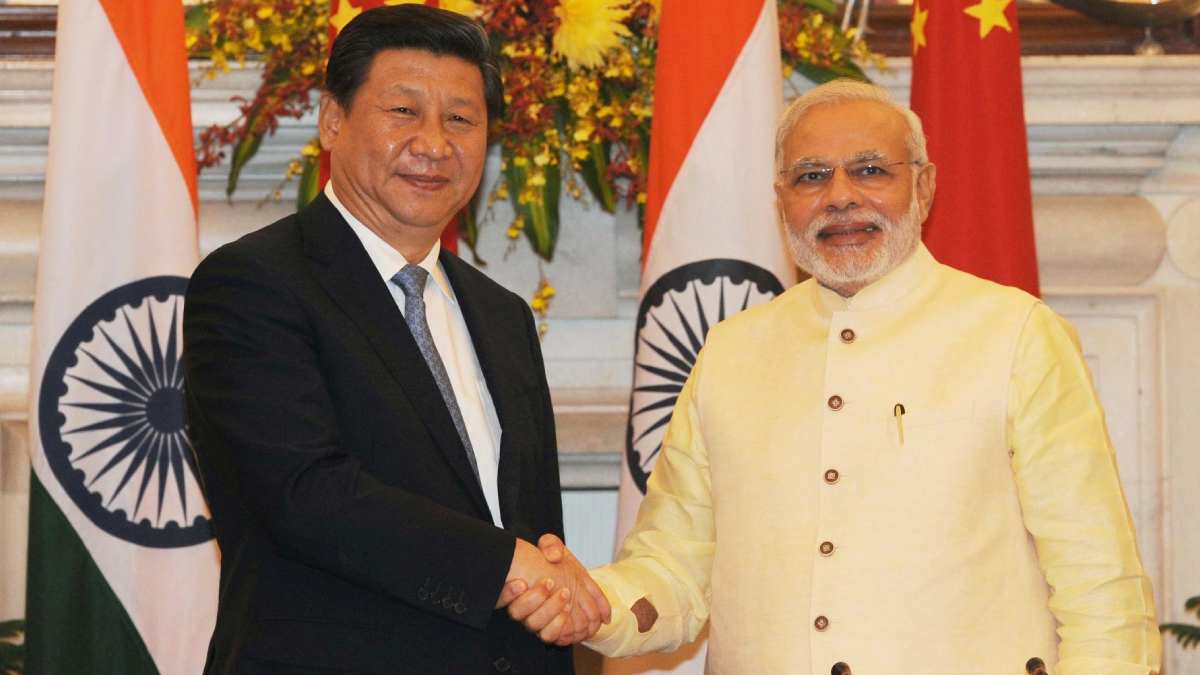
In a significant development for bilateral economic engagement, India and China have agreed to reopen border trade through the three designated trading points — Lipulekh Pass, Shipki La Pass and Nathu La Pass.
The decision was taken during the 24th round of the Special Representatives’ dialogue on the India-China boundary question, co-chaired in New Delhi by National Security Advisor Ajit Doval and Chinese Foreign Minister Wang Yi on Tuesday.
The agreement to revive border trade marks a crucial step in people-centric and economic engagement between the two countries, which also discussed boundary issues, peace-building measures and wider cooperation.
Border Trade Reopening and Economic Engagement
Both sides underscored the importance of stable and forward-looking ties and reaffirmed the role of leadership-level consensus in guiding India-China relations.
They also emphasized the need to enhance people-to-people exchanges, resume direct flights between India and China, and finalize an updated Air Services Agreement. The discussions highlighted the resumption of various dialogue mechanisms and the facilitation of visas for tourists, businesses, media and other visitors.
ALSO READ: China addressing India’s concerns over rare earth minerals, fertilizers: Wang Yi tells S Jaishankar
Advancing Peace, Connectivity and Cooperation
The talks also led to agreements on expanding the scale of the Indian pilgrimage to Mt. Kailash and Lake Manasarovar in Tibet starting 2026, and on deepening cooperation on trans-border rivers. Both sides reaffirmed their commitment to jointly maintain peace and tranquillity in the border areas through friendly consultations and to strengthen multilateral cooperation in international forums.
The reopening of trade routes through Lipulekh, Shipki La and Nathu La Passes is expected to serve as a symbolic step toward economic revival and confidence-building in India-China relations.
Key Highlights of the India-China meeting
1. Both sides underscored that the strategic guidance of the leaders of India and China plays an irreplaceable and crucial role in the development on India-China relations. They agreed that a stable, cooperative and forward-looking relationship between India and China is in the mutual interest of the two countries to realize their development potential fully. They further agreed that both sides should earnestly implement the important common understandings reached between the two leaders and promote sustained, sound and steady development of India-China relations.
2. Chinese side welcomed Indian Prime Minister Narendra Modi’s attendance at the Shanghai Cooperation Organization (SCO) Summit to be held in Tianjin. Indian side reaffirmed its full support to China’s SCO Presidency, and looked forward to a successful SCO Summit with fruitful outcomes.
3. Both sides agreed to support each other in hosting successful diplomatic events. Chinese side will support India in hosting the 2026 BRICS Summit. Indian side will support China in hosting the 2027 BRICS Summit.
4. Both sides agreed to explore and resume various official bilateral dialogue mechanisms and exchanges, to enhance cooperation and address each other’s concerns and properly manage differences, including holding the Third Meeting of the India-China High-level Mechanism on People-to-People Exchanges in India in 2026.
5. Both sides agreed to continue supporting each other in holding events in 2025 to commemorate the 75th anniversary of the establishment of diplomatic relations between India and China.
6. Both sides agreed to resume direct flight connectivity between Chinese mainland and India at the earliest, and finalize an updated Air Services Agreement. They also agreed on the facilitation of visas to tourists, businesses, media and other visitors in both directions
7. Both sides agreed to continue and further expand the scale of the Indian pilgrimage to Mt. Kailash/ Gang Renpoche and Lake Manasarovar / Mapam Yun Tso in Tibet Autonomous Region of China starting 2026.
8. The two sides exchanged views on trans-border rivers cooperation and agreed to give full play to the role of India-China Expert Level Mechanism on Trans-border Rivers and keep communication on renewal of the relevant MoUs. The Chinese side agreed to share hydrological information during emergency situations based on humanitarian considerations.
9. Both sides agreed to the re-opening of border trade through the three designated trading points, namely Lipulekh Pass, Shipki La Pass and Nathu La Pass.
10. Both sides agreed to facilitate trade and investment flows between the two countries through concrete measures.
11. Both sides agreed to jointly maintain peace and tranquility in the border areas through friendly consultations.
12. Both sides agreed to uphold multilateralism, enhance communication major international and regional issues, maintain a rules-based multilateral trading system with WTO at its core, and promote a multipolar world, that safeguards the interest of developing countries.