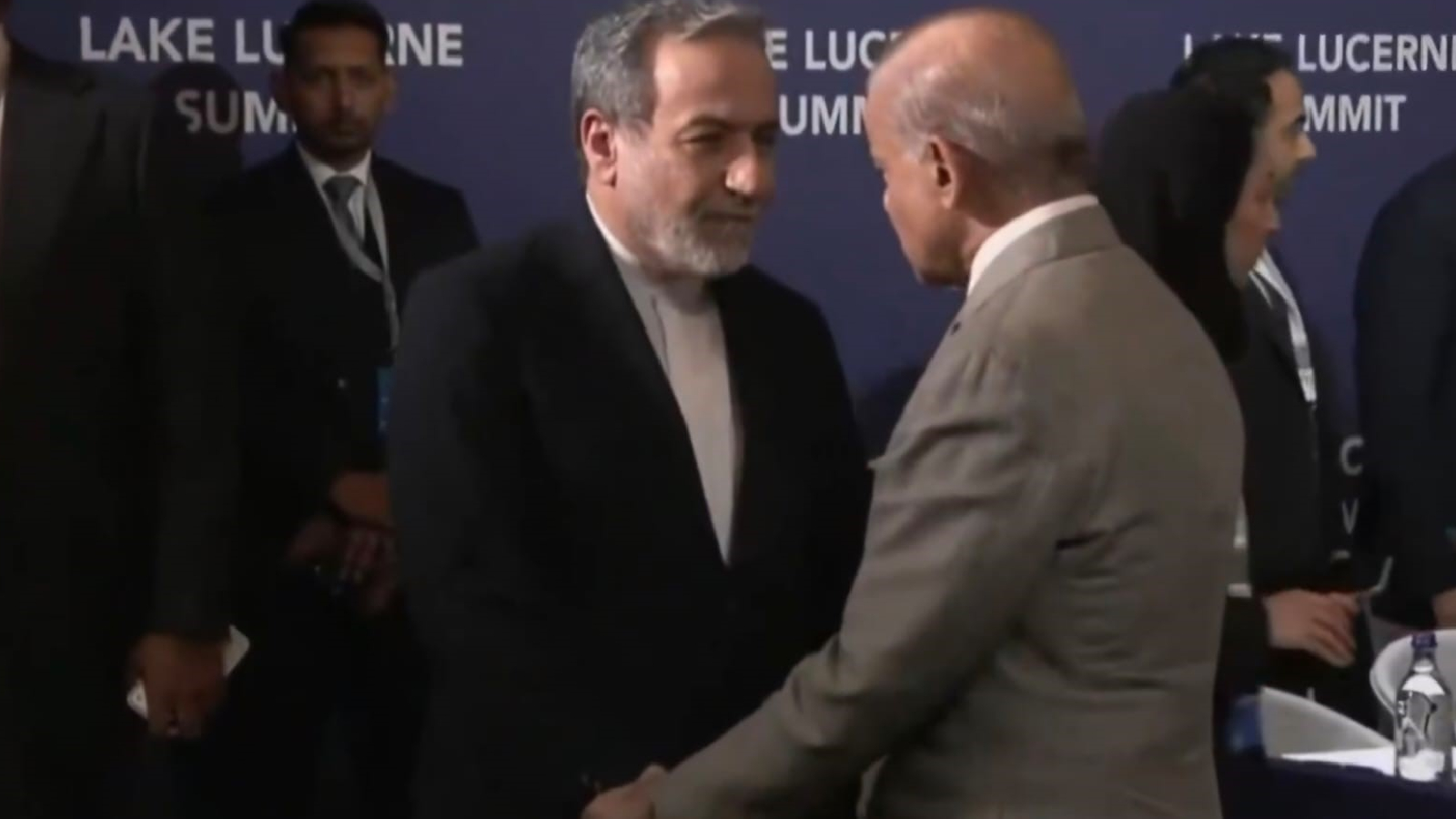
Tensions surfaced during the opening round of crucial US-Iran negotiations in Switzerland on Sunday when members of the Iranian delegation temporarily left the meeting venue following objections to recent remarks made by US President Donald Trump.
Footage from the talks at the Burgenstock resort gained widespread attention online, showing Iranian Foreign Minister Abbas Araghchi speaking briefly with Pakistani Prime Minister Shehbaz Sharif before exiting the room alongside other Iranian representatives.
Iranian media later reported that the move was linked to both a scheduled photo session and Tehran’s dissatisfaction with Trump’s comments. According to reports, Iranian officials communicated their concerns directly to the US side while considering their next diplomatic steps.
In a social media post, Trump called on Iran to restrain armed groups in Lebanon and warned of stronger military responses if tensions escalated further. The comments reportedly complicated efforts by mediators to maintain momentum in the negotiations.
MUST READ: What is the 14-point Iran-US peace deal?
High-level negotiations between the United States and Iran aimed at securing a long-term resolution to the ongoing conflict in West Asia concluded in Switzerland on Monday. The discussions took place at the Buergenstock resort in Switzerland and followed a Memorandum of Understanding (MoU) reached last week.
The negotiations began under challenging circumstances after Iran announced a renewed closure of the Strait of Hormuz. At the same time, US President Donald Trump warned that military action against Iran could resume if Tehran failed to curb the activities of its regional allies.
Who were present in the meeting?
US Vice President JD Vance led the American delegation during the talks, accompanied by senior officials including Steve Witkoff and Jared Kushner. The Iranian delegation included Parliament Speaker Mohammad Bagher Ghalibaf and Foreign Minister Abbas Araghchi and other senior officials. Pakistani officials including, PM of Pakistan Shehbaz Sharif, General Asim Munir, Ishaq Dar, the Foreign Minister of Pakistan. Qatari officials including, Sheikh Mohammad bin Abdulrahman bin Jassim Al Thani and Majed bin Mohammad Al Ansari were present in the high level negotitaion.
ALSO READ: Big surprise as Trump, Tehran sign Iran peace deal ahead of Swiss meet | What we know so far
Roadmap Agreed for Future Negotiations
In a joint statement released by Pakistan and Qatar, both sides confirmed that the High-Level Committee overseeing the negotiations had agreed on a roadmap aimed at achieving a final agreement within 60 days.
The statement said the framework would allow for the immediate start of additional technical discussions designed to address outstanding issues and prepare the ground for future meetings between senior officials.
Abbas Aragchi wrote on X, “Tireless Pakistani and Qatari mediation has delivered major progress to end Lebanon War. Oil and petrochem exports are waived, blockade lifted, some frozen assets released, and major reconstruction & development plan launched for Iran.”
Tireless Pakistani and Qatari mediation has delivered major progress to end Lebanon War. Oil and petrochem exports are waived, blockade lifted, some frozen assets released, and major reconstruction & development plan launched for Iran.
1st real test: Lebanon deconfliction cell https://t.co/q0okD2qwSO
— Seyed Abbas Araghchi (@araghchi) June 22, 2026
New Mechanism Proposed for Lebanon Conflict
The mediators also announced the establishment of a de-confliction mechanism involving the United States, Iran and Lebanon. The initiative is intended to support adherence to the cessation of military operations in Lebanon and reduce the risk of further escalation.
Lebanon has remained a focal point of regional tensions since fighting intensified earlier this year following exchanges involving Iran-backed Hezbollah and Israel.
Communication Channel Established for Strait of Hormuz
As part of the negotiations, Tehran and Washington agreed to create a direct communication line aimed at preventing misunderstandings and ensuring safe commercial navigation through the Strait of Hormuz, one of the world’s most critical energy shipping routes. The measure is expected to help avoid incidents that could disrupt global oil supplies and regional trade.
Iran Highlights Economic Measures
Following the talks, Iranian Foreign Minister Abbas Araghchi stated on social media that certain economic measures had been discussed, including waivers related to oil and petrochemical exports, the lifting of blockades, the release of some frozen assets and plans for reconstruction and development projects in Iran.
With the first round of high-level negotiations now complete, technical teams from both countries are expected to remain in Switzerland for further discussions. Officials hope these talks will generate sufficient progress to enable senior leaders to return and work towards a broader agreement in the coming weeks.