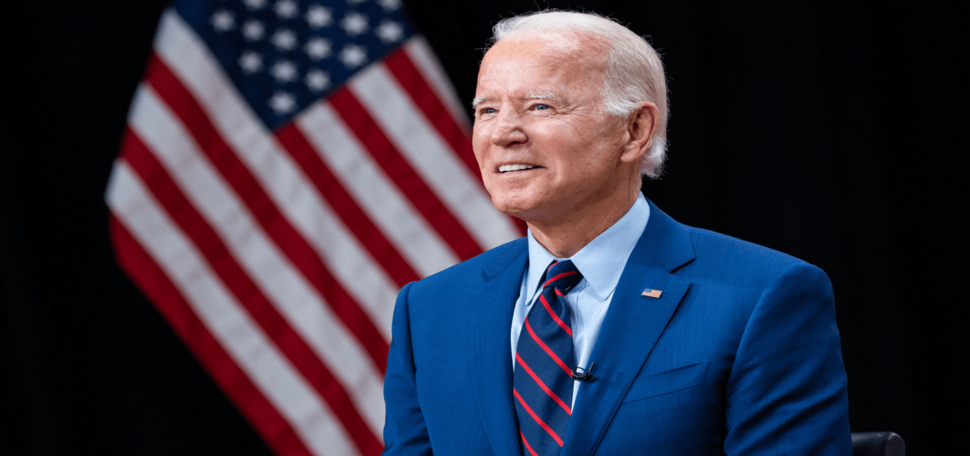
President Joe Biden on Saturday signed a $1.2 trillion spending package into law, ensuring that the U.S. government remains funded for the fiscal year, which began half a year ago.
The $1.2 trillion funding package, which ensures full government funding until September 2024, received approval from the Senate in a vote of 74 to 24 after being introduced early Thursday. Prior to this, it had passed the House with a vote of 286 to 134. However, the Senate faced delays in reaching an agreement on amendment votes, leading to a standoff that extended past the deadline.
Biden described the package, which received broad support from Congress in the wee hours of Saturday, as an investment in the American populace, emphasizing its role in bolstering both the economy and national security. The Democratic president called on Congress to address other pending legislation currently stalled in the legislative process.
Senate majority leader Chuck Schumer eventually announced an agreement to expedite the bill’s passage after Republicans insisted on voting on amendments before moving forward. Although the missed deadline did not impact government operations, agencies were assured they could continue normal activities as it was evident that a resolution was imminent and President Biden would sign the bill.
This comprehensive package consolidates six spending bills into one, covering approximately three-quarters of government funding until the end of the fiscal year. It allocates funds to various departments including State, Homeland Security, Defense, Labor, Health and Human Services, alongside provisions for foreign operations, financial services, and the legislative branch. The passage of this package enables Congress to shift its attention to other priorities, such as drafting next year’s spending bills due by October, and resolving the months-long uncertainty surrounding foreign aid to US allies.
Despite the bill’s passage, House Speaker Mike Johnson, a Louisiana Republican, faces potential challenges in his leadership role as a majority of his conference voted against the agreement reached with Democratic Senate leadership to fund the government.
The business community expressed satisfaction with the passage of the spending bill and pledged to collaborate with policymakers on advancing legislation aimed at improving tax benefits for businesses and low-income households. Despite initial concerns about a potential government shutdown, the White House Office of Management and Budget reassured that agencies would not be directed to close, expressing confidence in the Senate’s prompt approval of the bill, which ultimately transpired.
Nevertheless, the deep partisan divisions within Congress were once again evident, particularly within the House’s narrow and contentious Republican majority. Representative Marjorie Taylor Greene, a prominent conservative figure, threatened to push for a vote to remove Speaker Mike Johnson, a fellow Republican, for allowing the bill to pass. Johnson, employing a parliamentary maneuver for the umpteenth time since assuming leadership, bypassed hardline factions within his party, enabling the bill’s passage with a vote of 286-134, garnering more support from Democrats than Republicans.
The extensive 1,012-page bill allocates $886 billion in funding for the Defense Department, including provisions for a pay raise for U.S. troops. Senator Susan Collins, a key negotiator, highlighted the bill’s significance as a national security measure, emphasizing that the majority of the funding is directed towards bolstering military readiness, supporting servicemembers, and strengthening alliances with key partners.
However, critics denounced the bill as overly costly and potentially inflationary. Senator Rand Paul and other Republican lawmakers who generally oppose expansive spending measures characterized it as reckless and detrimental to the economy.
The passage of the spending bill marks a departure from the frequent short-term funding measures that have characterized government financing in recent months. The last partial federal government shutdown occurred during Donald Trump’s presidency, stemming from a deadlock over funding for a border wall with Mexico.
Read all the World News, Business News, Sports News, Entertainment News, Business News and Opinion here. Follow us on Facebook, Twitter and Instagram