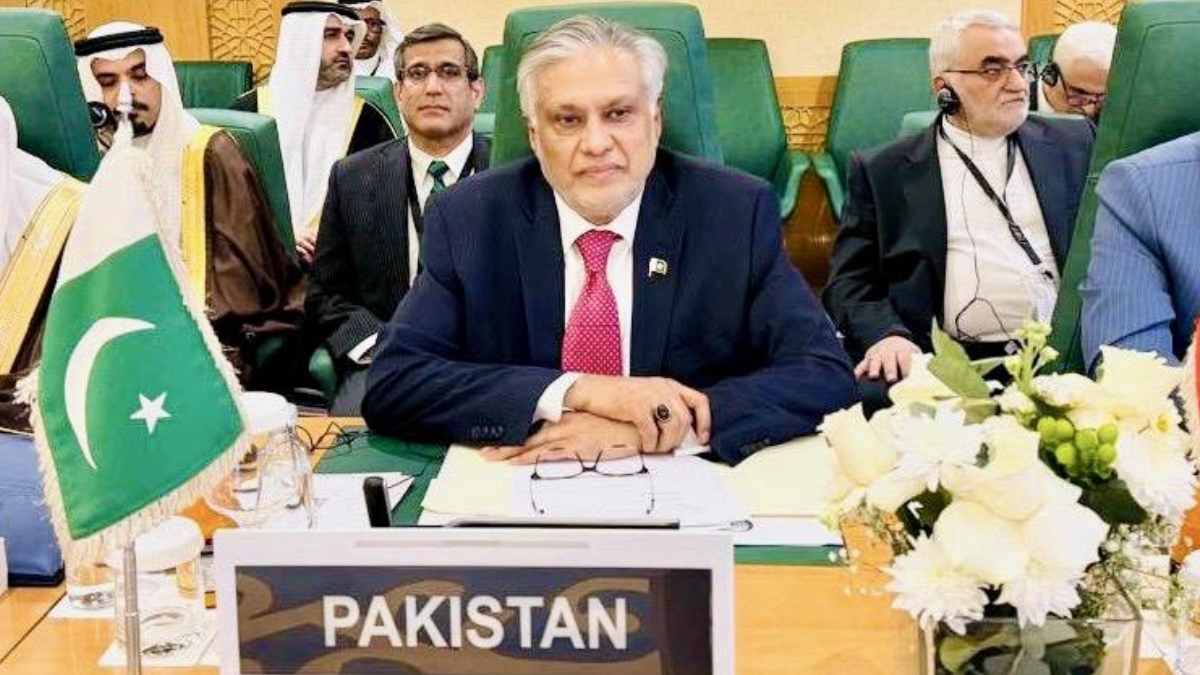
Pakistan Deputy Prime Minister calls Pahalgam attackers freedom fighters: In a shocking and provocative statement, Pakistan’s Foreign Minister and Deputy Prime Minister Ishaq Dar referred to the perpetrators of the April 22 Pahalgam terror attack as “freedom fighters”, further inflaming already surging tensions between India and Pakistan.
Dar’s remarks came even as Pakistan publicly condemned the attack and denied harboring terror outfits. Speaking to reporters in Islamabad, Dar said, “Those who carried out attacks in Jammu and Kashmir’s Pahalgam district on April 22 might be freedom fighters.”
The controversial statement is being seen as diplomatic provocation by New Delhi, especially at a time when India is mounting a strong counter-offensive against Islamabad, both militarily and diplomatically, in response to the Pahalgam massacre that killed 26 civilians, most of them tourists.
India’s Diplomatic Response: Indus Waters Treaty Suspended, Visas Cancelled
Following the attack, Prime Minister Narendra Modi chaired a high-level Cabinet Committee on Security (CCS) meeting where India decided to place the 1960 Indus Waters Treaty in abeyance – a rare and bold diplomatic move.
India also cancelled all visas issued to Pakistani nationals, including those seeking medical treatment, sending a stern message about zero tolerance for terror.
ALSO READ: Homes of Pahalgam terror attack accused blown up as India escalates crackdown on Lashkar
Speaking on the suspension of the treaty, Ishaq Dar said, “240 million people in Pakistan need water. You cannot stop it. It is tantamount to an act of war. Any suspension or encroachment won’t be accepted.”
“Tit for Tat”: Pakistan Threatens Retaliation
Dar warned that if India carries out any attacks, Pakistan would respond with a “tit-for-tat” reply. Echoing this aggressive rhetoric, Pakistan Defense Minister Khawaja Muhammad Asif claimed India was planning “cross-border strikes”, stating: “We will make them pay through their noses. If our citizens are harmed by India, Indian citizens will not remain safe either. It will be tit-for-tat.”
These statements have sparked fresh concerns about the potential for military escalation between the two nuclear-armed neighbors.
Pahalgam Terror Attack: The Worst Since Pulwama
The April 22 attack in the Baisaran meadows near Pahalgam — a popular tourist destination dubbed “Mini Switzerland” — claimed 26 lives, making it the deadliest terrorist attack in Kashmir since the 2019 Pulwama bombing.
The assault was carried out by militants dressed in military fatigues, who reportedly checked IDs to target non-Muslim tourists, executing several at point-blank range.
ALSO READ: Top Lashkar commander Altaf Lalli killed in Bandipora as India retaliates to Pahalgam terror attack
The Resistance Front (TRF), a shadow outfit of Lashkar-e-Taiba (LeT), has claimed responsibility for the massacre. The same group has been behind multiple attacks in Jammu and Kashmir since its emergence as a proxy front post-Article 370 abrogation.
India’s Counter-Terror Campaign Intensifies
India has since launched massive search and elimination operations, killing top LeT commander Altaf Lalli in Bandipora and demolishing the homes of two local LeT operatives, Adil Thoker and Asif Sheikh, believed to have aided the attackers.
Sketches of the suspected attackers, including two Pakistani nationals identified as Hashim Musa and Ali Bhai, have been released, with a ₹20 lakh reward announced for actionable intelligence.
ALSO READ: Explained: What is Simla Agreement? the 1972 treaty Pakistan scrapped amid rising tensions with India
With Pakistan calling Indian moves an “act of war” and openly glorifying the terrorists, analysts fear a sharp downturn in bilateral ties. The coming days are expected to be critical in shaping the geopolitical trajectory of the region.
India’s strategy so far suggests a multi-pronged approach combining diplomacy, military precision, and global outreach to expose Pakistan’s duplicity on terrorism while avoiding large-scale escalation — for now.